Jewish, Czech and caught in the debate over Gaza: Two scholars reflect on life after October 7
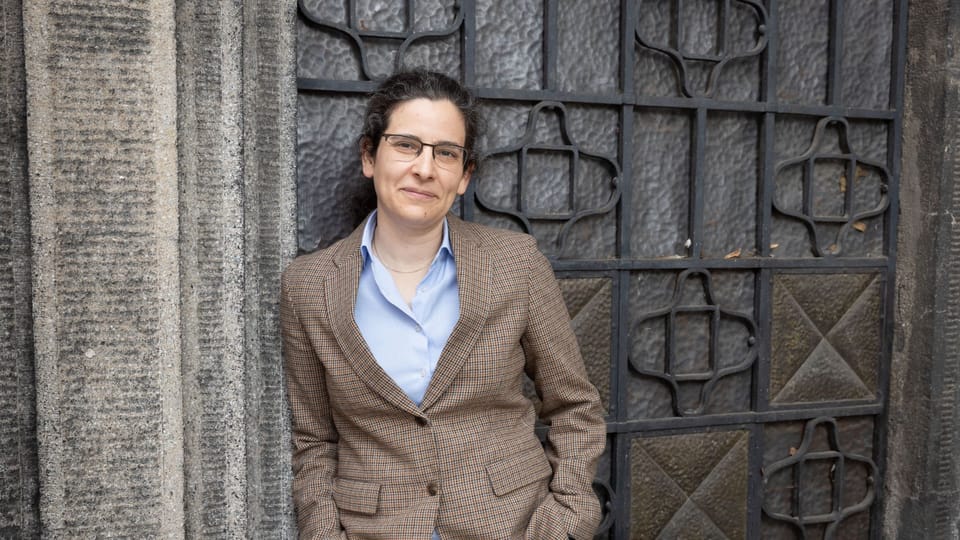
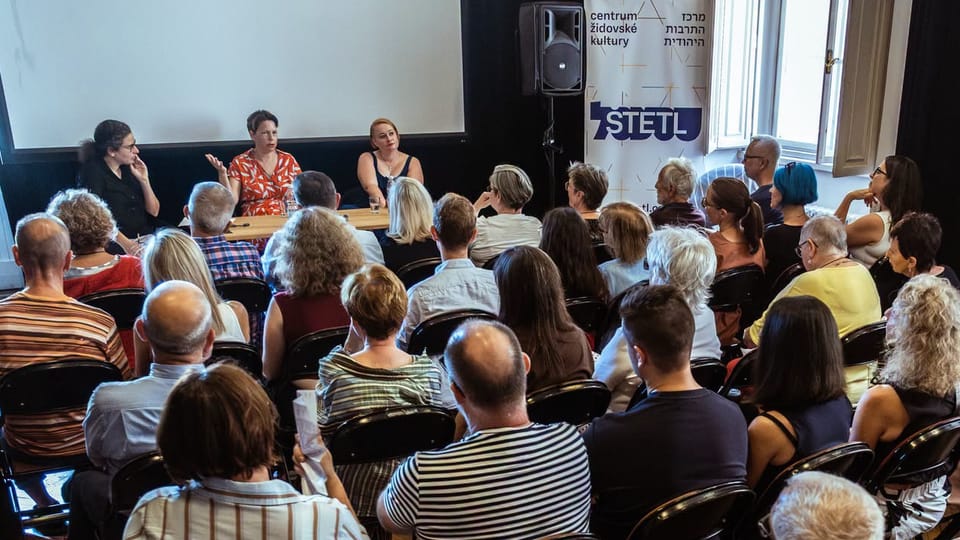
What does it mean to be Jewish and Czech after October 7, 2023, and the devastating war that followed in Gaza? At Brno’s Štetl Fest, Czechast spoke to historian Anna Hájková (University of Warwick) and Israel expert Irena Kalhousová (Charles University) about antisemitism, Israel, the political left and the peculiar position of Jews in Czech society.
Being Jewish and Czech these days
For a festival devoted to Jewish culture, history and ideas, Brno’s Štetl Fest offered an unusually fitting place to ask a much broader question: what does it mean to be Jewish in Czechia today?

The question has acquired a new urgency since the Hamas attacks of October 7, 2023, and Israel’s subsequent war in Gaza. Across Europe and North America, Jewish cultural events, Holocaust education and Jewish academics have increasingly found themselves drawn into arguments over Israel and the Palestinians – whether they want to be or not.
Two Czech scholars who took part in this year’s festival approach these developments from somewhat different perspectives. Irena Kalhousová heads the Herzl Center of Israeli Studies at Charles University and regularly comments on Israel and the Middle East in the Czech media. Anna Hájková is a historian of the Holocaust based in Britain at Warwick University whose work has focused particularly on marginalized victims, sexuality and queer history.
Gaza changed the conversation
Anna Hájková says that her own interpretation of the war evolved as the conflict continued. By 2025, she says, she had come to regard what was happening in Gaza as genocide. At the same time, however, she began noticing something else: a growing tendency in some academic and left-wing circles to treat Jews and Jewish studies themselves as somehow implicated in Israeli actions.
“Increasingly, you see a condemnation wholesale of Jews and Jewish studies as somehow complicit in the Israeli crimes in the Palestinian territories and in Gaza.”
She says she has experienced this in connection with her latest book, People Without History Are Dust. Invitations from some radical left-wing and queer spaces have become more difficult to obtain, she says, even though the book itself is about Jewish and queer history rather than contemporary Israeli politics.
The situation is particularly complicated for Hájková because she identifies strongly with the political left. She rejects the idea, however, that some of the attitudes she has encountered since October 7 should be taken as representative of the left as a whole.
READ ALSO
“I told her: they are the idiots and I’m the left, right? This is not the whole left. When you look at the history of leftist movements, you will always have certain parts lacking in nuance and being antisemitic, or lacking in solidarity, or lacking in feminism.”
What disturbed her most immediately after October 7, she says, was not criticism of Israel but the absence of sympathy in parts of the left for Israelis who had just been attacked.
Anna recalls being particularly struck by what she saw as a lack of solidarity with the residents of Israeli kibbutzim, young people murdered at the Nova music festival and women subjected to sexual violence. “The extent of the lack of solidarity with the Israeli kibbutz, with the left, with the people who partied at Nova, with the women who were very obviously sexually assaulted – by feminists, by experts on sexual violence – that was something that really took me a long time to get used to.” At the same time, she is unequivocally critical of Israel’s conduct in Gaza. Her position illustrates precisely why the discussion has become so difficult: condemnation of Israeli policy and concern about antisemitism can coexist.
Why is Czechia different?
Irena also believes that October 7 and the Gaza war have blurred boundaries between Israel, Jewish identity and Jewish cultural life. Jews living thousands of kilometres from the Middle East, she says, are increasingly treated as representatives of Israel or its government. Yet she considers Czechia unusual by European standards. Jewish events continue relatively openly, and the highly polarized confrontations seen elsewhere have been less pronounced.

Part of the explanation, she argues, lies deep in Czech historical memory. Jews lived not only in Prague and other major cities but also in towns and villages across the Czech lands. Their physical presence was largely destroyed during the Holocaust, but synagogues, cemeteries and other traces remain scattered across the country. Since 1989, many communities have rediscovered this history, often restoring Jewish monuments even in places where no Jewish community survives. But Kalhousová cautions against turning this into an overly comfortable story of uninterrupted Czech-Jewish harmony.
“We didn't go through the same very turbulent period and debates like, for example, Poland or even Hungary to some extent, about historical responsibility of us Czechs for what happened to the Jews during World War Two. We simply don't want to talk about it. And it kind of helps to sustain the myth that Czech-Jewish relations were always positive.”
That myth, she says, is not historically accurate, but it has nevertheless helped shape the largely positive way in which many Czechs perceive Jewish culture today.
Jewish – but not a spokesman for Israel
There is a paradox running through both conversations. Czechia remains a country where Jewish culture and history attract considerable public interest and where open antisemitism is relatively marginal. Anna describes a longstanding Czech interest in Jewish history and what she calls a tradition of friendship towards Israel and Jewish matters. But she also sees younger Czechs absorbing some of the same political attitudes that are widespread among their contemporaries elsewhere in Europe and North America.
And beyond Czechia, the distinction between being Jewish and supporting the policies of the Israeli government has become increasingly difficult to maintain in public debate. For scholars such as Anna Hájková, that produces an uncomfortable position. She can regard Israel’s conduct in Gaza as criminal while simultaneously objecting to those who treat Jews collectively as responsible for it.
Irena Kalhousová approaches the same problem from another direction. She warns against casually labelling criticism of Israel as antisemitic – not least because doing so can weaken the meaning of the term when genuine antisemitism occurs. Both perspectives point towards essentially the same problem: after October 7, identities and arguments that were never simple have become even harder to disentangle.
And that perhaps makes an event such as Štetl Fest particularly interesting. It is ostensibly a celebration and exploration of Jewish culture and history. But in 2026, talking about Jewish life inevitably raises questions reaching far beyond Brno – about Israel and Gaza, political loyalties, historical memory and what it means to be Jewish and Czech today.
More on Czechast.

about programme
Czechast, Radio Prague International
Czechast is a regular RPI podcast about Czech and Moravian culture, history, and economy.






