Girls' Castles: Legends, Meadows, and Przewalski’s Horses in Prague
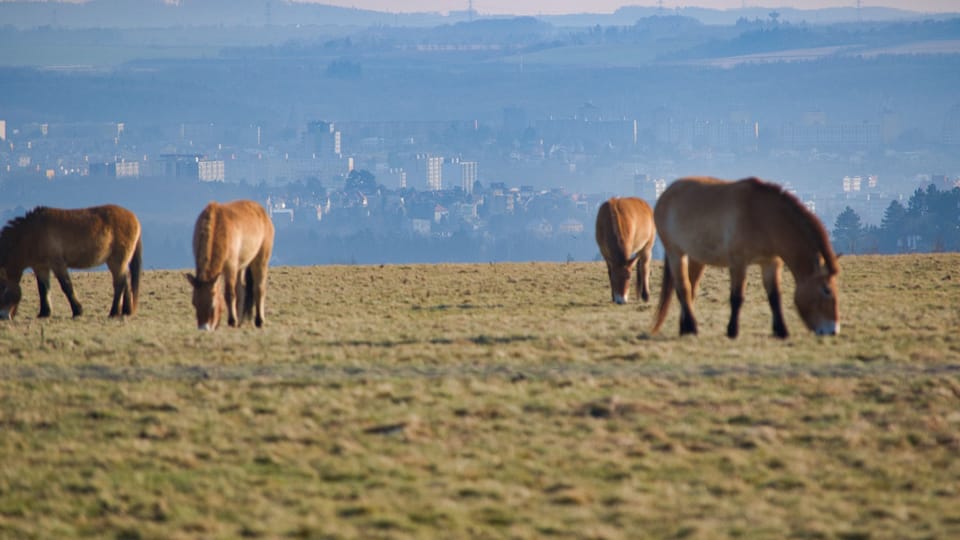
In this episode of Prague Off the Beaten Track, we take you to Dívčí hrady, where legends meet nature on a peaceful hillside above Prague. Walk through meadows, discover old Czech stories, and catch a glimpse of wild Przewalski’s horses. This quiet part of Prague offers stunning views, rich history, and an experience far from the city’s usual tourist routes.
If you’re looking for a quiet walk with panoramic views of Prague, Dívčí hrady should be on your list. Located above the Prokop Valley in Prague 5, this hillside plateau feels miles away from the tourist-packed center. But beyond its peaceful meadows, it holds stories of medieval legends, forgotten wartime history, and a small herd of wild horses roaming free.
The Story Behind the Name

The name Dívčí hrady literally means “Girls’ Castles.” It may sound romantic, but there’s no actual castle here. The name comes from the Dívčí válka, or "Girls' War" – an old Czech legend about female warriors battling men. The story was first recorded by Kosmas, the country’s earliest chronicler, in the 12th century. Later, the tale was expanded in the Dalimil Chronicle and became widely popular in the 19th century, thanks to writer Alois Jirásek.
The site itself – also known locally as Děvín – connects to this legend by name only. For most of its real history, it was simply open farmland. Still, the name has endured, giving this quiet part of Prague a sense of mystery and folklore.

From Farmland to Military Outpost

In the early 19th century, Dívčí hrady was a patchwork of small fields worked by local farmers. This changed during World War II, when the German army established an anti-aircraft post here to protect nearby factories. Remnants of military structures can still be found, both inside and outside the current horse enclosure.
After the war, agriculture returned, but under communist rule the small fields were consolidated into a single large field. Locals recall growing maize and collecting leftover corn for small animals. Children flew kites here in autumn, taking advantage of the plateau’s windy conditions. After the Velvet Revolution, the city wisely chose to protect the area as open landscape.


Preserved Nature and Fruit Tree Avenues
In 2017, the Prague city council transformed Dívčí hrady into a landscape park. Fruit trees – including pears, plums, walnuts, and the rare oskeruše – were planted in straight avenues along the paths. These orchards recall traditions from the era of Maria Theresa, when soldiers marched along tree-lined roads, using the fruit as nourishment and the trees as shade.
Today, the fruit trees serve a double purpose: they offer occasional refreshment to visitors, and act as windbreaks on the exposed hills. Together with the meadows, they create a peaceful green space ideal for walking, relaxing, and escaping the city’s noise.

Wild Horses Grazing Above Prague
Perhaps the most surprising feature of Dívčí hrady today is the small herd of Przewalski’s horses. Known in Czech as koně Převalského, they are the world’s last remaining truly wild horse species. Managed by Prague Zoo, these animals roam twenty hectares of grassland here, adapting to semi-wild conditions.

Visitors can observe the horses from simple wooden viewing platforms, although spotting them requires some luck. The best chances are in the morning or late afternoon, when the animals graze near their shelter. Unlike zoo enclosures, here the horses live more naturally, grazing on their own, moving freely, and preparing for potential future reintroduction to the wild.
In addition to the horses, the area supports diverse plant and insect life. Meadows full of clover and wildflowers attract butterflies, grasshoppers, and bees. City officials manage the land using mosaic mowing, allowing flowers to seed and insects to find shelter. Even the hay is baled and used to feed livestock elsewhere.

Dívčí hrady remains one of Prague’s hidden gems – a mix of folklore, history, and quiet nature. Whether you come for the sweeping views, the legendary name, or the sight of wild horses grazing above the city, this hillside offers a refreshing and unexpected escape, just minutes from the bustling center of Prague.
Fact Box: Dívčí hrady at a Glance
- Location: Prague 5, above Prokopské údolí
- Name Meaning: “Girls’ Castles” – inspired by medieval legends
- Legend: Linked to the mythical "Girls' War" (Dívčí válka)
- History: WWII anti-aircraft site; post-war farming
- Modern Use: Nature park with orchards and grazing wild horses
- Przewalski’s Horses: Managed by Prague Zoo, roam 20 hectares
- Best Time to Visit Horses: Morning or late afternoon
- What to Expect: Meadows, panoramic views, peace, and history
How to Get There
Metro and Bus: Anděl station (B line), bus 231 (Dívčí hrady stop), buses 125, 153, 232 (Konvářka stop). Alternatively Radlická and Jinonice stations (B line) and walk (10–15 minutes)







