Czech voters stick to familiar choices as election campaign begins
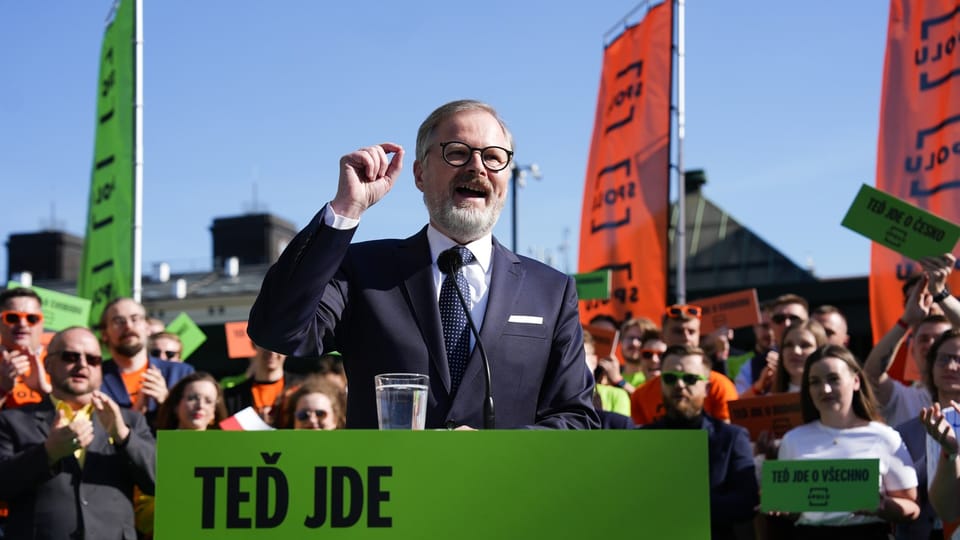
As the Czech Republic enters the early phase of its election campaign, a new NMS Market Research poll suggests that most voters are sticking with familiar political brands. Andrej Babiš’s ANO continues to lead the field, while the nationalist Freedom and Direct Democracy party (SPD) shows a gradual upward trend. At the same time, new and smaller political alliances are failing to break through the five percent threshold needed for parliamentary entry. These early results offer a snapshot of voter sentiment—but much could change as the campaign heats up.

With several months to go before the next Czech parliamentary elections, the political landscape appears surprisingly stable. According to a fresh poll conducted by NMS Market Research, the two dominant opposition forces—ANO and the Freedom and Direct Democracy party (SPD)—remain firmly positioned as the main challengers to the current governing coalition.
ANO, the populist movement led by former prime minister Andrej Babiš, continues to lead comfortably with over 30 percent support. This suggests that despite controversies and ongoing legal battles, Babiš retains a solid and loyal voter base. Analysts note that this level of stability points to a persistent dissatisfaction with the current centre-right government, which is facing criticism over inflation, energy prices, and housing affordability.

Riding a quieter but consistent wave is Tomio Okamura’s Freedom and Direct Democracy party (SPD), which has now reached around 12 percent in the latest polls. The party’s messaging—centered on national sovereignty, opposition to migration, and skepticism toward the EU—appears to be resonating with a portion of the electorate. “There is clearly an appetite for anti-establishment voices,” says Radio Prague International journalist Vít Pohanka, “and SPD is capitalizing on that more effectively than the new fringe groups.”

Indeed, not all political newcomers are enjoying the same momentum. The left-leaning Enough! (Stačilo!) alliance—which includes the Communist Party—remains stuck below the five percent threshold required to enter parliament. The same goes for Motorists for Themselves (Motoristé sobě), a party attempting to rally drivers and opponents of environmental regulations. While they have gained some media attention and visibility in street protests, their broader appeal remains limited.
“These groups represent real frustrations in society,” Pohanka noted, “but unless they broaden their platform, they’ll remain on the margins.”

The poll also reveals that support for the current governing coalition of Civic Democratic Party, TOP 09, Christian Democrats and Mayors and Independents is fragmented. None of the coalition parties individually surpasses the 20 percent mark, though together they still represent a significant share of the electorate. However, maintaining cohesion and voter confidence will be a challenge in the face of inflation and ongoing social discontent.
While these numbers provide a snapshot of current preferences, experts caution against reading too much into early polls. “We’re still in the prelude to the campaign,” Pohanka pointed out. “Events over the next few months—be they political scandals, economic shifts, or even international developments—can easily reshape the final outcome.”
As the official campaign unfolds, all eyes will be on whether these early trends hold—or whether Czech voters, known for their late-breaking decisions, will once again surprise the pollsters.