Otto Eibl on Czech elections 2025: Fiala’s legacy, Babiš’s legal woes, “threats to liberal democracy”
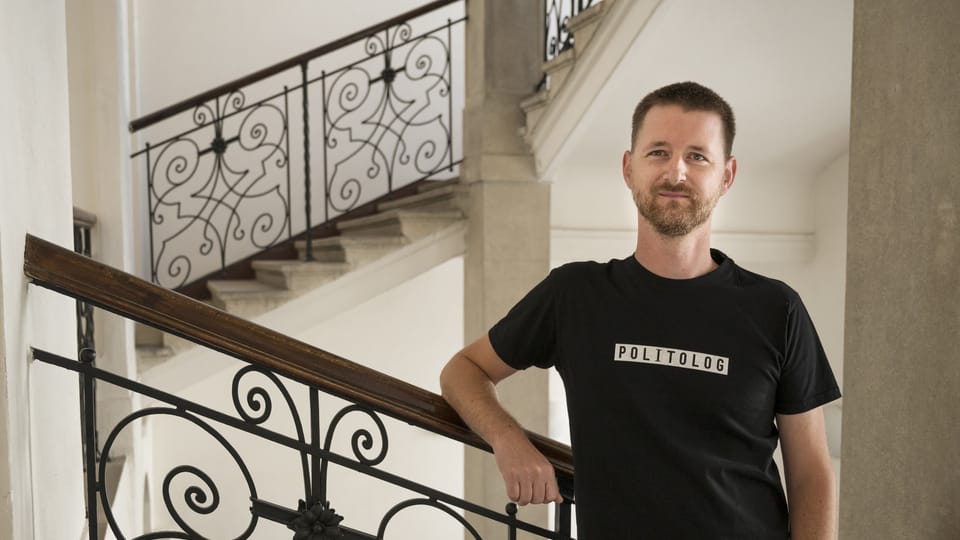
Polls suggest outgoing Czech prime minister, Petr Fiala, is one of Europe’s least popular leaders, but does his four-year term actually deserve opprobrium? And what is outlook for potential successor Andrej Babiš when it comes to forming a new government? Or could legal issues even block Mr. Babiš’s appointment? With general elections just two weeks away I discussed those questions and more with political scientist Otto Eibl of Brno’s Masaryk University.
Could you please give the current government a mark out of 10? How do you think they have preformed?
“OK. I would say they did a great job. I would rate them a solid seven, maybe eight.”
Why so high? Some people might be surprised.
“Yes, people might be surprised, because they don’t like the government.
“I believe that the public space is poisoned by narratives spread by disinformators and the opposition parties.

“But I believe the current government had to face several crises and they did quite well. They did almost everything that they wanted to do.
“They did great on foreign policy.
“The truth is they could do better in domestic policies. But to be honest they had to deal with so many issues and I think they performed quite well.”
OK, where were they weakest? You already mentioned domestic policies.
“Some people say they were weakest in their communication with the public, and I agree with that to a certain degree.
“I think that they created an impression that they are out of touch with ordinary people, and this is their biggest sin, I would say.
“Because many Czech voters got the impression that they care more about foreign policy, more about Ukraine, and they didn’t do enough to regulate energy prices, they didn’t do enough to fight migration – but there is no migration going on in the Czech Republic.

“So it’s all about impressions and managing those images in the public sphere.”
Maybe it’s not “migration”, but we do have hundreds of thousands of [Ukrainian] refugees in this country.
“Yes, you are right. And according to the latest figures we can clearly see that they bring some economic advantages to Czech society.
“So it’s only Tomio Okamura [chair of Freedom and Direct Democracy, SPD] and similar parties and politicians repeating the disinformation that they are harming Czech society, they are responsible for rising crime rates, etcetera.”
Recently I saw an international comparison which said that Petr Fiala [Civic Democrats, Spolu alliance] was one of the most unpopular politicians in the whole Europe. Why specifically is he so unpopular, if he really is?
“He became a symbol for opposition parties and for opposition voters.
“If you look at him you realise that he doesn’t represent ordinary citizens.
“He doesn’t look like us. He looks like a very noble gentleman. He always wears a suit, which for some people is a sign that he’s out of touch.
“Even Petr Fiala’s voters expect at least some emotions.
Otto Eibl
“And he supported this image. If you look at his Facebook or Instagram, you will see pictures of him wearing a suit in situations where ordinary people would wear a tracksuit.
“That’s the first thing. Second, he’s not open to emotions. When he communicates in a calm manner, he uses rational arguments.
“But even his voters expect at least some emotions.
“I think they are there now, during the campaign, but during the last four years the communication was too rational, it wasn’t a dialogue but rather a monologue, and people didn’t like it.

“Then they heard Andrej Babiš [ANO], they heard Kateřina Konečná [Communists], they heard Tomio Okamura repeating that he is one of the worst politicians ever, and they poisoned, or spoiled, the public sphere.
“They spread a ‘bad mood’, as Václav Havel used to say, and I think this bad mood is partially responsible for the evaluation of Petr Fiala.”
At the beginning of his government there was speculation that the fact it began, at least, with five parties would mean it would be very hard to rule, or that it would be a kind of mess. How did they perform in terms of five parties, for most of the term, working together?
“That is an important point. Because Petr Fiala managed to govern without scandals.
“OK, one year ago the Pirates left the government. But that was it – that was the only major conflict in the government, which is quite a tremendous performance.
“If I’m not mistaken, this is the only right-wing government that finished its term in modern Czech history.
“This is the only right-wing government that finished its term in modern Czech history.”
Otto Eibl
“So Petr Fiala is great in managing more political parties, he’s great in achieving compromise, and this is something that Czech society doesn’t see, or doesn’t want to see, and doesn’t appreciate.
“That’s a pity. I think that in the upcoming years we will remember Petr Fiala’s government with positive feelings.”
Some people reading this will say, You can’t say there were no scandals, what about for example the Bitcoin scandal? That of course involved his party, the Civic Democrats.
“Of course, you are right. But it didn’t lead to the end of the government.
“Petr Blažek left the government, he abstained from the elections, so we could say that they managed the crisis in some way.
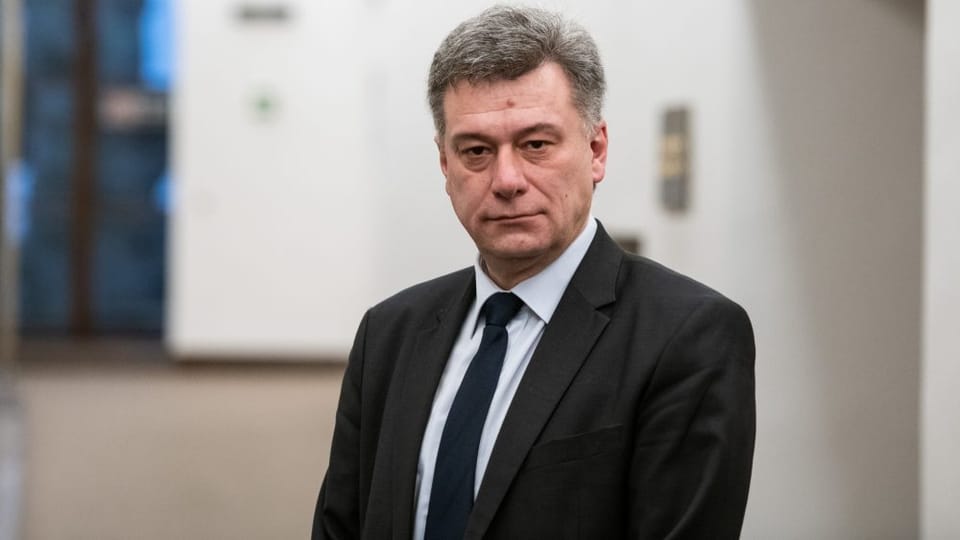
“And I’m not saying that they did everything well. I think that was a major mistake by Blažek [in his then role as justice minister] to take those Bitcoins, and the following communication was a mess. I admit that.
“But at the same time they still manage to stick together and to try to deliver their policies and fulfil their electoral pledges.
“So they were strong at sticking together. They were good in parliamentary work.
“And I didn’t mention that, but they have to face quite brutal opposition work. The opposition were quite aggressive. They were blocking the Parliament, which made things even more complicated.”
Well, the opposition I’m sure would just say they did it because they could do it. But moving on to the upcoming elections on the first weekend of October, clearly Andrej Babiš and ANO will come first. They’ve been heading the polls for a very long time. They also came first in the last elections with 29.6 percent. But what do you think is the most likely scenario after the elections, after Babiš finishes first again?

“I don’t have a crystal ball to foresee the future, but from the current figures it seems that Andrej Babiš will be able to form a government.
“The question is whether he will need coalition partners or if he will make a deal with Tomio Okamura or someone else to support a Babiš minority government.
“This will be quite important, because the composition of the government might change the direction of Czech politics.
“So we have to wait for the final results. Stačilo! [Enough!, grouping including Communists] is in a good position and will make it into the Parliament. But what about Motoristé [Motorists] and other small parties – and that could change the political landscape slightly.
“Some speculate that at least some parties from the current government will join ANO and form a government, to protect democracy. I think that would be a huge mistake.”
Otto Eibl
“So we will see how many parties will form the government and what will happen after the elections.
“Also some people speculate that at least some parties from the current government will join ANO and form a government, just to protect democracy.
“But I think that would be a huge mistake, because it would harm Czech politics for many years to come.”
When you say Tomio Okamura and his party Freedom and Direct Democracy could for example support a minority government, or clearly could be in a coalition, what do you think their asking price would be for any kind of collaboration with ANO?
“It’s hard to say. But what they want is a referendum on Czexit, they want to change the direction of foreign policy and things like that.
“They want to stop migration, but again we don’t see any migration waves in the Czech Republic. We can talk about Ukrainians, but that’s it.

“The sentiment behind all these things is that they are going to destroy and undermine the legitimacy of democratic institutions – and democracy is fragile.
“So Andrej Babiš, Tomio Okamura, Kateřina Konečná – they are ready to dismantle public media, they are ready to make changes and amendments to the institutions, to the constitution.
“And I hope they won’t be able to do that, but they represent a real threat to the current form of liberal democracy.”
Babiš would surely say, 30 percent of people support us, 10 percent of people support Okamura – this is what people want.
“Yes. He might say that, of course.
“But many people don’t understand politics and many people just hear all those slogans and soundbites and think, This is a good idea. They don’t see the consequences.
“If I were cynical I would say that most of the voters of these parties are older, but we are looking to the future so if older people don’t understand the political landscape and the future of Europe, they shouldn’t cause any harm for future generations.
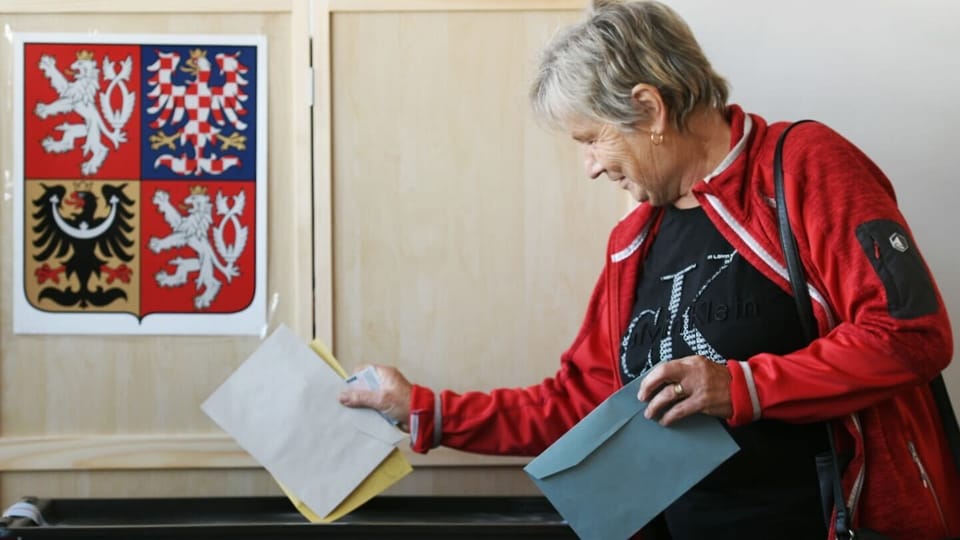
“I have the feeling that they are going to do that, because they are ready to make a trade-off between their wealth, the amount of money in their wallets, and the basic values of the democratic institutions in the Czech Republic.
“I think that’s really dangerous.
“And you are right, 30 or maybe 40 percent of people are going to vote for these for those parties. But they are going to vote against Petr Fiala – this is also an important point – and they are going to vote for dangers because they expect that these parties will give them a little bit more than the others.”

You mentioned already the Motorists. Specifically what does it mean if they get in or if they don’t, in terms of the likely post-election constellation we see?
“It is not clear where they stand. They seem to be a right-wing, conservative party, but at the same time [Motorists MEP] Filip Turek is quite a controversial figure; he’s had to face many scandals.
“We don’t exactly know what to expect from them. Because if you ask [party chair Petr] Macinka if he is ready to govern with the Communists, he says, No. If you ask Turek, he says, OK, it’s perfectly fine with me to join them and be part of a government.
“So it is quite unclear.
“But speaking of these opposition parties, I would say that they are on the softer side, just like ANO; ANO and Motoristé are more, I would say, pro-democratic or normal parties.
“But Stačilo! and the SPD are far more on the extremist spectrum.

“I forgot to mention one thing and I think it is quite important. It seems that Andrej Babiš doesn’t care about many political issues.
“He cares about the healthcare system because he is getting older and I think he likes to talk with people about health issues. He means it.
“And then he talks about economics; OK, that’s perfectly fine.
“But he doesn’t care about foreign policy that much. So he’s not dangerous in that way. He’s not going to be the one who will jeopardise Czech democracy.
“But at the same time he doesn’t care about so many issues and I fear he might be the one who opens the doors for others who will damage the Czech Republic and its image abroad.”
You mentioned a couple of times Stačilo!, headed by Kateřina Konečná. The main party in Stačilo! are the Communists [headed by KK]. At the last elections the Communists didn’t get in and many people, myself included, thought, We’ve heard for decades the Communists’ voters will die out and the party will disappear from the Chamber of Deputies. But now they are evidently coming back. How do you view the way they have made this turnaround?
“I believe that during the last elections when one million votes didn’t get represented [as they were cast on parties who failed to reach 5-percent threshold], this activated a certain part of the electorate.
“Now they are back and they are ready to fight Fiala’s government.
“And I think the electorate of this party, or coalition or whatever it is, seems to be a little bit older, but it’s not unnatural.
“Years ago some Communist voters moved to Andrej Babiš, but they saw that he wasn’t radical enough.

“And if you look at their programme and what Kateřina Konečná is saying you realise that there is a huge difference between her party, or coalition, and Andrej Babiš.
“Because Kateřina Konečná openly says, We want to leave the EU, we want to question NATO.
“And they are openly pro-Russian. They are openly spreading pro-Russian in the public sphere, which is also striking.
“The saddest part of the story is the involvement of the Social Democrats. Lubomír Zaorálek became an amplifier of Russian narratives in the Czech Republic, which is really striking.
“I ask myself how cynical are they – they just want to get to the Parliament and they are paying quite a high price.”
There’s increasing speculation that whatever happens Andrej Babiš may not be the prime minister. One reason is that he would need to sell his company Agrofert, which apparently he is unwilling to do. Also he’s in legal hot water over alleged abuse of EU subsidies. And, on the top of that, the current president is not like the previous one and is unlikely to aid Andrej Babiš. If ANO do form the next government, will Babiš be leading it, do you think?
“I think that’s his goal. But he understands that there are so many obstacles and he won’t be the one to push himself towards them.
“So if there will be a legal obstacle to becoming prime minister I think he will pass this privilege to someone else, like Karel Havlíček or maybe Alena Schillerová, I don’t know.”

So you think it’s very possible he won’t be the prime minister?
“I think he will become the prime minister.”
But how will he manage that if there are these major obstacles, including the president saying he may take legal advice that might lead him to not name Babiš?
“Yes, you are right. But other conditions must be fulfilled too.
“I believe that the president was asking under what conditions it would be OK if he wouldn’t appoint Andrej Babiš.
“And he got an answer but we don’t know what is coming, we don’t foresee the outcome of the [subsidy abuse] trial.
“We have to ask what Andrej Babiš will do with Agrofert. But also we need to realise that they may be in a position to change the legislation.
“So he doesn’t have to be the prime minister, they can change the laws and then maybe some make some amendments… I don’ t know.
“Many people think that the upcoming elections will be rigged.”
Otto Eibl
“This will be a legal battle. This will be a media battle and public battle as well.
“But if you realise that the so many people think that the upcoming elections will be rigged, I think that would be an ultimate proof, for them, that the elections and the outcome of the elections are not fair.
“Because for them it doesn’t make any sense to listen to such a debate; they want to see Andrej Babiš in the role of prime minister.
“And I saw some figures from polls and the majority of Czech voters wish Andrej Babiš to become the next prime minister.”
How soon do you think the next government will start taking shape?
“I believe that it could be really fast. There is no reason to postpone any important steps and decisions.
“And I think even now Andrej Babiš is talking behind closed doors with the others and they are getting ready for the upcoming situation.
READ ALSO
“So it depends how good and how well prepared they are and what deal they can make.
“But I believe it will be quick, at least on the part of the political parties.”
To rewind a little bit, you said that one of the current government parties, or maybe more, could go with Babiš. How likely do you think that is? Which of the parties would be more likely to say that they are saving democracy by holding their noses and getting into bed with Babiš?
“Some people mention the Civic Democrats, and other people mention STAN [Mayors].
“It’s hard to say anything about that, because in the current situation for the Civic Democrats or STAN it is not OK to form a government with Andrej Babiš.
“But we don’t know what will happen with Spolu [Together, an alliance of Civic Democrats, Mayors and Christian Democrats] after the elections.
“If they split apart and Petr Fiala loses his position and won’t be the chairman of the Civic Democrats any more, there might be forces coming to power who would be willing to enter a government.
“We don’t know what will happen with Spolu after the elections.”
Otto Eibl
“STAN will be in a similar position, but everything depends on the final outcome of the elections and their actual strength.
“And I’m not talking about the Christian Democrats and TOP 09, because it seems they are not so significant.
“But there is speculation that the Christian Democrats could be represented slightly more, because their voters are quite ready to mark their candidates and help them to get elected.
“So we will see.
“But I think if you politicians from STAN or Spolu or even the Civic Democrats today, they would say they would never go with Babiš.
“But, you know, under pressure and under the threat of Communists in the government, some parties might take special steps and do something that is not desirable for the whole society.”






