Pundit: Babiš faces tough coalition talks after decisive election win
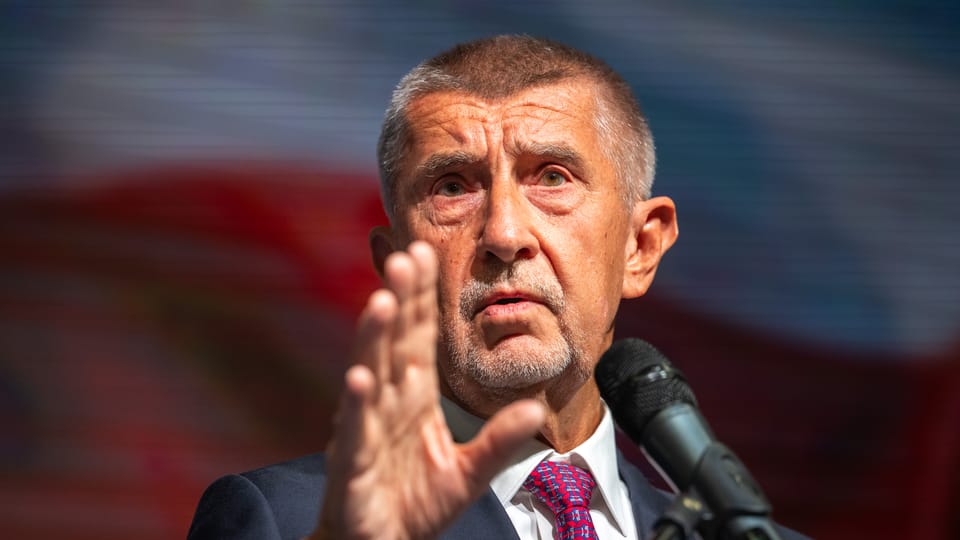
ANO leader Andrej Babiš scored a decisive victory in the Czech general elections at the weekend, but failed to secure enough support to govern alone. Now, he faces tough coalition talks with two fringe parties –the SPD and the Motorists who could help him to secure a comfortable majority of 108 seats.

Radio Prague spoke to political analyst Vladimíra Dvořáková about his chances of forming a stable government and where it could lead the country.
Professor Dvořáková, Andrej Babiš and his ANO party won a decisive victory in these general elections. How do you read the outcome? What was the message voters sent?
“Well, I think that the main message was “change”, voters really wanted to change the cabinet, to bring new people into politics, and it was a clear signal that they were not satisfied with the work of the outgoing cabinet.”
Were there any big surprises?

“There were several surprises. The first was that the Communists didn't get into the lower house of Parliament. It was somehow expected they would be able to pass the 5% threshold needed to win seats, but they did not. In general, there was a lower than expected number of votes for really extremist political parties. So from this point of view, it is a positive outcome. Still, we can see that there will probably be more illiberal tendencies in the Czech Republic. I'm not afraid that the Czech Republic will go directly the same way as Orbán in Hungary and Fico in Slovakia, but there will be more criticism of the European Union.”
Andrej Babiš will have to rely on support from two parties in order to put together a majority and form a government (either a minority government with support or a coalition government) – the SPD and the Motorists. How stable would this alliance be?
“I think that there will be an unstable situation in the Czech Republic for some period of time, maybe for the entire four years in office, because Andrej Babiš is a strong personality, a strong leader, and the parties whose support he has to gain are really more extremist than he is. Also, I think that they will have strong demands, mainly the Motorists who will probably ask for ministerial posts in the cabinet.

“Meanwhile the other extremist or radical party, the SPD party of Tomio Okomura, ran together with representatives of other political parties and they will not be able to control them. So although the 3-party alliance would have 108 votes in 200-strong lower house, it could be very unstable. I think that at the outset, probably at the end of this year or in the beginning of the New Year, there could be a vote of confidence in this coalition, but I think that in time Babiš will try to find other collaborators, from other parties in the Chamber of Deputies to support him.”
This election has increased the ratio of women in politics. A third of the new house will be made up of female MPs. How do you read that choice?

“That development is quite interesting. Voters in the Czech Republic have the chance to mark four preferential votes on the given party ticket. And it is interesting that the voters who voted for STAN (Mayors and Independents) or for the Pirates –both liberal parties - voted for women, for candidates who had little chance of entering Parliament because they were so low down on the list -and that really changed the situation. And so now the Pirates have a majority of female MPs. That is a really interesting change to be analyzed.”
How do you read the turnout, which is close to 70%?

“Yes, the turnout was very important, and I think the main reason was the polarized situation in Czech politics which really led voters to go to the polls. And this a very positive development I think, because it's very important that voters use their right to vote. Also, I think that the high turnout led to the situation that the Communists were stopped under the 5% threshold.”
Finally, the Czech general election was closely watched abroad, and there have been concerns that a Babiš administration could weaken the Czech Republic's commitment to the EU and NATO. Are those concerns justified? Are we looking at a radical change or U-turn in foreign policy?

“Well, I think that there will be some change. On the one hand, Andrej Babiš has repeatedly stated that he is not thinking about leaving the EU, that NATO is important to Czechia’s security and that Russia is the aggressor in the war with Ukraine. But there can be lower support in some matters, also because of the necessity to gain support from his coalition partners. So a referendum on membership in the EU is not probable. On the other hand, lower support for Ukraine and lower support for refugees from Ukraine, is rather probable. And we also have to think about the fact that Babiš’ ANO party and the Motorists are part of the Patriots for Europe group in the European Parliament. So, this will probably also have some impact on the next government’s policies and its position towards the EU. I don't think that, for instance, adopting the euro will be an issue for this government. I think they will be very critical to climate demands, and also there will be some criticism of liberal tendencies, such as in dealing with gender and such things.”
Related
-

Czech Parliamentary Elections 2025
At the beginning of October, Czechs will head to the polls to elect a new Chamber of Deputies, the lower house of Parliament.