Why Czech leaders quarrel about NATO summit? Their egos!

Who should represent Czechia at the upcoming NATO summit in Ankara has become the latest flashpoint in the conflict between President Petr Pavel and the government. Political commentator Martin Čaban of Seznam Zprávy told Vít Pohanka that the quarrel has little to do with defence policy itself.
The Czech government initially argued that only the Prime and Foreign Ministers should represent Czechia at the summit and opposed the president's participation. President Pavel challenged that decision before the Constitutional Court, which ruled last week that the head of state has the constitutional right to attend such meetings if he chooses. The ruling cleared the way for Pavel to join the Czech delegation, but it did little to calm the political tensions.
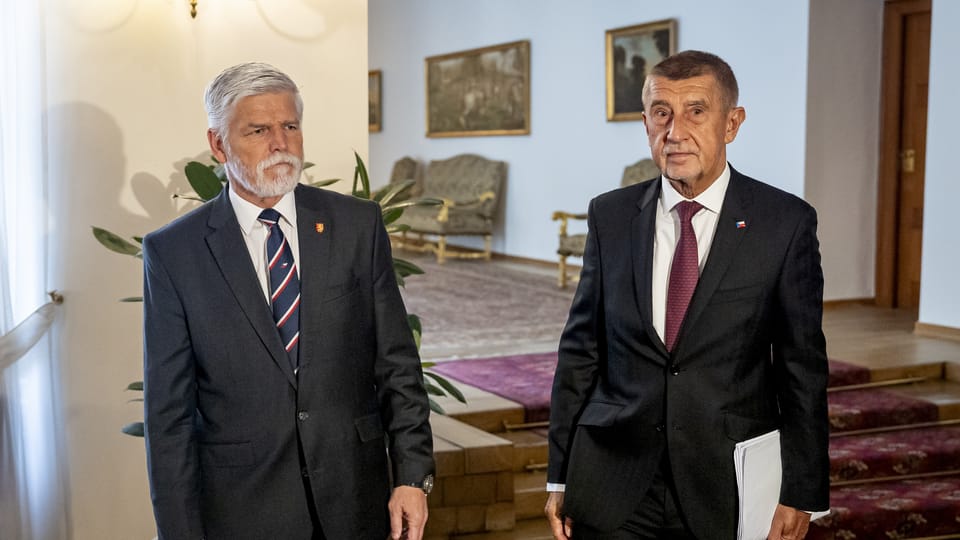
The argument over the NATO summit is only the latest chapter in a dispute that has been brewing for months. Relations between the president and the government deteriorated after Pavel refused to appoint Filip Turek of the Motorists party as environment minister. The decision angered Foreign Minister Petr Macinka, one of the leading figures of the same party, and the disagreement has since expanded well beyond the question of ministerial appointments. According to political commentator Martin Čaban of Seznam Zprávy, the Ankara dispute should therefore be seen as another stage in a much broader political conflict.
In reality, more agreement than disagreement
Despite the increasingly sharp rhetoric, Martin Čaban believes the country's leading political figures remain largely united on the substance of Czech defence and security policy. In his view, President Pavel, Prime Minister Babiš and Foreign Minister Macinka all support NATO membership, higher defence spending and the continued modernisation of the Czech armed forces.

"I really believe the basic look at the defense policy is mainly shared to a big extent between the Prime Minister and the president and even the foreign minister, Mr. Macinka. They all respect the NATO commitment to defence spending as two percent of GDP, even though we are repeatedly failing to accomplish it. To be fair, we are failing with the former government as well as we are with this one. So there is no big difference. But they are all serious about accomplishing this commitment in the near future. So they all agree on the need to build our army substantially and according to the technical NATO commitments. So there is also no dispute."
Martin Čaban acknowledges that differences exist over the pace of military modernisation and some technical aspects of defence policy. However, he argues that those disagreements are relatively minor and cannot explain the intensity of the current confrontation. In his assessment, the real source of the conflict lies elsewhere.
"Mostly about revenge and egos"
Rather than reflecting a genuine disagreement over Czechia's role within NATO, Čaban believes the dispute has become highly personal. He traces the current tensions back to the president's refusal to appoint Filip Turek and argues that emotions have increasingly overshadowed policy.
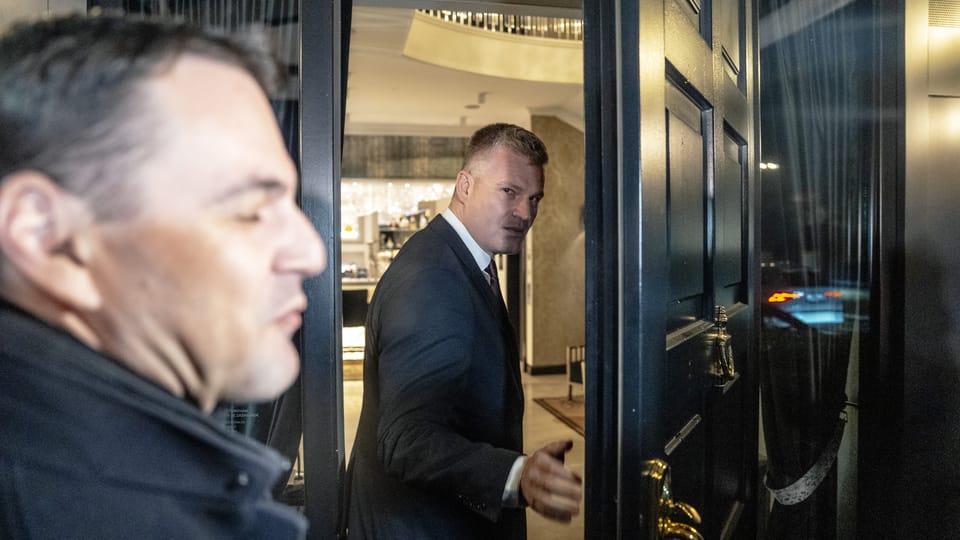
"The differences may be in some details, the pace of the changes or the technical some technical issues, but hardly on the merit itself. If nothing, I'm absolutely sure that the differences on the merit itself are not worth the conflict. Some even say war between Prime Minister and president that we are witnessing these days. So the core of the current fight is mainly in hurt egos. The Foreign Minister is angry that the president didn't appoint Mr. Turek as the Minister of the environment, and that is the main cause of the war between government and president. And it is mostly about revenge and egos."
While each side may hope the confrontation strengthens its standing among supporters, Čaban is sceptical that any of the political actors will emerge as winners. Instead, he believes the country itself is paying the highest price for the continuing dispute.
"Each one of these political actors in this tragic act is playing for his own political audience. I don't know how much it can help any of them. I can't estimate it, but I'm pretty sure that it is indeed the Czech Republic which has the most to lose in this strange game."
The political row also raises questions about how Czechia is perceived by its allies at a time when NATO is placing increasing emphasis on defence spending and military preparedness. Čaban says it is difficult to judge how much reputational damage the public dispute may cause abroad, although he hopes allies will continue to focus on Czechia's actual commitments rather than its domestic political battles.

Conflict unlikely to end after Ankara
According to Martin Čaban, NATO partners are likely to be more interested in whether Czechia fulfils its obligations than in the political theatre surrounding the summit. He believes that, if called upon, the country would continue to meet its alliance commitments regardless of the current quarrel between its political leaders.
At the same time, he sees little reason to believe that the Constitutional Court ruling or the Ankara summit itself will put an end to the dispute. On the contrary, he expects relations between the president and the government to deteriorate further because the underlying political conflict remains unresolved.
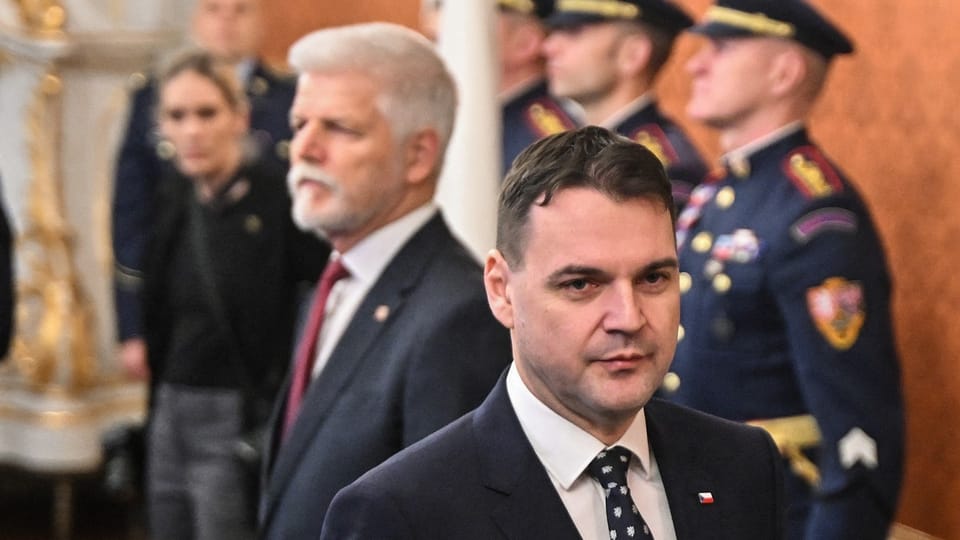
"I don't think I need a crystal ball for this. Unfortunately, the conflict will definitely not fade away. It's true. I'm afraid the current situation around the Ankara summit didn't come just out of the blue. It is just the next stage of the political conflict, which has its roots in the mentioned dispute about Mr. Turek and his appointment or non appointment. And this, let's call it Ankara dispute definitely is not the last stage of this conflict. On the contrary, I think and I'm afraid that things are right now just heating up as I see it now, not one of the parties looks ready for any form of compromise, unfortunately."
If Martin Čaban's assessment proves correct, the dispute over representation at the NATO summit will be remembered not as an isolated constitutional disagreement but as another milestone in the increasingly confrontational relationship between President Pavel and the government. Although the Constitutional Court has resolved the immediate question of who can attend the summit, the deeper political conflict appears far from over.
Related
-

Expert: NATO summit dispute linked to next presidential election
Czech politics are currently dominated by a court ruling allowing President Pavel to attend a NATO summit next month. What's at stake and what is likely to happen there?
-

Pavel warns of a shifting world order and urges Czechia to remain a reliable ally
Marking three years in office, President Petr Pavel reflected on global challenges in a Czech TV interview. RPI asked analyst Pavel Havlíček what stood out to him.
-

Pavel prioritises security in speech to MPs amid defence spending debate
President Petr Pavel made his first address to the current lower house of the Czech Parliament on Tuesday, making a pointed call for an increase in defence spending.