Who owns Czech football?
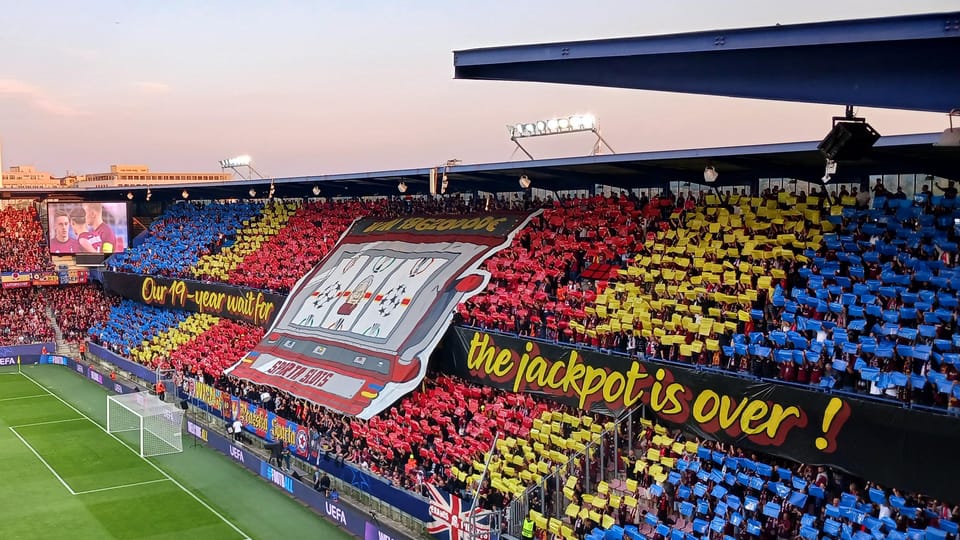
Trying to decipher the motives behind owning a football club is like putting together a colorful puzzle. Some clubs are owned by very wealthy businessmen, others by cities or even a foreign company. But they rarely, if ever make money and are definitely not a safe investment. So what motivates some rich Czechs to buy them? Football expert and editor-in-chief of Canal Plus Sport, Jiří Hošek, offers some insights.
A status symbol and a powerhouse
According to Hošek, a football club is more than just a sports organization. "It is, in many ways, a local, regional, or even municipal powerhouse. Owning a club grants a certain status in society and sends a message to politicians, fellow entrepreneurs, and competitors," he explains.

This motivation is not unique to Czechia. Many club owners have a strong emotional bond with their teams, often rooted in family history. However, unlike in larger European markets, Czech club ownership is rarely about financial gain. With the exception of Sparta Prague, Slavia Prague, and Viktoria Plzeň, clubs are not expected to generate large profits, whether in the short or long term.
Weak fan influence in Czechia

Hošek points out that fan influence over club management is much weaker in Czechia compared to countries like Germany or England. In Germany, clubs are largely owned by their supporters, creating a sense of "football socialism." Similarly, in England, backlash against the rece nt European Super League project forced even the biggest clubs to abandon their plans.
"In Czechia, however, club owners can essentially do whatever they want. There is little accountability to supporters, and decisions are driven by the owners' personal priorities, whether commercial or sporting," says Hošek.
A financially sustainable model?
Many Czech clubs operate at a financial loss, raising questions about long-term sustainability. UEFA's financial fair play rules impose some constraints, but the regulations are far stricter in England, where owners cannot inject unlimited funds without corresponding revenue.

In Czechia, Hošek explains, "Owners can treat clubs as a hobby, absorbing heavy financial losses year after year. Many simply continue injecting hundreds of millions of crowns to keep their teams afloat."
One positive trend, however, is the increasing quality of the domestic league. Czech clubs like Sparta and Slavia Prague have recently transferred players to top European clubs for record fees, sometimes exceeding 10 million euros. If this trend continues, club ownership may become more appealing from a business perspective.
Billionaire owners: a blessing or a curse?
Some of Czechia’s biggest clubs are now owned by prominent billionaires, such as Daniel Křetinský (Sparta Prague) and Pavel Tykač (Slavia Prague). Their involvement is a double-edged sword.

"On the one hand, they have the resources to elevate their clubs and bring them closer to European standards," says Hošek. "On the other hand, they face little accountability from fans, meaning they can essentially run the club however they like."
Owning a football club also enhances these billionaires' social and business status. Křetinský, for example, is a co-owner of West Ham United, and his reputation in the UK is largely tied to his role in football rather than his business empire.
The future of Czech club ownership
Hošek believes the ownership landscape could shift if global sports conglomerates begin acquiring Czech clubs. Some multinational groups already own teams across multiple continents, and a Czech club could be a logical next step.
However, he also expects club ownership in Czechia to retain its traditional elements: passion, sacrifice, and last-minute rescues. "Over the past 30 years, we’ve seen many instances where someone steps in at the last moment, claiming to be the club’s savior," he notes.

One fundamental question remains: is a club run as a sporting institution or a business investment? Additionally, what actually constitutes a club’s value? Many Czech club owners do not own the stadiums where their teams play, as these are often owned by cities or regional authorities.
In some cases, buying a club means acquiring not just the team but also its youth academy, training grounds, and additional infrastructure. In others, the only assets are player contracts and a league license. Understanding these nuances is key to grasping the reality of football club ownership in Czechia.