Prague takes a “wait and see” approach to Trump’s Peace Council

Czech Foreign Minister Petr Macinka is travelling to Washington to attend the inaugural meeting of U.S. President Donald Trump’s newly established Peace Council. Prague has been invited to join the initiative, but for now is participating only as an observer while it monitors the positions of its EU and NATO partners.
“Better to be there than not”
Supporters of the visit argue that participation gives Czechia valuable access and information at a time when global diplomacy is rapidly evolving. Radek Vondráček, chairman of the parliamentary Foreign Affairs Committee, says the observer role reflects a pragmatic approach.

“We want information first-hand. This is also an expression of our relationship with the United States, which is a key ally. And frankly — it’s better to be there than not. At the same time, the rational position is to attend as an observer and not jump to quick conclusions.”
According to Vondráček, the new body could develop into a highly influential diplomatic forum.
“If you look at the nature of this Peace Council, it could become a club of invited countries — a highly influential club searching for solutions that traditional international organisations sometimes struggle to deliver.”
He also points to the Middle East as one of the key issues likely to dominate discussions.
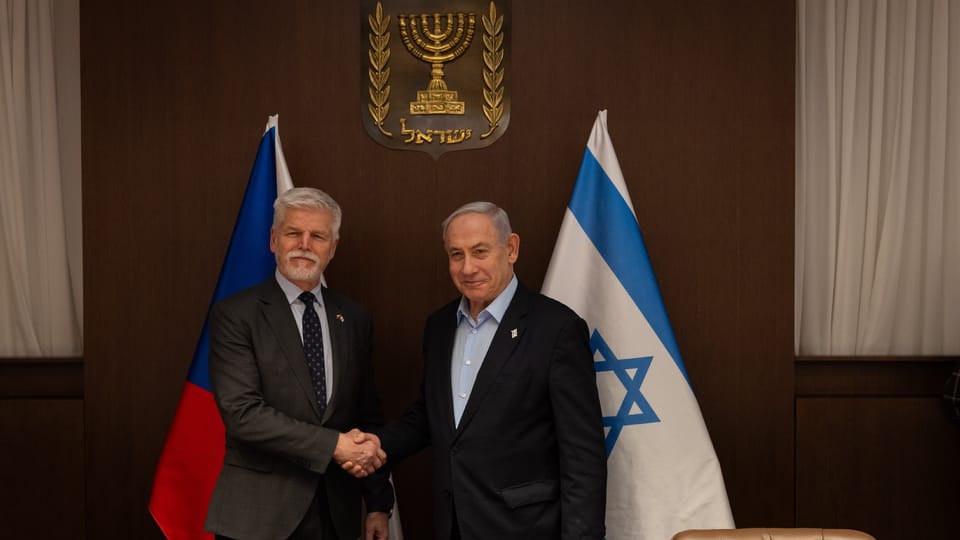
“Even though the Middle East may seem far away, stability there is part of our security policy. Reducing tensions and preventing new migration waves is in the interest of Central Europe — and that is also indirectly part of what is being discussed in Washington.”
Czechia has long been a strong supporter of Israel, including during the war in Gaza, a conflict that is expected to be high on the agenda of the new initiative.
A cautious view from former diplomats
Others are a little more more sceptical about the long-term importance of the Peace Council. Former Foreign Minister Tomáš Petříček says the initiative should be followed carefully — but not overestimated.
“This is not really a new international institution. It’s more like a club — or even a label that reflects the current direction of U.S. foreign policy.”
He sees the council as part of a broader trend toward new and more flexible diplomatic formats.

“We are seeing more flexible formats in international relations — networks of countries working around major powers to solve specific problems. The key question is what the outcomes will be. But I don’t believe this Peace Council could replace institutions like the United Nations.”
Macinka’s visit to Washington will also include meetings with U.S. officials and think-tank representatives before he travels on to New York for United Nations events marking the fourth anniversary of Russia’s invasion of Ukraine. For now, Czechia — like several other European partners — is choosing a cautious approach: to be present, to observe, and to wait before making any long-term commitments.