“We could not rely on international law”: Matviichuk speaks to Czechs about justice in Ukraine
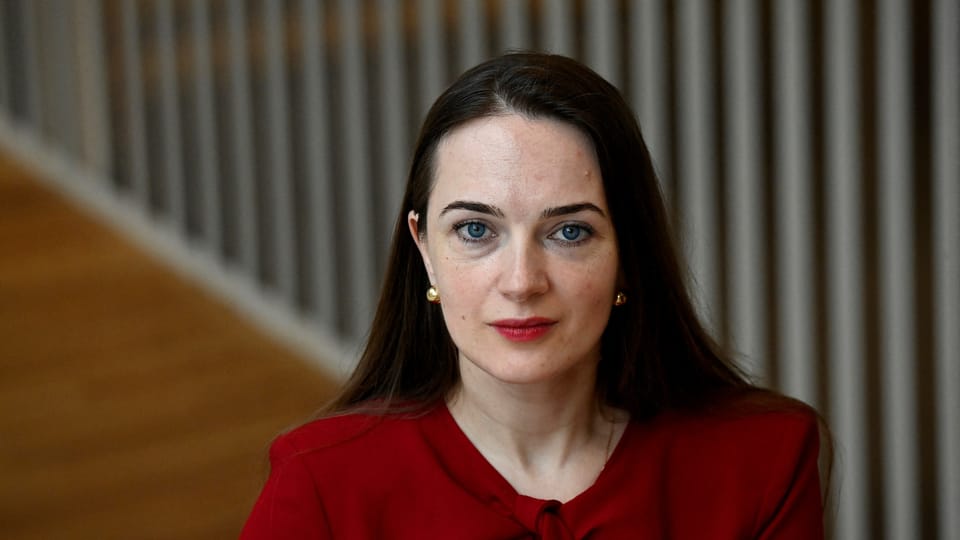
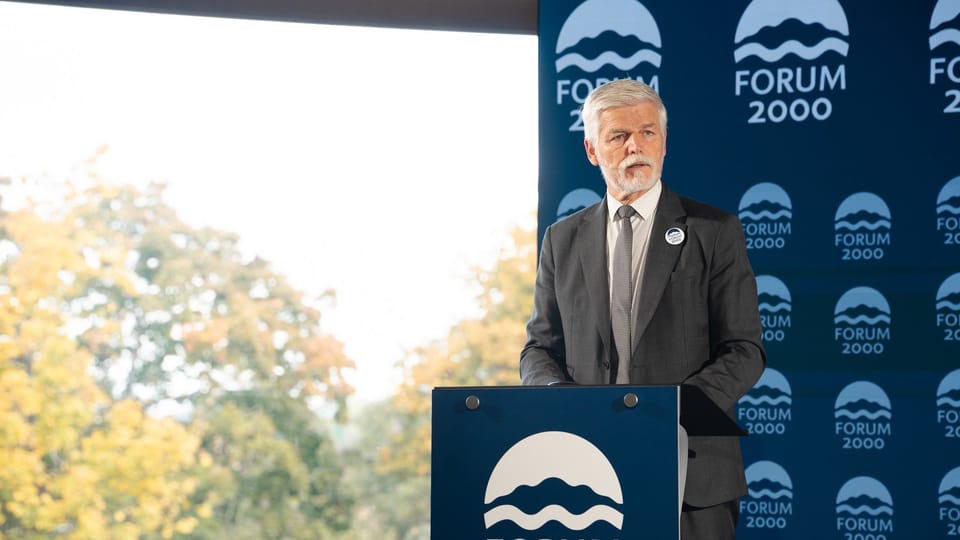
Prominent human rights lawyer and head of Ukraine’s Center for Civil Liberties Oleksandra Matviichuk came to Prague in October to speak at Forum 2000. In her words, her mission was to bring the human dimension of the war in Ukraine back to Czech audiences, but also anyone who would listen, because she felt it had been lost. With experience documenting Russian atrocities in Ukraine, she shares what led her to become a human rights lawyer, the limitations of international institutions, and the resilience of ordinary people.
First, I want to start with a bit of background. You’re a very prominent voice in human rights advocacy. Could you briefly talk about how you got into this role? You’ve been doing it for some time, so maybe looking back, what initially led you to this work?
“When I was a child studying in school, I became acquainted with Soviet dissidents. Suddenly, I found myself surrounded by fantastic people, people who said what they thought and did what they said. They had the bravery to raise their voices against the entire totalitarian Soviet machine.
“The dissident movements were severely repressed. Some people were killed, others imprisoned or sent to forced psychiatric treatment. Their careers were destroyed, their families separated, but they never gave up. As a child, I was so inspired by their example that I decided to study law and continue their fight for freedom and human dignity.”
So I imagine also that it was communal, were there others who were also inspired, or was it more unique to you?
“I come from an ordinary family. My family loved me, and that’s the most important thing a child can have. But we lived in poverty, like many others after the collapse of the Soviet Union. My family wanted the best for me, so they were happy that I chose to become a lawyer, but they were disappointed when they realized I wanted to become a lawyer to defend human rights.”
Speaking about that instability, the region has long faced instability, especially since the annexation of Crimea, the war in Donbas, and now the full-scale war. Around that time, you also began leading the Center for Civil Liberties. Could you talk about some of the work your organization focuses on with your leading of the organization?
“It really depends on the period. I founded the Center for Civil Liberties after graduating from the Law Faculty of the National University in 2007. At first, we focused on education, because I’ve always believed it’s not enough to simply adopt good laws or build formal institutions; society’s values ultimately prevail. That is why education is a long-term strategy for shaping those values.

“But because I was born not in Switzerland, but in Ukraine, we’ve faced many other challenges. We became known for our ability to involve ordinary people in human rights work.
“For example, during the Revolution of Dignity, I launched a civic initiative called Euromaidan SOS. We brought up several thousands of people to provide legal and other assistance to persecuted protesters across the country. We worked 24 hours a day. And every day hundreds of people who were beaten, arrested, tortured, or falsely accused came to us for help. We handled over 16,000 requests for help during those mass protests, only because so many people joined the initiative.
“We were also the first human rights organization to send mobile groups when the war began. It’s important to remind people that this war didn’t start in February 2022, but in February 2014, with the occupation of Crimea and parts of the eastern regions of Ukraine. Since then, we’ve been documenting war crimes for more than 12 years.”
And now, after the full-scale invasion, the number of cases must be overwhelming. How does your organization handle such volume?
“It’s a good question because we’re facing an enormous number of crimes. Russia uses war crimes as a method of warfare; it weaponizes human suffering to try to break people’s resistance and occupy the country.
“In order to be effective, we united with dozens of organizations across Ukraine, creating a national network of local documenters that covers the whole country, including occupied territories. Working together, we have documented more than 89,000 war crimes over the last three years of the full-scale war.”
So, you expect a lot more cases that (1) have gone unreported and (2) will be reported on in the future that the organization can tackle.
“Absolutely. In the 21st century, we have much better tools to document war crimes, communicate with people under occupation, and identify perpetrators, far better than what existed during the Balkan wars 30 years ago. But still, this war has turned people into numbers, and we are fighting to give those people back their names.”
You’ve mentioned working with international partners. How do those collaborations function in practice?
“We collect information from different sources, analyze open data, and verify it carefully. Russians often record their own crimes, posting videos of torture in closed Telegram channels or even publicly. We also send mobile groups into occupied territories. For example, after Russian troops briefly occupied parts of the Kyiv region, they left behind extensive destruction. We’re still gathering testimonies from victims and witnesses there.

“When incidents happen, like the Russian missile strike on Kyiv’s largest children’s hospital, we can immediately send our documenters to the site to take photos, record video, and speak with survivors. But documenting is only the first step. We don’t have the capacity to investigate all 89,000 cases ourselves. That’s why we share our findings with national and international institutions, such as the International Criminal Court, the UN Human Rights Council Committee, the OSCE, and Ukraine’s Office of the Prosecutor General.”
How helpful are these international collaborations? Have you seen the UN and other international bodies as important collaborators?
“There’s something bigger than that. I don’t know how historians will describe this period, but we are living through the collapse of the world order based on the UN Charter and international law. Not just for Ukraine, but for everyone. For the Czech Republic as well, unfortunately.
“We’ve lived under the illusion that we could rely on international law, but that illusion is gone. The UN system was created after the Second World War to prevent wars. It’s outdated, slow, and lacks capacity. We urgently need a cardinal reform of the UN system.”
And would you say there are a lot of voices pushing for reform? For outside observers, we find it incredibly frustrating. And you having to work with that system must be even more frustrating. So, how many voices are pushing for reform?
“I don’t see such voices. There’s a very simple explanation. Authoritarian leaders have no interest in reforming the UN; they want to rule by force, not by law. Many countries are under authoritarian regimes, so they are not interested.

“As for democratic countries, their leaders are focused on short-term electoral cycles. People in places like the Czech Republic don’t demand UN reform; I don’t believe they are asking to reform the UN. They care, like everyone else, about prices, tariffs, jobs. And that’s natural. Because democratic leaders want to be successful, they focus on short-term perspectives. But we have to do something about the long-term problems because global instability will grow. If this ‘global fire’ keeps spreading, it will eventually affect everyone: prices, jobs, everything.”
That must take a great emotional toll, especially after so many years of documenting such suffering. Could you share what that’s like on a personal level for you and your team?
“Let me explain with one story. This is a story about a 10-year-old boy named Ilya from Mariupol. When Russian forces besieged the city, they didn’t allow the International Committee of the Red Cross to open safe corridors to evacuate civilians. Ilya and his mother, like other people in Mariupol, were hiding in the basement of their building. They melted snow and cooked over small fires.
“When supplies ran out, they tried to leave but came under heavy shelling. His mother was hit in the head, and Ilya’s legs were badly injured. With her last strength, his mother carried him to a friend’s apartment. There was no medical assistance because prior to this Russians had already destroyed the hospitals. So, in this friend’s apartment, they laid together on a couch, holding each other for hours, until his mother died and froze in his arms.
“I’m a professional lawyer with long experience in this field, but I can never get used to stories like that. They break me.”
You’re here at Forum 2000. Is that the message you’re bringing to the international community this year?
“Yes. I have a special task here, one I’ve tried to fulfill in the United States, Germany, France, and elsewhere. I want to return the human dimension back into the political discussion about this war, because it’s been lost.
“In recent months, we hear a lot about natural resources, geopolitical interests, or Putin’s vision of history, but not about the people. And that’s not okay. We still don’t know what will happen to over 20,000 Ukrainian children abducted and deported to Russia, or to the tens of thousands of civilians tortured and detained in occupied territories. Millions live under occupation with no way to protect their rights, freedom, lives, property, or loved ones. We must put the human story back at the center.”
And what message would you share with young people, future lawyers or human rights activists?
“I would tell them the truth. It’s incredibly difficult to be a human rights lawyer when the law itself doesn’t work, when there’s no legal instrument to stop Russia’s atrocities. But what I know from my own experience is that when you can’t rely on legal institutions or the international system, you can still rely on people.
“We have become used to thinking in categories of states and international institutions but ordinary people have far more power than they realize. They can change history. Our future isn’t predetermined, it’s still being written. That means we still have a chance to fight for the kind of future we want for ourselves and our children.
“As Václav Havel said [paraphrased], ‘Hope is not the confidence that everything will be fine; hope is a deep understanding that all of our efforts have deep meaning.’ ”