Czechast: the first known Czechs were the Celts!

Celtic symbols and festivals remain surprisingly popular in Czechia. But how much did 19th-century historians really know about the ancient Boii who once lived here? František Palacký’s classic history offers a revealing glimpse into early efforts to understand the region’s pre-Slavic past.

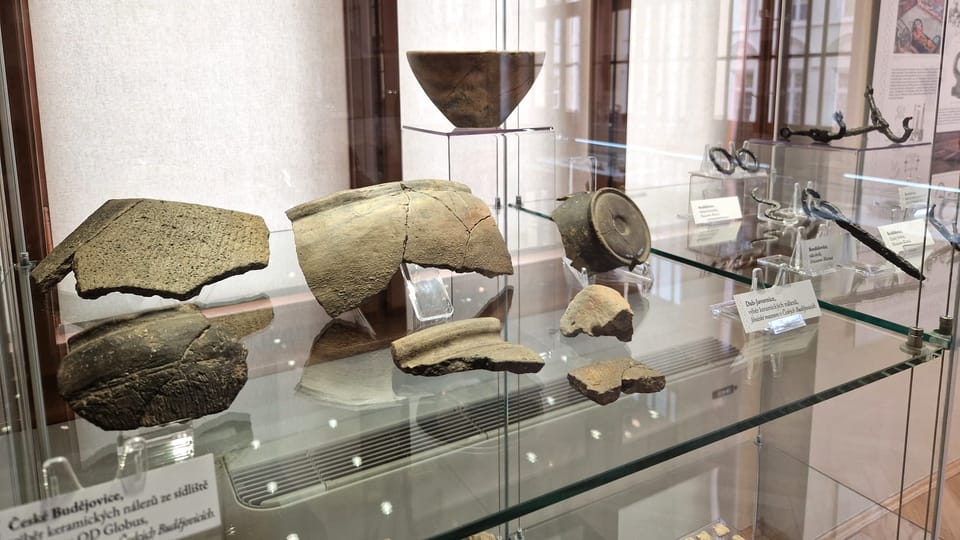
The journey begins in the rolling hills near Nasavrky, where a reconstructed Celtic oppidum now stands. Built on a verified archaeological site, it marks what was once a fortified settlement of the Boii tribe. Similar sites exist throughout Czechia, and some place names—especially rivers—may even have Celtic origins, though this remains uncertain.
To explore these questions, attention turns to František Palacký’s History of the Czech Nation in Bohemia and Moravia. Written before the rise of modern archaeology, Palacký’s work relied heavily on linguistic evidence and the writings of ancient historians. Yet his portrayal of the Celts—specifically the Boii—is surprisingly detailed and thoughtful.

“Which nations and what kind of peoples lived in Bohemia from the beginning of time is not only difficult but impossible to determine,” Palacký admits early on. “It was not until later that general history turned its attention to these lands, inaccessible to its earliest caretakers, the Greeks and Romans.”
Palacký also challenges early Czech legends that ignore any pre-Slavic past. Referring to chronicler Cosmas, he writes:
“Our oldest domestic chronicler… neither knew nor suspected that any other nation had ever lived in our land before the Czech people.”
Instead, Palacký points to linguistic clues embedded in geography:
“Names like Říp, Vltava, Labe (Elbe), and others… clearly reveal through their sound that they originate from foreign, non-Slavic languages and peoples who held this land long before the Czechs.”
According to Palacký, the Boii were the first clearly identifiable group to inhabit Bohemia.
“The first clear ray of historical light falling on the Czech land reaches only to the beginning of the fourth century before the birth of Christ. It is said that at that time, the Boii… penetrated from present-day France across the Rhine and the Hercynian forests… and settled there.”

Unlike the image of “barbarians” often associated with early tribes, Palacký presents the Boii as advanced and organized:
“Having permanent settlements, they engaged in agriculture, livestock farming, crafts, and trade; they practiced literary arts, using Greek script, and were knowledgeable in various sciences at least by the time of Gaius Julius Caesar.”
He highlights their societal structure:
“The Celts in Bohemia established legally organized communities with a clear social hierarchy dividing people into classes with unequal civic rights.”
Central to their culture were the Druids, who held both religious and judicial authority:
“They were the custodians of all knowledge and learning in the nation, wielding great power as judges who punished disobedient individuals by exclusion from religious ceremonies… the most disgraceful punishment in their culture.”
Palacký also explores the political and economic power of the nobility:
“The nobility… possessing landed estates, gained greater power by acting as leaders of the common people and, along with their servants, called solduri, conducted military operations.”
Even the role of common citizens was carefully defined:
“The common people were free but could not enjoy civic rights unless they undertook the protection of powerful nobles, to whom they paid taxes and provided services.”

What makes all of this even more remarkable is that Palacký wrote long before archaeological finds confirmed many of the structures, practices, and artifacts of Celtic life in Czechia. His work shows how much could be reconstructed from classical texts and linguistic analysis alone.
Beyond the historical insight, the story invites reflection on how national identity is formed—not just through politics or recent memory, but through deep cultural associations with the ancient past. The continued fascination with the Celts may speak to a longing for mystery, for a proud origin story, or perhaps even for a civilization that seems distant enough to romanticize.
Link to one of the downloadable copies of Palacky's History of the Czech Nation in Bohemia and Moravia at Czech National Library website: https://ndk.cz/view/uuid:1789c940-dffe-11e3-b110-005056827e51?page=uuid:8ffa11e0-fd23-11e3-9806-005056825209
about programme
Czechast, Radio Prague International
Czechast is a regular RPI podcast about Czech and Moravian culture, history, and economy.






