Czech researchers test microrobots for reproductive health

Researchers at CEITEC, part of Brno University of Technology, are developing tiny magnetic particles to capture microplastics and tackle bacterial biofilms in the female reproductive system. Laboratory tests suggest the particles can collect contaminants and be retrieved afterwards using a magnetic tip. The team is also exploring other possible medical applications, although clinical use remains years away.
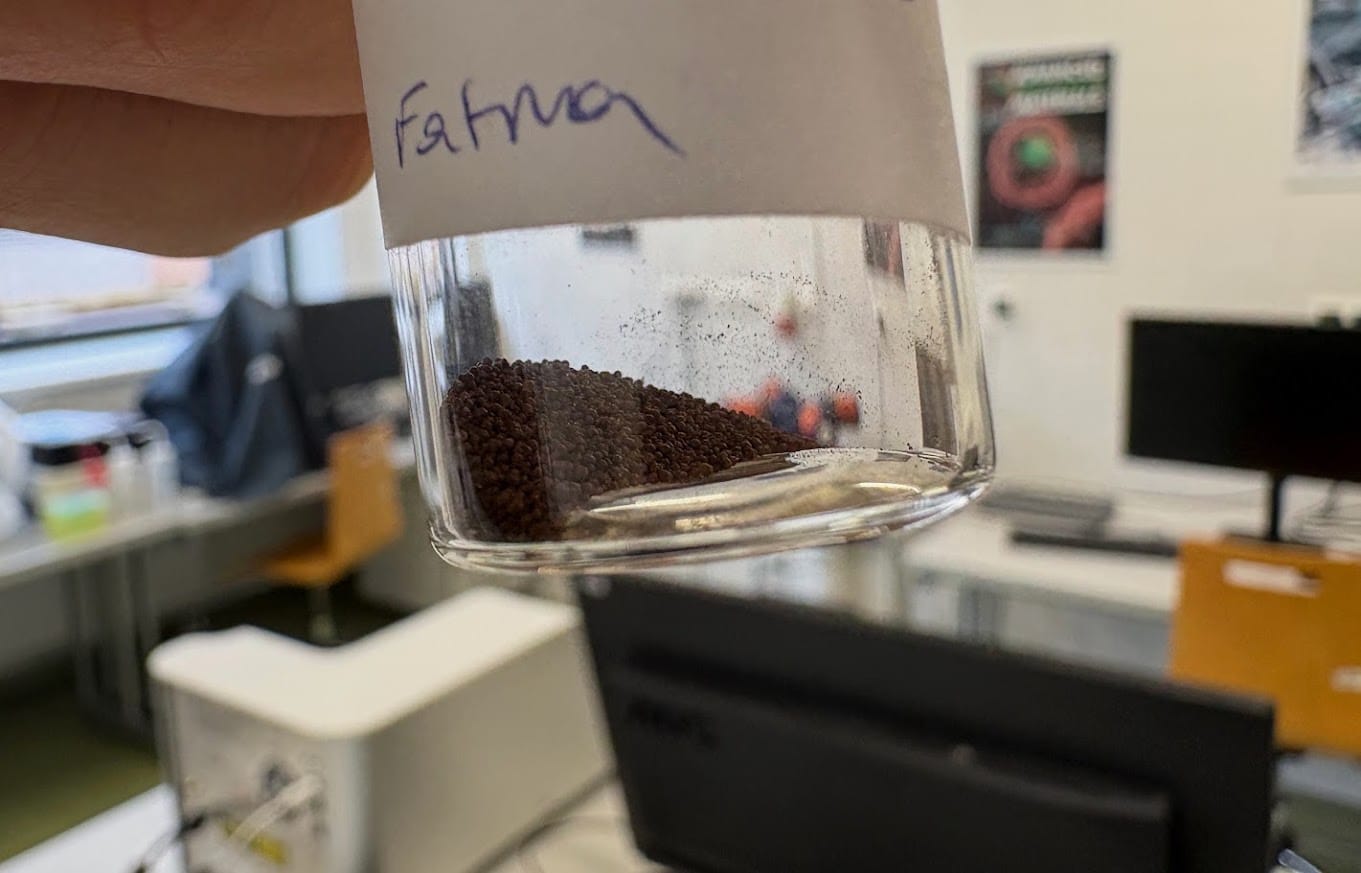
A small vial of brown powder offers little hint of the task its contents are designed to perform. Inside are tiny particles that researchers at CEITEC in Brno can guide using a magnetic field, with the aim of collecting microplastics and tackling harmful bacteria.
Fatma Merve Yurtsever, a postdoctoral researcher in the Future Energy and Innovation Laboratory led by Professor Martin Pumera, is developing the microrobots for potential use in the female reproductive system. “We would like to address this challenge by using microrobots to capture these microplastics,” she explains.
Guided by magnets
The particles have a soft polymer scaffold containing iron oxide, which allows them to respond to an external magnetic field. Their surface coating is designed to capture plastic fragments and act against bacteria. The team is also targeting biofilms, layers of bacteria that can contribute to infections.

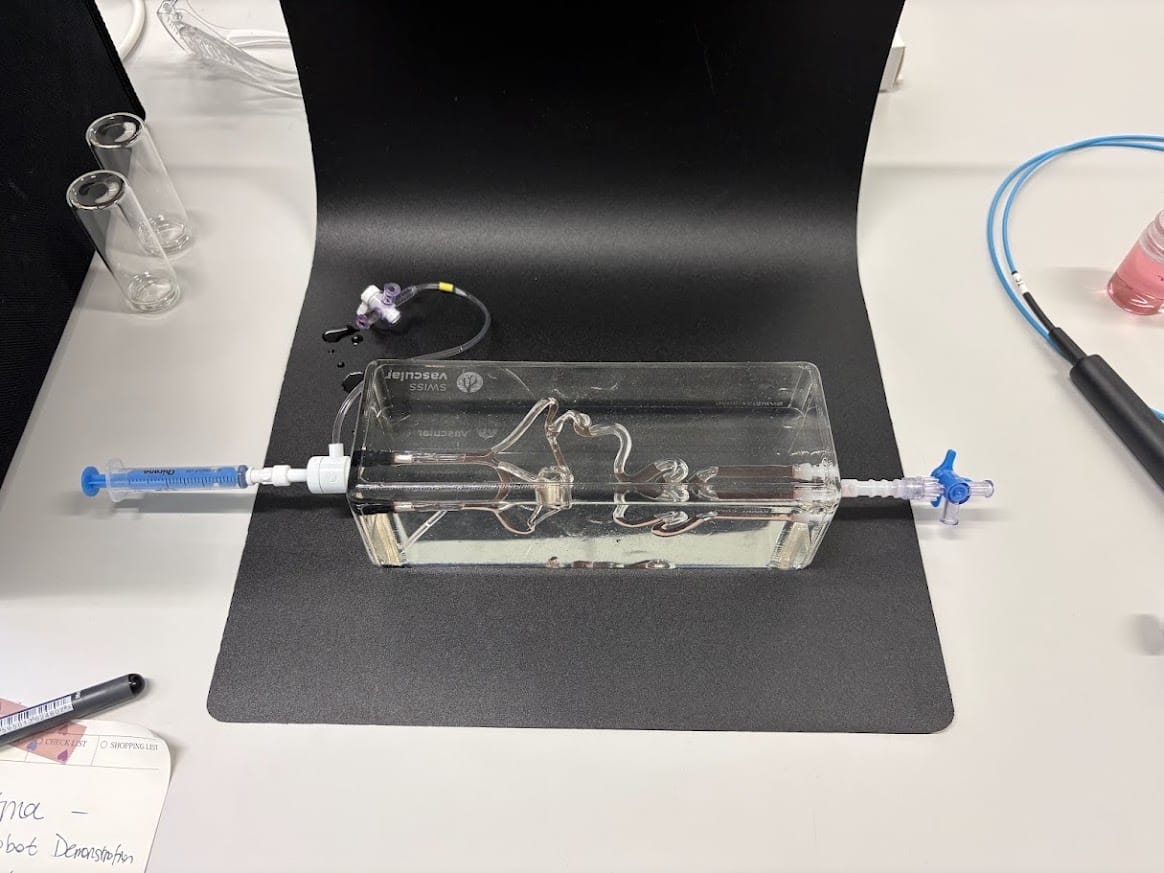
For a laboratory demonstration, Fatma Merve Yurtsever puts on safety glasses and turns to a tube containing liquid that mimics conditions in the reproductive tract. “We have a tube which represents the female reproductive system,” she says. “And we injected the microrobots inside this tube.”
Moving a magnet alongside the glass allows the researchers to guide the particles inside. In the published study, the team reports capturing up to 80 percent of microplastics in a saline solution and 50 percent in simulated vaginal fluid. The Nanorobots Research Center
Retrieving the microrobots after they have completed their task is another part of the design. “We can collect these microrobots using the external magnetic tip,” Fatma Merve Yurtsever explains. A possible future approach would use a catheter with a magnetic tip to collect the particles and remove them together with the material they have captured.
Possible medical uses beyond microplastics
Her colleague Senthil Nathan Natarajan, also a postdoctoral researcher in the laboratory, sees wider possibilities for directing microrobots to a particular part of the body, for example a tumour. “We can drive the microrobots to that particular diseased place,” he says.

One potential application would be delivering medicine directly to an infection, concentrating its action where it is needed. The group is also exploring approaches involving the eyes and the digestive system.
For the work on removing microplastics, however, the results so far come from experiments outside living animals. Fatma Merve Yurtsever stresses that the research remains at the laboratory stage. “We are doing everything in in vitro conditions, which means we are not using any live animals,” she says.
The experiments include cell studies. Further testing will be needed to establish how safely and effectively the technology works before it can be used in patients. Clinical use is still years away.