MoMA series shines light on Czechoslovak normalisation-era cinema

The Czechoslovak New Wave of the 1960s is the most celebrated period of cinema in this part of the world. But a film series now running at MoMA in New York – Shadows of the Spring – highlights what came next: the movies of the post-Soviet invasion normalisation period. I spoke to its curator Christopher Small.
“When I moved to Prague and would ask people which Czechoslovak films I should see, the kind of ‘official responses’ I would receive were from the ‘60s. Because people wanted to give me the right answers.
“But then usually as the conversation would progress, I would start to realise that the films that people were actually watching on a regular basis, that they had the most sentimental attachment to, were from the ‘70s and ‘80s.
“And yet if I asked them about the ‘70s and ‘80s as a historical period the answer would invariably be that it was a period of stasis, propaganda, trashy films, et cetera.
“So this tension always struck me as interesting somehow.
“Then over time, as I saw more and more Czech films, I started to wonder if there could be a series that tries to defend that as a historical period.
“The Czech National Film Archive and the Slovak Film Institute have done incredible work restoring films from this period, which I cannot take credit for – they are the ones who do that.
“But what this series tries to do is to define the borders of a historical period, and tries to establish the main characters of that period.”
If we accept that a lot of the films of the ‘70s and ‘80s were quite good, did the directors, like Menzel or Chytilová, still have to change their approach in that period?

“Yes. And what they had to do is often take films much more on assignment. They had less control over the script process. And the [previous] freedom of creative structure, in these kind of autonomous creative units, was no longer the case.
“But what you see in the best of those films is their artistic sensibility coming through despite the restrictions placed upon them.
“If you think of the ‘60s as this kind of bouncing, rollicking, modernist period, then in the ‘70s and ‘80s it's much more staid, prosaic, settled in some way.
“Maybe it speaks to my personal taste, but that's also what I like in many of these films.

“For example, František Vláčil is a good example; we have one film by him in the series.
“Vláčil is known for huge historical epics, like Marketa Lazarová or The Valley of the Bees: films with these huge, widescreen frames in black and white, rich historical detail, et cetera.
“But the film that we're showing here in New York, which is from 1982, Serpent's Poison, is a small drama about alcoholism. Most of the shots are handheld, in small spaces, there are few actors – so the absolute opposite.
“There's something appealing to me about that collision of sensibilities.”
The films in Shadows of the Spring are from 1971 to 1986. Did you choose all of them on their artistic merit, or were some selected as kind of historical curiosities, perhaps?
“I like all the films, but when building a programme like this, there are a few times where you have to tip your hat to one thing or another.
“But I've realised since arriving in New York that the program can essentially be divided into two.
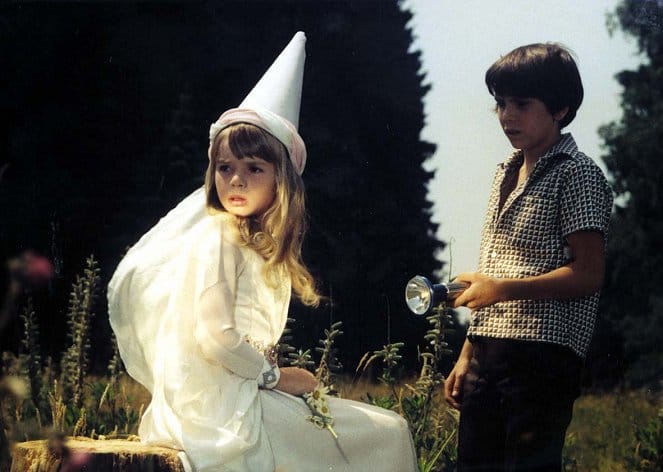
“Half of these films are very well known in Czechia and Slovakia. I'm thinking of films like Long Live Ghosts, Ať žijí duchové!, or Perinbaba, The Feather Fairy, from Slovakia.
“There are extremely well known films which I'm hoping that the series will kind of re-contextualise and put into a historical frame.
“Then the other half is films that nobody knows, ones that even film-loving Czechs, I think, would scratch their heads at.

“There's films like The Downfall of the Secluded Farm Berhof, or also Serpent's Poison – this Vlácil film is not very well known today. Or a film like Another Love, made in Slovakia in 1985.
“So the series puts these two things together.
“And for films like Perinbaba or Long Live Ghosts – which maybe people saw as kids on TV around Christmastime – seeing them here hopefully gives them a new context.”
Have you got a favourite film of all the selections, or one that means most to you?
“Yes, there are a few that I love very much.
“Also we have welcomed Magda Vášáryová, who's one of my favorite stars ever, here in New York, and spending these days with Mrs. Vášáryová is so wonderful.

“I was lucky enough that she decided to see Postřižiny, Cutting it Short, for the second time in her life and the first time in 20 years. So seeing Postřižiny sitting next to her was very special. So that, I can say, has kind of been a favourite experience.
“But then also, the last film in the series, chronologically, which we showed last night [Sunday Night] in New York, is Tichá radosť, Silent Joy.
“It was made in Slovakia in 1985–1986, with Magda Vášáryová in one of her last roles before she left film and started her diplomatic career.

“And that was one of the films that helped me conceptualize the series originally, because it's this essentially realist feminist drama set in Bratislava. A very slow, sad film that has a special place in my heart.
“But she didn't want to see that. We came in just to see the ending, because when they shot the film, she and Dušan Hanák couldn't agree on which ending to use.
“So she wanted to see which ending he chose.”