UNESCO-listed Ride of the Kings tradition knows its new king

The annual Ride of the Kings has a new king: ten-year-old Marek Dacík. Continuing a remarkable family legacy, Marek is the 100th historically documented king in the town of Vlčnov.
The annual Ride of the Kings is one of the most celebrated folk customs in the Czech Republic. It is practiced in just four villages in South Moravia and for local residents the festival symbolizes a link to their roots and commitment to preserving an important cultural tradition.
At the start of the year local boys are tasked with finding a suitable candidate to be “the king”, typically a boy aged 9 to 12, and also chose a royal entourage of boys who will accompany him on the ride, which traditionally takes place in May.
The new “king” is introduced at a Costume Ball held on the last day of January and “providing the monarch” is considered a huge privilege for local families who vie for the honour and often spend large amounts of money on costumes for the ensuing ceremony.
On Saturday, the crown for 2026 was handed over to ten-year-old Marek Dacík by his brother František, who was king last year.
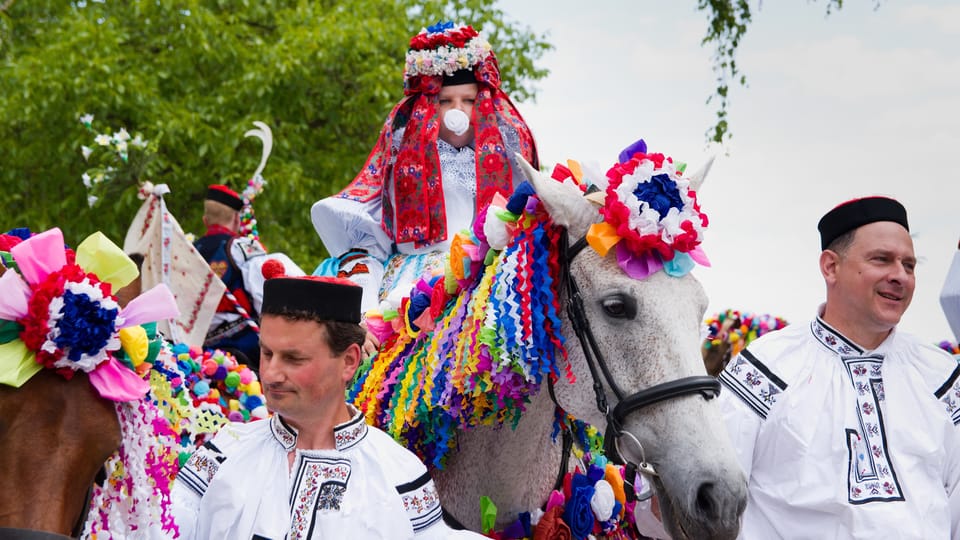
The tradition of kings in the Dacík family goes back to their father, who was king exactly 30 years ago and who wants both his boys to experience the honour.
“He will be the hundredth king that has been historically documented. For the first time in history, a brother will also pass the rule of the kings on to another brother,” the proud father beamed.
The actual Ride of the Kings through Vlčnov will take place on May 31.
The Ride of the Kings tradition refers to the flight of Hungarian King Matthias Corvinus from Czech King George of Poděbrady in the 15th century. The ride is headed by a boy portraying the monarch, dressed as a girl in the regional folk costume, with his face partially covered, and a rose between his lips so that he is not tempted to speak and give himself away.
Apart from Vlčnov, it occasionally takes place in another three villages in the South Moravian region, Hluk, Kunovice, and Skoronice.
The colourful ceremony was added to UNESCO’s list of intangible cultural heritage in 2011.






