Top 4 real-life locations of Kingdom Come: Deliverance II
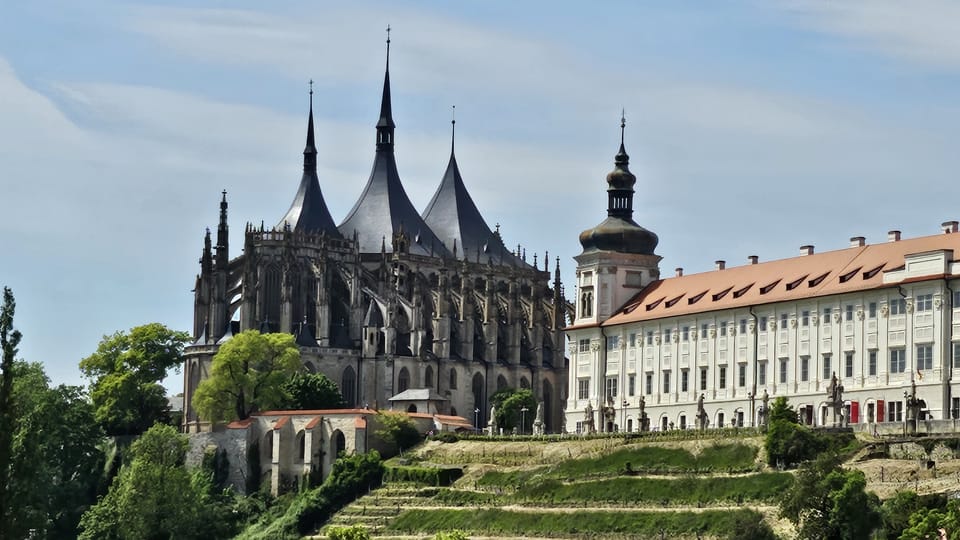
With the success of Kingdom Come: Deliverance II, there has been a substantial increase in tourists visiting the Czech city of Kutná Hora, located just one hour outside of Prague by train. But which locations stand out? Members of our team visited the city to speak with tour guide Lara Emig about the uniquely well-rendered buildings featured in the hit game.
The first game centers around towns like Rataje, Sázava, Talmberk, and other areas nearby. The map is relatively small compared to the second installment. In fact, in Kingdom Come: Deliverance II, the map is twice the size of the first game and the heart of the game is set right in Kutná Hora.

Before we get to the list of sites to visit, for those who might not know, our tour guide, Lara Emig, summarized Kingdom Come: Deliverance II and the period of history it so beautifully restored to modern audiences.
“Kingdom Come: Deliverance II is a video game developed by the Czech studio Warhorse Studios. It was created by a team of developers from the Czech Republic, including not only game designers but also historians and art historians. In fact, many of my old classmates from my master’s degree, who are now working at Warhorse as medievalists, contributed by researching how people looked and lived back in the day.

“Both the first and second parts of the game follow the protagonist Henry on his adventures. Born the son of a blacksmith, Henry’s story begins when his parents are killed in the raid on Skalice. He sets out on a mission to avenge their deaths, which leads him through many different adventures.
“The game is an open-world role-playing game, and while you primarily play as Henry, the second part allows you to control other characters as well. There are different missions, side quests, and fun games like participating in tournaments or searching for silver coins, for example.”
Speaking of the heart of the city, our first stop is arguably the most frequented part of Kutná Hora, namely St. Barbara’s Cathedral.

1. St. Barbara’s Cathedral

Even if you haven’t played the games, you are most likely familiar with St. Barbara’s Cathedral, as it is one of the most popular Gothic churches in central Europe. And that is no surprise to any of its visitors, as the cathedral boasts unique features, adding to the traditional vaulted ceilings, frescoes, and the view over parts of the city.
Construction of the cathedral began in 1388 and it took over 500 years to complete. Over the centuries, architects added both Gothic and Baroque elements to the building.
The guide touched on how things looked like back at the turn of the 15th century:

“This is how things looked back in 1403. At the start of the 15th century, Rataje was actually owned by a man named Wenceslas—not King Wenceslas IV, who ruled at the time, but another member of the royal family and part of the king’s council. He was the one who gave Rataje the Gothic appearance it still retains today.
“Roughly 80 years later, in the 1480s, Matthias Rejsek, who also contributed to the construction of St. Barbara’s Church, left his mark on Rataje as well. He helped further shape its distinctive Gothic architecture, adding to the character of the city that we still see today.”

2. The Italian Court
The Italian Court is another highlight for any visitor of the city. It was originally a royal residence and mint, playing a crucial part in the economic strength of medieval Bohemia. Presently, you can visit museums at the site that feature some of this minting history, including a coin exhibition, as the Court was the central mint for the Kingdom of Bohemia in the 14th century. The Prague groschen was minted here, for example.

The rendition of the game is nearly identical to the way it would look in real life at the time, according to our guide. She recollected that many historians were advisors to the game developers:
“I would say it’s very realistic because a lot of historians and art historians contributed to the creation of this game. Many medievalists and historical reenactors have also endorsed it, which speaks to its authenticity. Of course, there are some minor details, such as the position of certain balconies in the Italian Court, that were adjusted slightly for better gameplay. These changes were made to enhance the fun and playability. But overall, I’d definitely say it’s very realistic.”

3. The Ossuary (Bone Church) and Cistercian Monastery in Sedlec
This church and cemetery will certainly stand out to any visitor of the city. It is “decorated” with the bones of over 40,000 people, all arranged into pyramid-like structures and chandeliers.

While there, you can also visit the Cathedral of the Assumption of Our Lady and Saint John the Baptist, which is also a blend of Gothic and Baroque and one of the oldest Cistercian churches in Bohemia.
Both of these are in Sedlec, which is a suburb of Kutná Hora and is also the oldest part of the settlement. At its genesis, a monastic community lived there. The guide touched on some of the important Christian elements in the construction of the monastery:
“The monastery was built in 1633. It is 179 meters long and has 33 windows, if you dare to count them. These 33 windows represent the 33 years of Jesus' life, making it a very symbolic feature. The Jesuit monastery was in use until 1773, after which it was turned into military barracks under different regimes, from the Habsburgs to the Czech Communist era. In 1997, the use of the barracks came to an end, and it was transformed into the Gallery of Contemporary Art. It's called GASK (Gallery of the Central Bohemian Region).”
4. St. James’ Church
Lastly, we bring you to the defining feature of the Kutná Hora skyline. Its singular tall tower adds to the medieval feel of the city. It stems from the 14th century and was originally meant to have twin towers, but only one was ever completed. Built in Gothic style, it is subtle in comparison with St. Barbara’s Cathedral.
But its simplicity is also its strength. Where St. Barbara wows visitors for its Baroque-Gothic combinations and well-preserved wall paintings, St. James’ Church allows the eye to rest and contemplate the history of this once jewel of medieval Bohemia. We should expect no less from the oldest preserved building in the city.

To experience Lara Emig's interactive tour Uncover the Mintmaster’s Secret, visit Kutná Hora Guide Services, developed in cooperation with KCD Live.
Related
-

Central Bohemia Region
A region without a regional city, surrounding Prague on all sides. A trip to Kutná Hora and Karlštejn are a must-see. Birthplace of Antonín Dvořák.
-

Discover Czechia's regions
With its rich history, stunning architecture and beautiful skyline Prague attracts visitors from all over the world. But there is much more to see in Czechia.






