Remembering Pavel Jungwirth, the world-class chemist whose excitement was infectious

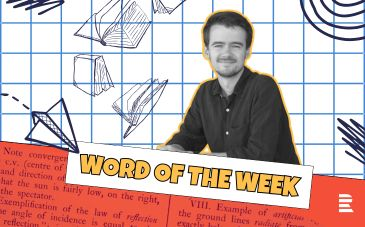
Pavel Jungwirth, one of the country's leading chemists and an internationally respected researcher, has died at the age of 60. Renowned for his pioneering research, he was equally admired for his exceptional teaching and science communication.
Pavel Jungwirth was a world-leading expert in theoretical chemistry. His research into the behaviour of molecules and ions helped advance fields ranging from biology and medicine to the chemical industry and drug development.
Alongside his scientific work, he became one of the country's best-known science communicators, admired for his ability to make complex ideas accessible and inspire young researchers.

Jan Konvalinka, director of the Institute of Organic Chemistry and Biochemistry of the Czech Academy of Sciences and a long-time friend and colleague of Jungwirth, says his work reached far beyond the boundaries of chemistry.
“In terms of scientific achievement, he was an expert in molecular mechanisms and molecular modelling. He was one of the theoreticians able to describe interactions between molecules and ions, and the mechanisms of their reactions.
“It looks very technical and theoretical, but because of his approaches, he was able to gain insight into such diverse phenomena as the photochemical smog over Los Angeles, the mechanism of hearing, or the delivery of drugs into human cells.
“He was able to find the mathematical tools to describe and model those events.”
But those who knew Jungwirth say his scientific achievements were only part of his legacy. Konvalinka says it was his curiosity, enthusiasm and ability to inspire others that truly set him apart.
“The most important thing about Pavel was that he was really a fountain of inspiration and ideas. He was the kind of person who would not follow a line of research because other people found it important or relevant. He would pursue it because he was interested in it. And his excitement was infectious. He was able to inspire the people around him.

“He was a brilliant teacher and a great communicator of science. He was able to explain things in such a way that everyone felt they understood what he was saying. He inspired other people through his enthusiasm, his energy and his enjoyment of science. That was probably what he was better at than anyone else I can think of.”
Jungwirth was also known for asking deceptively simple scientific questions that others overlooked, such as why heavy water tastes sweet or why sodium explodes when dropped into water. Konvalinka says that curiosity often led to important scientific discoveries.
“His approach to science was playful. He was having fun and he really played with things.
“Putting sodium into water is something that most boys would do when they were young because it explodes, and it’s fun. Everyone thought it was a phenomenon that had been known for ages, so what could possibly be interesting about it?

“But he realised there was no theoretical description of it. He first developed the theoretical explanation and then experimentally proved the molecular mechanism behind the explosion.”
Jungwirth spent most of his career at the Institute of Organic Chemistry and Biochemistry, where he led one of its research groups. Konvalinka says that, for all those reasons, he will be impossible to replace.
“At our institute, we never try to replace people who leave. We simply need to find someone else, and that's very difficult. Personally, he cannot be replaced.
“We will do our best to help his colleagues and his students complete their work and support them as much as we can. But we will need to find someone as original as he was and as inspiring as he was. That's going to be very, very difficult.”