Pundit: Public media funding fight major test for Babiš government

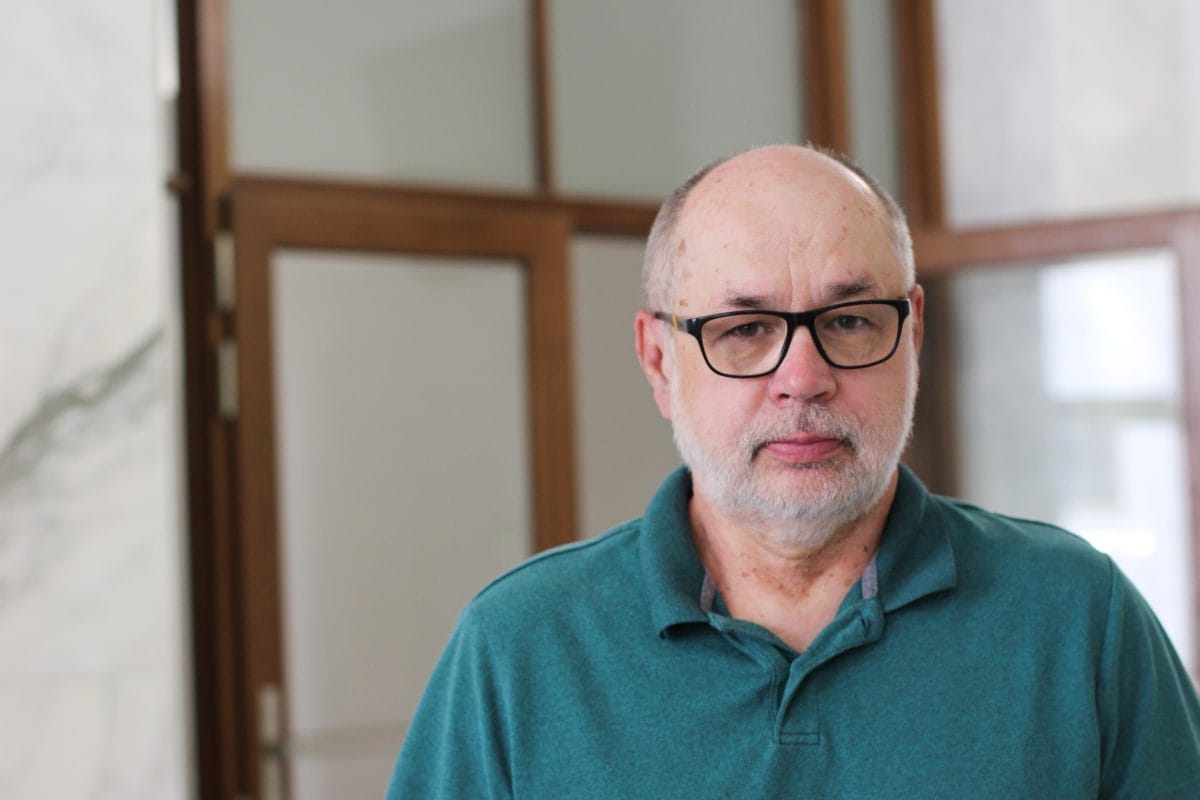
The Babiš government’s fast-tracking of legislation to end license fees and fund Czech Television and Czech Radio from the state budget – including a first reading vote passed in the early hours of Saturday – sparked protests at the weekend. I discussed the situation with political scientist Jiří Pehe.
The parties in the ANO-led government pledged to end license fees and then the public voted for them. Now they’re pushing that through, albeit in a relatively unusual manner. The opposition and a section of the public are up in arms, but can’t the government legitimately claim that they’re merely fulfilling their promises, and using tactics to do so?
“Well, the government put this in its programme, but at least one of the government parties, the Motorists, didn’t have anything like that in their own programme before the elections.
“So yes, the government decided when it was formed that they would try to push this through, but at the same time they cannot really claim legitimately that they have the majority of Czech society.”
They could claim that, though, because people voted for them.
“That is certainly true, but we don’t really know how many people in the government camp really support this – there are no opinion polls.
“Plus we know that the Motorists didn’t promise anything like that to their voters.

“The fact that the leadership of the Motorists decided, in order to be part of the government, that they will support this, doesn’t mean that they really represent the wish or the will of their voters.
“So I think it’s very dubious to claim that they are doing this in the name of the majority of Czech society.
“My guess is that the majority of Czech society does not support this, because it is absolutely unnecessary and it [paying license fees] is something that people are used to.
“Plus, of course, a lot of people are beginning to realise only now that moving the financing of the public media into the state budget will simply mean increasing taxes or paying for it by deepening the country’s debt.”
Vít Rakušan of the Mayors said that the vote that was set for Saturday morning at 4:36 was the beginning of the end for the Babiš government. Obviously that’s opposition rhetoric, but is the situation a major test for the coalition?
“Yes, I think it is a major test. Because it’s not only a matter of the way that this draft law was put on the agenda of the lower chamber, but also the way it was done.
“Even under the previous government, of Petr Fiala, there were instances in which the majority would force a vote and say it would be voted on at a specific time, but this time there was no time for a real discussion.

“So I think that this law, if it ever passes, will have big problems at the Constitutional Court.
“And as far as the timing of all this is concerned, I really think that in particular the Freedom and Direct Democracy party of Tomio Okamura, which pushed this, did not really consider that to do something like this only three weeks before November 17, the state holiday commemorating the fight for freedom and democracy, is really not very wise.
“It’s like a slap in the face to civil society.
“So I’m not at all surprised that Andrej Babiš, when he was leaving this morning for Algeria, was really worried about what’s going to happen on November 17.”
Also before then, on November 15, a protest is being held at Letná in Prague, where in the past we’ve seen hundreds of thousands of people protesting against Babiš. As you say, this year’s November 17 could be relatively intense too. Do you think that Babiš minds these protests? Or does he seem them as a price to pay for being in power and pushing through certain policies?
“I think that Babiš does mind these protests. He is known not to like them, because it gives him a bad name internationally.
“And of course one of the reasons why he wants to be prime minister is that he wants to play a role on the international scene.
“This does not make him look good on the international scene.
“The protest on November 15, which is expected to be attended by as many as 300,000 people, or maybe more, will certainly be shown on international media.
“Politicians in Europe will take note, and this is something that Babiš does not like.
“Plus, in my opinion, Babiš does not really have a vested interest in changing the way that the Czech public media are financed; this is not his top priority.
“After the protests in the last six months, he might have realised that this is not something that serves him well.

“But he wants to say in power and is pushed by the two smaller parties, especially Okamura’s party, which after the electoral fiasco two weeks ago decided that it has to show that it’s doing something that was part of its programme.
“But it is very telling that Babiš himself didn’t take part in Parliament proceedings [in the early hours of Saturday] – he stayed at home.
“I think he is maybe reserving for himself some kind of role in which he may want to mediate, or come up with proposals that will make him look like someone who does not want to go for this hard option.”