Two Czech cities, two different worlds: Ostrava and Český Krumlov

In this episode of Czechast, we travel to opposite corners of Czechia to explore two cities with very different histories and identities. Ostrava, once a powerhouse of coal mining and heavy industry, has to reinvent itself, while picturesque Český Krumlov has struggled with the consequences of mass tourism. Singer-songwriter Jaromír Nohavica, artist Jana Pešková and radio documentary maker Ivan Studený share their personal memories and explain what makes these places special to them.
Ostrava: coal, steel and poetry

Ostrava, near the Polish border, was built on coal mining and heavy industry. For generations, its identity was shaped by mines, steelworks and factory chimneys. But following the collapse of communism in 1989, the mines closed, thousands lost their jobs, and the city had to reinvent itself.
Singer-songwriter and poet Jaromír Nohavica, who grew up in Ostrava, remembers a city of striking contrasts: enormous industrial complexes surrounded by green hills and forests. "Here, people have always had to work to achieve that significance — we literally had to mine our status from the ground," he says.

Today, former industrial sites such as Dolní Vítkovice have become cultural landmarks. But for Nohavica, Ostrava is much more than its industrial heritage. His family has lived there for generations, and the city's sometimes rough, contradictory character continues to inspire his music.
Český Krumlov: the price of beauty
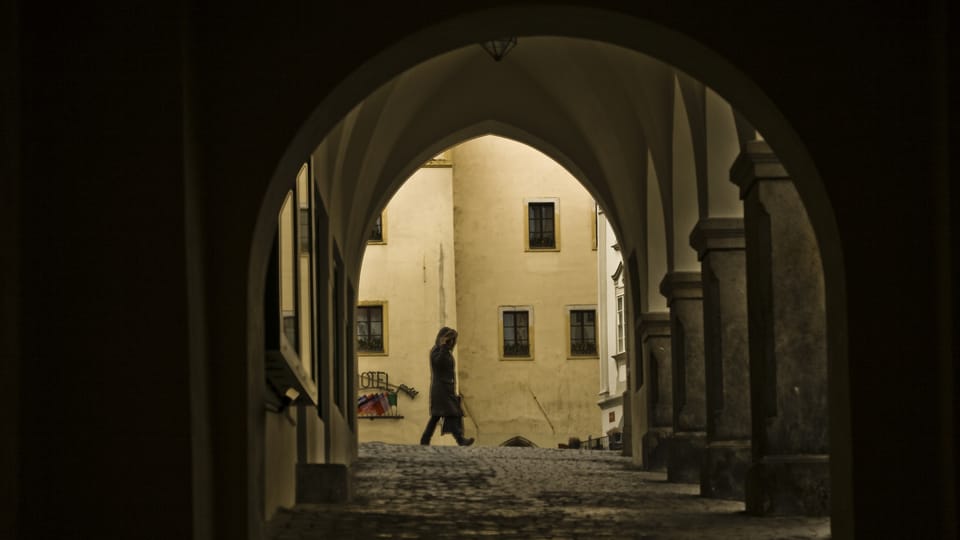
At the opposite end of the country lies Český Krumlov, famous for its beautifully preserved historic centre, castle and winding streets above the Vltava River. Unlike Ostrava, its challenge has not been the disappearance of industry but the overwhelming success of tourism. In a report recorded during the COVID-19 pandemic, when the usually crowded streets were almost empty, two local residents reflected on how their hometown had changed.

Artist Jana Pešková remembers the neglected but atmospheric Český Krumlov of her childhood in the 1960s. She regrets that restoration and commercialization have erased some of its distinctive character and pushed residents away from the historic centre. Radio documentary maker Ivan Studený recalls the spontaneous community life of the 1990s, before mass tourism transformed the town. Yet he remains optimistic. "I think that the genius loci of Český Krumlov is indestructible come what may," he says.

Two cities, two identities

Ostrava has learned to embrace its industrial past. Český Krumlov continues to balance its historic beauty with the needs of the people who live there. Their histories could hardly be more different. But as Jaromír Nohavica, Jana Pešková and Ivan Studený remind us, the true identity of a city lies not simply in its buildings or monuments, but in the memories and experiences of its people.
Listen to this episode of Czechast, the podcast in English about all things Czech, for two very personal portraits of two very different Czech cities.

about programme
Czechast, Radio Prague International
Czechast is a regular RPI podcast about Czech and Moravian culture, history, and economy.