Crystal Valley Week turns Liberec into a showcase of Bohemian glass

Crystal chandeliers, monumental glass sculptures, jewellery, fashion shows and even a tram transformed into a kind of Orient Express. For six days, the northern Czech city of Liberec is celebrating a material that has shaped this region for centuries. Crystal Valley Week brings contemporary glass art into galleries, workshops and public spaces across the city, turning Liberec into a showcase for the past and present of Czech glassmaking.

Crystal Valley Week brings contemporary glass art into galleries, workshops and public spaces across the city. Its director Jan Šmíd says the ambition is to turn Liberec itself into a showcase for Czech glassmaking.
“It is the biggest glass festival in the Czech Republic and with its scope and diversity, it's unique in the world. It takes place in Liberec, which is part of the unique Crystal region, and visitors can explore about thirty-six locations, over eighty events, exhibitions, workshops, open studios and fashion shows. It turns the city into a big open-air glass gallery.”
Seven centuries of glassmaking

The festival may be only five years old, but the industry it celebrates has roots reaching back around seven centuries. Glassmaking developed in the mountainous regions of northern Bohemia partly because early glassmakers found there exactly what they needed. Extensive forests supplied wood to heat their furnaces and potash for the glass itself, while streams provided water power for grinding and polishing.
By the seventeenth century, Bohemian glassmakers had developed an exceptionally clear and hard potash-lime glass. It proved particularly suitable for cutting and engraving and became known internationally as Bohemian crystal. It differed both from the delicate glass associated with Venice and from the lead crystal developed in England. Its hardness allowed Bohemian craftsmen to decorate it with increasingly elaborate designs. By the first half of the eighteenth century, Bohemia had become one of the world's leading exporters of decorative glass.
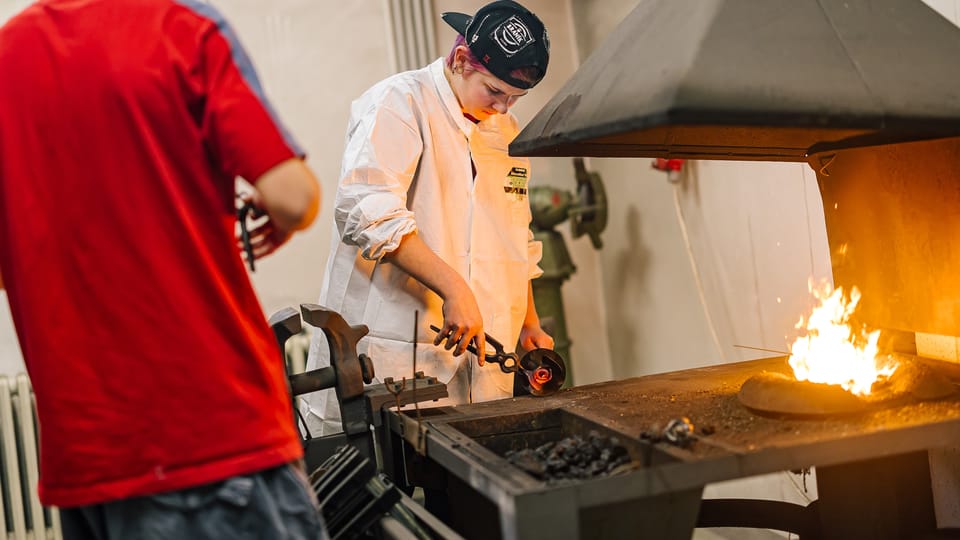
Much of that success was concentrated precisely in the north. Nový Bor and Kamenický Šenov became famous for glassmaking, cutting and chandeliers. Jablonec nad Nisou developed another speciality – glass beads, imitation gemstones and costume jewellery that were exported around the world. The industry survived industrialisation, two world wars, the expulsion of much of the region's German-speaking population after 1945, communist nationalisation and another economic transformation after 1989.
Today, traditional glassworks coexist with small studios, art schools and internationally successful Czech design companies. Crystal Valley Week tries to bring those different strands together – and increasingly to connect them with artistic traditions far beyond the Czech Republic.
Connecting cultures through glass

This year's festival has made those international links one of its central themes. Jan Šmíd explains: “It's hard to say what the highlight actually is, but this year the theme is connecting cultures and the international dimension is quite amazing. We have wonderful guests from the Panará tribe in Brazil, who show a unique project, a collaboration between a French artist and producer, as part of the Crystal Boxes installation in public spaces in Liberec. There's also the Welcome to the Exhibition by world-famous artists Pavlína Čambalová and Vladimír Klein, which connects Czech and Japanese culture, and the Bohemia Africa exhibition, featuring works by Czech glassmakers, showing a journey from a student workshop into international collaboration with artists from Kenya. Visitors can also ride our Crystal Ball Express tram, which is inspired by the Orient Express.”

In some ways, those international connections are nothing new. For centuries, northern Bohemian glass was made locally but travelled globally – to royal courts, wealthy households and eventually mass markets across Europe and much further afield. What has changed is the role of glass itself. What was once primarily a craft, and later a major export industry, is today also closely associated with contemporary art and design.

Crucially, however, this is not simply a heritage industry preserved for tourists. Glass is still blown, cut and engraved here and transformed into everything from jewellery to large-scale artworks and lighting installations. The wider Crystal Valley brings together more than a hundred glassworks, studios, museums, schools and jewellery makers across the Liberec region. The survival of those skills has also received international recognition. In 2023, the knowledge, craft and skills of handmade glass production in Czechia and five other European countries were inscribed on UNESCO's Representative List of the Intangible Cultural Heritage of Humanity.


A tradition that is still alive
While Crystal Valley Week concentrates the spectacle into six days in Liberec, Jan Šmíd says the festival should also serve as an invitation to discover the wider region where the glass actually comes from.

“Crystal Valley is a unique region with a strong glass and jewellery tradition that is still very much alive, so you can admire it during the festival, but also all year round. The festival started five years ago and over the years it has grown into, I think, a fantastic international event. So today it connects local masters with global cultures and top designers.” So, Crystal Valley Week is a reminder that in northern Bohemia, glassmaking is not simply a celebrated part of the past, but a centuries-old tradition that continues to evolve.