Prague remains a global congress powerhouse, but competition is growing

Prague has ranked sixth among thousands of destinations in the latest global congress rankings, confirming its place among the world’s leading conference cities. International conferences bring significant economic benefits, with delegates spending far more than leisure tourists. But maintaining Prague’s competitive edge will require continued investment and strategic planning.
Prague is known around the world for its historic skyline, cultural heritage and architectural beauty. But beyond the postcard image, the Czech capital has also built a formidable reputation in a less visible but highly lucrative field: international congresses, conferences and expert meetings.

The latest rankings from the International Congress and Convention Association (ICCA) place Prague sixth globally among congress destinations, keeping it firmly in the world’s top tier. While that may sound like a prestige metric, Hana Otavová from Prague Convention Bureau says the real impact is much broader:
“The income from the expert events not only helps to create new jobs and business, but also supports investments into the infrastructure that is also available for locals through the income to public budgets. The spendings of congress delegates are usually around three times higher than the spendings of leisure tourists. So speaking of finances, this is really a huge benefit for each of the destinations that is hosting international congresses and conferences.”

And the benefits, she argues, are not only financial: “It is also a huge benefit in regards to science, scientific development and new trends and procedures that are implemented here locally more easily and also quickly when they are presented here at congresses and conferences in Prague or in the Czech Republic.”
Prague’s competitive advantage
Prague is competing against some of Europe’s strongest convention destinations, including Lisbon, Paris, Barcelona and Vienna—all cities with well-developed infrastructure and long experience in attracting international events. So what keeps Prague competitive? According to Otavová, one of the capital’s greatest strengths is something surprisingly simple: its size:
“The key competitive advantage of the Czech capital is its compactness compared to the mentioned cities, because Prague is very small compared to them and everything is quite near. It’s also its location in the heart of Europe, so Prague is very easily accessible for delegates.”

She also points to the city’s scientific background, especially in medicine and technology, as a major factor in attracting expert gatherings. Prague has long hosted major medical congresses, but the city is also actively trying to attract events in new sectors.
“Prague doesn’t stop here and actively promotes and focuses on specific strategic industries and topics such as biotechs, space research or robotics. Together with other stakeholders, we are trying to bring as many expert events in these respective fields as possible to Prague.”
That strategy includes cooperation with research institutions and innovation organisations, as well as an ambassador programme linking event organisers with Czech experts.
Not only giant events matter
At first glance, the trend toward shorter and smaller meetings might seem less impressive than massive international conventions drawing thousands of participants. But Otavová says that would be the wrong conclusion:

“Even these smaller events may have a strong impact. There are many emerging industries and niche topics that are discussed in usually smaller expert groups and in a shorter amount of time. But these events are very important for sharing the know-how and for the development of the destination.”
Many of Prague’s events are local rather than international, and those tend to be shorter and more modest in scale. Still, they contribute to business activity, professional networking and the exchange of expertise. The benefits are also increasingly spreading beyond the capital, with cities such as Brno and Karlovy Vary also hosting growing numbers of business events.
Infrastructure remains the key challenge
Despite its strong international position, Prague still faces practical limitations. One of the biggest is the lack of a venue that combines extensive meeting facilities with a large adjoining exhibition space—something required for many major international congresses, especially in fields such as medicine.
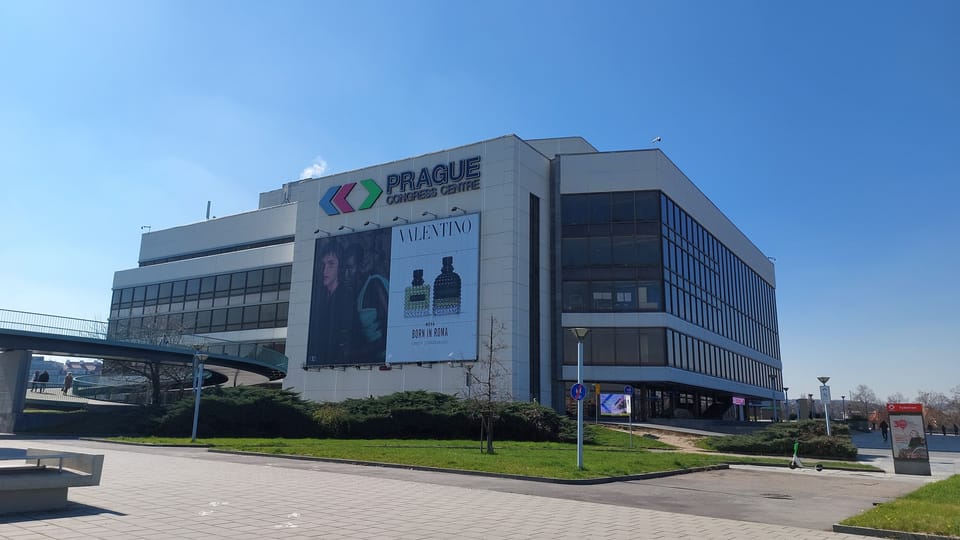
“Prague Congress Centre offers a lot of meeting rooms, but they are missing the exhibition space. On the other hand, Prague exhibition grounds offer great exhibition space, but they are missing the meeting rooms that are needed for congresses and their programmes. So we need something that is connected together.”
That missing piece means some major events still go to competing cities. The planned expansion of the Prague Congress Centre could help solve that problem. Otavová also points to other encouraging developments, including more long-haul direct air connections and the long-awaited rail link between Prague Airport and the city centre.
So for now, Prague remains one of the world’s elite congress destinations. But in an increasingly competitive global market, remaining in sixth place may prove just as challenging as getting there.










