“No boring 19th-century dude”: Prague exhibition revisits the legacy of Vojta Náprstek

A new exhibition is currently underway at the Náprstek Museum of Asian, African and American Cultures in Prague, marking 200 years since the birth of Vojtěch Náprstek, a remarkable 19th-century figure who was not only the founder of a museum, but also an innovator, politician and early advocate for women’s rights.

Located on Prague’s Bethlehem Square, not far from the bustling Národní třída, the Náprstek Museum feels surprisingly quiet and hidden and is easy to overlook despite sitting right in the heart of the city. Part of the museum is housed in the historic U Halánků House, where Vojta Náprstek lived from early childhood. His family transformed the house into a thriving business, complete with a brewery, distillery, shop and inn, says one of the exhibition’s curators, Gabriela Jungová Vrtalová:
“He was not born here. The legend says that his parents brought him here when he was a baby in a basket. But he was actually born just around the corner, and he grew up here. Since he was born into a wealthy family, he could concentrate on his intellectual development, and that’s where all his visions and ideals came from.”

Náprstek was unable to pursue the Oriental studies he had originally hoped for, and at his mother’s insistence, studied law in Vienna. However, he never practised as a lawyer. Instead, he became something far more unusual for his time: a museum founder, promoter of new ideas, politician, and, in many ways, an influencer of the 19th century.
The exhibition, titled Vojta Náprstek Reloaded, aims to reshape the public perception of him, as Jungová Vrtalová explains:
“We assume that most people, upon hearing the name Vojta Náprstek, imagine a serious-looking, bespectacled, 19th-century man in a suit, someone with a lot of old-fashioned ideals, which he most certainly was not. So we would like to reload the public image of Vojta Náprstek, because he was a visionary, he was a feminist.

“From today’s perspective, he would maybe be considered woke. He was certainly an influencer of his time, and we would like to pinpoint that. There were also several reloads in his own life that completely changed its course and redefined who he was.”
The exhibition features more than 400 objects, most of them drawn from Náprstek’s original collections. Over the years, however, those collections became divided among several institutions:
“Parts of the collection are now held at the Náprstek Museum, the Ethnographic Museum of the National Museum, and the National Technical Museum. We were able to borrow items from these institutions to present the collection in its original scope. Additionally, some objects were acquired later but were inspired by Náprstek’s interests.”

Although the exhibition consists mainly of traditional museum displays, with objects arranged in glass cases, the curators also wanted it to feel immersive and multisensory, offering visitors much more than a standard museum experience.
“We created this exhibition in collaboration with many other colleagues, and we tried to make it an all-senses experience. So there is, of course, a lot to see. There are things to hear, songs, telephone calls, recordings.

“There are also bottles with scents or smells of the house, the original brewery house where Vojta grew up. Visitors can actually try to imagine what it smelled like here when he was born, when he was a young boy, and how it could have shaped his life.
“There are also hands-on activities, which I’m sure especially young visitors will appreciate. But there are also books and photo albums for older visitors, who might sit down, slow down, and browse through the pictures.”
Although many people think of Náprstek primarily as a traveller, the exhibition also tries to correct that perception. In reality, he travelled very little himself, but built extensive connections with explorers, expatriates and collectors from around the world. One room of the exhibition is devoted to these figures as well.

As Jungová Vrtalová explains, Náprstek was especially skilled at building social connections and acquiring objects through the people he met abroad:
“He actually did not travel much himself, but he was acquainted with many travellers, expatriates and people who either travelled for enjoyment or decided to live and work abroad. He was very good at building social connections, and through these relationships he was able to acquire non-European objects from them.”
His only long stay abroad was in the United States, where he spent almost ten years after leaving the Habsburg monarchy following the failed revolution of 1848. During that time, he worked, travelled and encountered ideas that would later strongly shape his views on society, education and public life.

It was also there, in 1856, that he undertook his only direct encounter with a non-European Indigenous culture, travelling to meet the Dakota people, during which he collected dozens of objects that later became part of his famous Dakota collection.
One room of the exhibition is dedicated entirely to this collection, the curator says:
“Unfortunately, we do not know the details of how exactly he got the objects because, even though he kept diaries, he did not start writing them until the second half of his journey. But he does mention some of the people he met. He mentions that he smoked a pipe, so one of the pipes we can see here was apparently one of his pipes, even though we are not sure which one it is.
“He also collected these objects with the intention of sending them to the Museum of the Kingdom of Bohemia. Even though at the time he did not yet dream of setting up a museum, he was already thinking of his compatriots and trying to broaden everyone’s horizons back home.

“There is the buffalo calf rope, and that is one object he must have been especially fond of, because while he sent the other objects to the museum, he kept this rope for himself. It joined the museum’s collections much later.”
His time in the United States had a profound impact on Náprstek’s life and outlook. After returning to Prague, he became increasingly committed to education, technological innovation and women’s emancipation.
“He certainly liked the ideas of liberty and equality, and the idea that things could be done differently than back home. In Austria-Hungary, things were too old-fashioned for him, and he did not like that people were not perceived as being equal. He dreamed of a more equal and inclusive society.

“Even though he learned very quickly how difficult it was to survive on his own, make his own money, and build a business that would actually generate income, he did not lose his social ideals. I think he was actually encouraged to try to reform and rebuild society in Prague when he came back.”
Part of Náprstek’s focus on improving women’s lives came from the experiences of his own mother. Although she came from a wealthy family, after her father died she was forced to work to help support her relatives. Her experiences, as well as her charitable work, helped shape Náprstek’s understanding of the difficulties and pressures women faced in everyday life.

He became especially interested in how technology could ease domestic labour and create more opportunities for women’s education and self-development. He also co-organised the first Industrial Exhibition on Střelecký Island, promoting modern inventions and technical progress.
The exhibition showcases several household gadgets that Náprstek promoted, including a washing machine, an ice cream maker, a pressure cooker and a so-called “magic apple peeler”, all displayed in the museum’s glass cases.
“Vojta realized how strenuous the workload placed on women was, and he understood that with new gadgets, their lives could be made easier. Giving them more time to focus on their own development and education.”
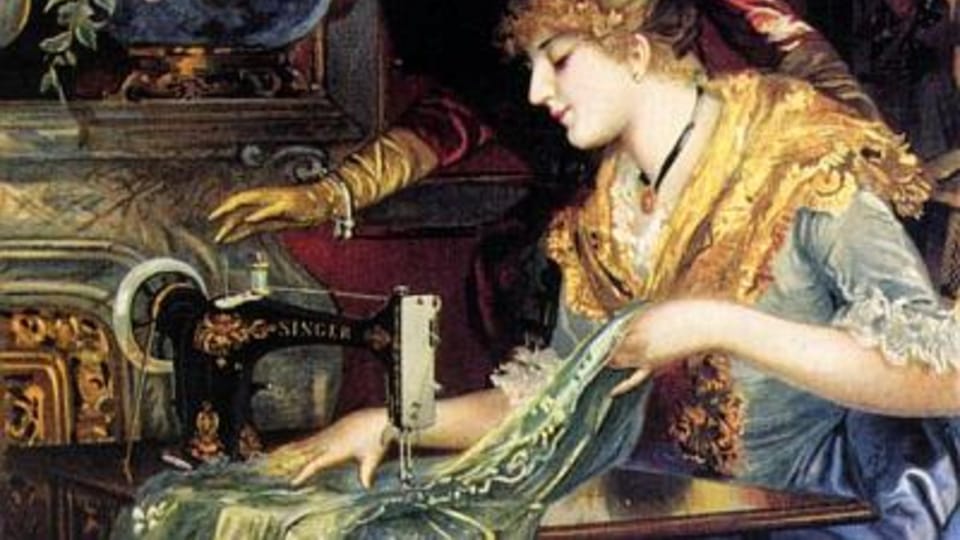
One of Náprstek’s most important projects was the American Ladies’ Club, a pioneering educational and social organisation for women. Inspired both by his experiences in the United States and by the difficult experiences of his mother, the club offered women educational opportunities, lectures, study space and organised trips, as Gabriela Jungová Vrtalová explains:
“Vojta organized lectures. He would invite university professors to come and lecture for the ladies. They also organized trips, often taking disadvantaged children with them. He offered women study time in his personal library, and there were hours dedicated exclusively to women, when no man could enter the library. They also organized many activities that helped expand people’s possibilities for spending their free time.”
The club was considered highly unconventional at the time. During lectures in the library, only women and the speaker were allowed inside the room itself. Men, including Náprstek himself, had to remain outside and listen through a specially positioned high window that prevented them from seeing inside.

It was after returning from the United States that Náprstek met his future wife, Josefa Křížková, whom he married only after his mother’s death. According to curator Jungová Vrtalová, Josefa played a crucial role in both his life and the success of the museum.
“The Náprstek Museum should probably be called the Náprsteks’ Museum because Vojta came up with many ideas, but his wife was the one who actually made them happen. She was the maker. He was the thinker, and she was the doer.
“If he came up with an idea, she was the one who would run around offices, secure all the necessary permissions, and get the money. After Vojta’s mother died, Josefa took over the business, and she was the one running it while Vojta focused on many other things besides making money.
“Josefa was the one earning the money and financing all the dreams of her husband, and she was a very devoted wife.”

After his mother’s death, the entire U Halánků House gradually opened up to the public and became a centre of intellectual and social life. In 1873 the museum was officially founded, and the foundation stone of the museum building was laid in 1876, around Náprstek’s 50th birthday, although the building itself was only completed a decade later.
The exhibition ends on a very personal note. The final objects on display are two urns containing the ashes of Vojtěch Náprstek and his wife Josefa, placed there in line with their own wishes. Gabriela Jungová Vrtalová explains:
“Vojta and Josefa were an unusual couple in themselves. They lived together before getting married, which was highly unusual and unorthodox for the time. Vojta was also the first Czech man who decided to be cremated. Since Austrian law at the time did not permit cremation, his remains had to be transported to Germany, where he was cremated and then brought back here.

“The couple specifically built an alcove here in the museum designed for their urns to be placed there and to watch over the objects they had collected throughout their lives.
“When Josefa died many years later, the same was done with her remains. She was also transported to Germany, cremated, and brought back here. The urns were made to match each other and were specifically designed to be exhibited here in the museum.
“It was clearly stated in their wills that they did not wish to be buried. They wished to be exhibited, or at least permanently placed, here in the museum.”
Asked what she would like visitors to take away from the exhibition, Jungová Vrtalová says:
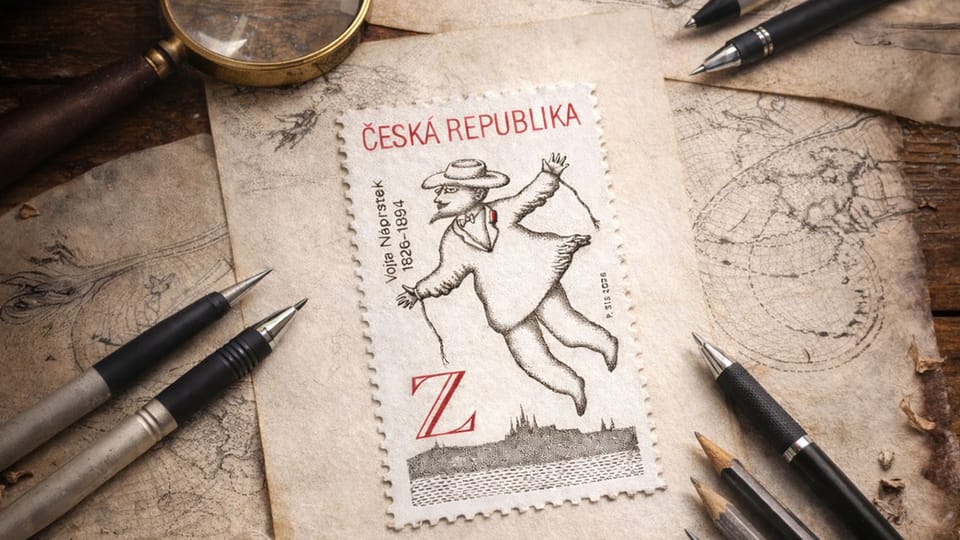
“Certainly that he was not a boring 19th-century dude. He was very up-to-date, very progressive, and he liked anything that, in his eyes, improved people’s lives in any way. He was all for it.
“And he truly tried to include everyone in society in public life. He devoted all his public activities to that cause.”
At the very end of the exhibition, visitors are invited to enter a single word they associate with Náprstek. Those responses gradually form a growing word cloud, reflecting how modern audiences perceive him today and how his image continues to evolve.
The exhibition Vojta Náprstek Reloaded will run at the Náprstek Museum until January 2, 2028.
Related
-

The 10 Czech museums you should visit
Radio Prague International has selected 10 Czech museums that you may not necessarily find in your guidebooks.