Suspected attack on Czech arms firm sparks debate over security and state responsibility
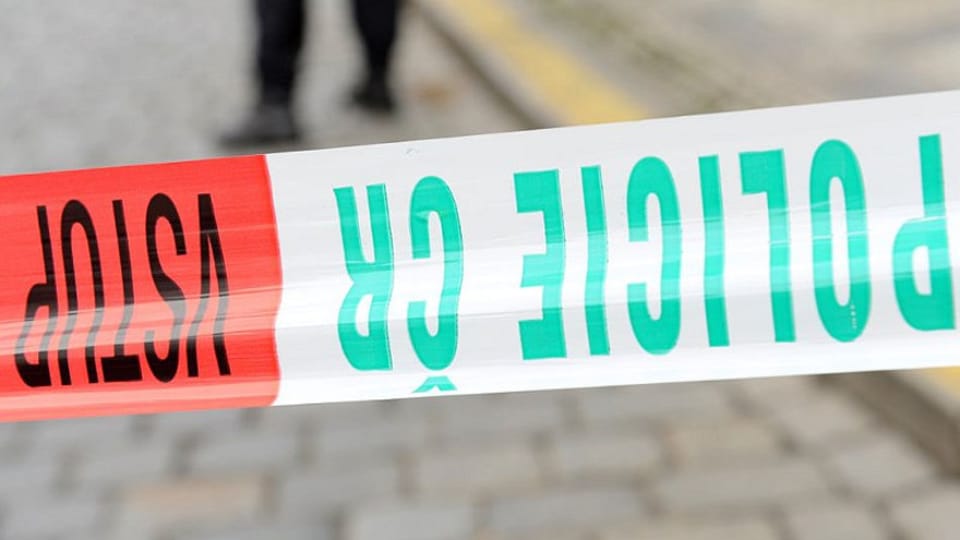
A fire at an arms-related company in Pardubice, now being investigated as a possible terrorist attack, has put the spotlight on the security of Czech defence firms. Prime Minister Andrej Babiš is calling on companies to step up protection of their facilities. But industry representatives warn that the issue is more complex and cannot be solved by companies alone.

Police have completed their initial examination of the site, but the investigation is continuing with the involvement of counter-terrorism experts, intelligence services and specialised forensic teams. Investigators are working with several possible scenarios, all of them involving deliberate action.
The blaze broke out in an industrial zone on Friday morning, destroying a storage hall and damaging an adjacent administrative building. No injuries were reported, and the extent of the damage is still being assessed.
The company, LPP Holding, says the incident has not significantly affected its overall production. It develops and manufactures technologies with both civilian and military applications.
PM Babiš calls for tighter security

Following a meeting of the State Security Council, Prime Minister Andrej Babiš urged companies in the defence sector to strengthen security at their facilities.
“I want to send a message here… to all manufacturers producing defence or military-related materials… to ensure that they properly secure their premises. The premises of the company that was attacked were not properly secured. Although there was a guard present, the intrusion was very easy,” he said.
Babiš also suggested that stricter conditions could be tied to licensing for companies operating in the sector.
“I have asked… to consider whether those licences should be tied to the level of security of their facilities. I believe this is important – it is in the interest of the companies themselves, as well as in the interest of our society as a whole,” the prime minister added.
The company itself rejects claims that its premises were inadequately protected. A spokesperson said the site had both standard and above-standard security measures in place and described the attack as something that would be difficult for a private firm to prevent.
Industry: security depends on the type of production

Security measures vary widely depending on what a company produces, says Jiří Hynek, head of the Czech Defence and Security Industry Association. “Every company that produces something has a certain level of security. If you produce explosives, that level will be significantly higher than if you produce, for example, gas masks. Motion sensors, camera systems or access cards are commonly used,” he said.
Hynek also points out that security cannot be viewed narrowly, as vulnerabilities may lie elsewhere in the supply chain:
“If you wanted to disrupt the production of gunpowder in the Czech Republic, you wouldn’t necessarily target the gunpowder manufacturer… you might target the chemical industry. By disrupting nitric acid production, you could effectively paralyse ammunition production,” he explained.

The debate has also turned to the role of the state. While Prime Minister Babiš emphasises the responsibility of companies, Hynek notes that the issue ultimately depends on political decisions:
“According to the law on the defence of the state, the government is responsible for preparing and ensuring the country’s defence. If it concludes that certain strategic production is key, it can respond accordingly,” he said.
In practice, he adds, most countries rely on a combination of private and public responsibility.
“In most cases, security lies on the shoulders of companies, but for particularly strategic production it is strengthened by additional elements from the state,” Hynek said.

Police say this type of attack is unusual in the Czech Republic. Media reports suggest a radical group may have claimed responsibility, but this has not been officially confirmed. What is clear is that the incident comes at a time when the Czech defence industry is expanding — and increasingly becoming a potential target. The question now is whether this case will lead to stricter rules — and a clearer division of responsibility between the state and private companies.
Related
-

Staroměstská, Old Town’s metro station, to shut for one month after young men cause fire
Staroměstská, the central metro station, will shut for one month, to repair the damage from a fire started by a group of young men on Saturday, July 5th.






