Prague Philharmonia begins US tour, ending with Carnegie Hall debut

This week, Prague Philharmonia embarks on a concert tour of the United States, performing in six cities across the American Southeast before culminating its journey at New York’s legendary Carnegie Hall. Ahead of the opening concert in Florida, RPI spoke with the orchestra’s chief conductor, Emmanuel Villaume, about the tour and the upcoming Carnegie Hall debut.
"Tours are always extremely important for any orchestra, and US tours are very special for European orchestras. We did a US tour with Prague Philharmonia eight years ago, which remains a very strong memory for us because it was such a huge success and took place in very important halls.
"This time, however, we are going to Carnegie Hall. It will be the first time I appear there with this orchestra, and it is perhaps the most prestigious concert hall in the world. This is an event we are anticipating with great joy, and it represents a very significant milestone in the history of the orchestra."
What will people hear in these concerts, and what does this music tell us about the kind of orchestra Prague Philharmonia is?
"When a foreign orchestra goes to Carnegie Hall, presenters usually want to hear the music the orchestra knows best, the repertoire it can perform with the greatest authenticity and originality. For Czech orchestras, that often means Czech repertoire, very frequently including Dvořák’s ‘New World’ Symphony.

"We were able to agree instead on Dvořák’s Eighth Symphony, which is very dear to me and to the orchestra, and which we have recorded together. Prague Philharmonia is also known for its approach to the Classical repertoire, particularly Beethoven and Mozart, so we will open the concert with Beethoven’s Coriolan Overture.
"We will also feature two soloists, who are always a great attraction for audiences. Blake Pouliot will perform a Mozart Violin Concerto, and Andrew von Oeyen will play Mendelssohn’s Piano Concerto No. 1, a work he has already performed many times with the orchestra."
How long does it actually take to prepare a tour of such size? How long ago did you start organizing it?
"There is this famous joke: how do you get to Carnegie Hall? Practice, practice, practice. In a way, it takes a full lifetime of work to be truly ready to appear there.

"But jokes aside, we have been working on this tour for more than a year. The repertoire is very familiar to the orchestra, but we will still take a full week before the tour to rehearse it intensively. Carnegie Hall comes at the very end of the tour, so by then we will already have performed the programme in several venues across four different US states."
Apart from Carnegie Hall, which of the six venues are you particularly looking forward to?
"We are very happy to be performing throughout Florida and Georgia, including Atlanta. Some of the venues are more prestigious than others, but we will give our best in every single place.
"And I must say, both the orchestra and I are very happy to be in Florida in the middle of January."
What is your experience with American audiences? Do they react differently from European listeners?
"The average American audience is extremely sympathetic and enthusiastic, which is a beautiful thing to experience. Sometimes people assume American audiences are less cultured than European ones, but that is absolutely not true.
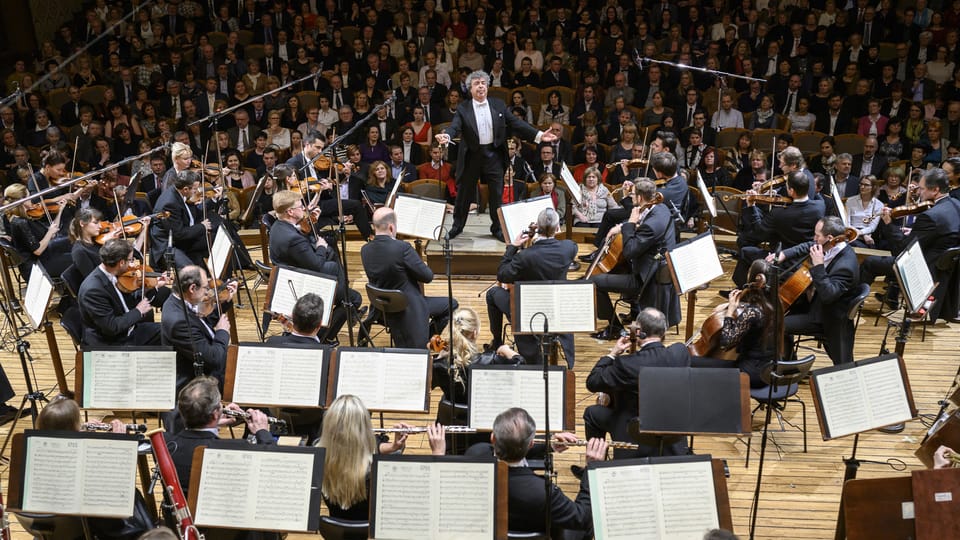
"It is certainly not true of the Carnegie Hall audience, which is among the most selective in the world. Carnegie Hall is deeply inspiring, not only because of its perfect acoustics, but also because of its immense history. That kind of pressure actually inspires you and pushes you to give your very best."
Finally, Prague Philharmonia was founded more than 30 years ago. What do you think makes this orchestra special today, and how has it changed over the years?
"Prague Philharmonia was founded more than 30 years ago by Jiří Bělohlávek, and it has retained its defining qualities of virtuosity, flexibility, and a constantly renewed approach to music-making.
"Many of the original musicians are still with the orchestra, so they are no longer as young as they once were, but we also have new members and an academy. I believe we have kept the same freshness, vitality, and flexibility, while gaining a little more maturity."
Related
-

The best of Czech classical music
Czech classical music is not only a part of the national culture and history, but also of its very soul.
-

Czech Music Greats
2024 is the Year of Czech Music, a celebration held once a decade, on every year that ends on the number four, a number that marks many Czech music anniversaries.






