Future Czech government divided over inclusion in schools as debate echoes global culture wars

As coalition talks between ANO, SPD, and the Motorists' parties continue, education has become one of the most sensitive topics on the table. While all three parties agree on raising teachers’ pay and cutting bureaucracy, SPD and the Motorists have called for an end to inclusion in schools. The debate, experts say, reflects not only policy disagreements but also broader cultural tensions that are increasingly visible in Czech society.
Inclusion debate returns to the forefront
Negotiations between the likely future governing parties – ANO, SPD, and the Motorists' parties – have focused past week on education. All three share the goal of improving teachers’ pay and reducing paperwork, yet opinions diverge sharply when it comes to inclusion, the system that integrates children with various special educational needs into mainstream classrooms.

While ANO speaks of a “revision,” the other two parties have proposed abolishing inclusion altogether. “There’s nothing worse than politicians deciding what should be in the curriculum,” warns Miroslav Hřebecký, program director of the educational NGO EDUin, in an interview for Czech Radio. According to him, the idea of completely ending inclusion is not realistic.
“Those slogans may have sounded good on billboards before the election, but they couldn’t have been meant seriously,” he says. “Even people inside SPD and the Motorists must realize that inclusion concerns around 150,000 pupils. If you abolished it, where would you send those children? What would you do with them?” In his view, the parties quickly recognized that a full rollback is impossible.
“They soon understood that what they actually meant was revising the current model, not scrapping it entirely.”
ANO’s “revision”: more support staff and special classes
The most likely future education minister, Robert Plaga of ANO, has long advocated what he calls a “major revision” of inclusion. That would mean strengthening support roles such as teaching assistants and psychologists, as well as reinforcing special schools.

“Part of the plan is to return pupils with the most severe diagnoses to special schools,” Hřebecký explains. “At the same time, ANO wants to create special classes within standard primary schools.” Another challenge is long-term funding. The parties agree it should be stable, but details are vague.
“Stable financing means planning with a long-term perspective,” Hřebecký says. “So far, budget forecasts have been more like fairy tales—nobody really believes the numbers.”
He notes that even the outgoing government has failed to secure enough money for mandatory expenditures.
“Without an immediate injection of funds, the system can’t function. Even legally guaranteed expenses aren’t fully covered.”
Tuition and ideological divides
Higher education policy is another flashpoint. ANO opposes tuition fees, and SPD considers free university study essential. The Motorists, by contrast, propose that some students—mainly in selected humanities programs—should pay.

“That’s more of an ideological skirmish than a genuine policy,” Hřebecký comments. “They usually target fields that conservatives find controversial, such as gender studies. But such proposals typically disappear once real governing begins.” He also rejects political attempts to limit lessons about sexual minorities or gender issues in schools:
“There’s nothing worse than politicians deciding instead of experts what belongs in the curriculum. That’s all the comment it deserves.”
Vocational training and the labor market
Both SPD and the Motorists say they want to strengthen vocational education. But Hřebecký believes their view is outdated. “Employers have been calling for more people with a secondary-school diploma, because modern industries need higher qualifications. Lower-skilled jobs will increasingly be replaced by robots and artificial intelligence. Reviving traditional apprenticeships as the main solution is a recipe from the past.” He adds that many vocational schools already struggle to fill places. “People vote with their feet—they understand what the job market of the future will look like.”
READ ALSO
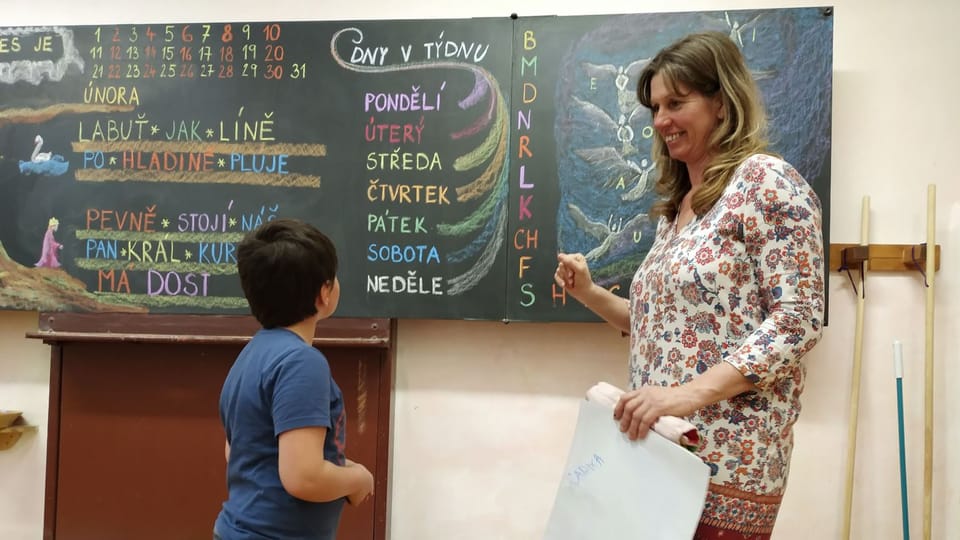
Czechia also faces a looming demographic challenge. “A strong generation is moving from secondary to higher education, and universities simply don’t have the capacity to absorb them,” says Hřebecký. “We’ll need to expand university places; there’s no other option.”
Continuity and long-term strategy
Despite all the disagreements, Hřebecký hopes the new government will maintain continuity in education policy. “It would be reassuring if the coalition confirmed that it will continue implementing the Education Strategy 2030+, which Robert Plaga helped prepare in the previous government. If he becomes minister again, I hope he sticks with it—and that the other parties support him.”
Analysts note that the renewed argument over inclusion is more than a technical question—it touches on how Czech society perceives diversity, equality, and the role of education. In this sense, the debate mirrors broader “culture-war” tensions seen in other countries, from disputes over curricula to discussions about gender and social policy.
For many teachers, parents, and policymakers, the coming months will show whether the new Czech government can move beyond ideological divides and focus on what unites them: better schools and opportunities for every child.