Has the left failed in the Czech Republic?

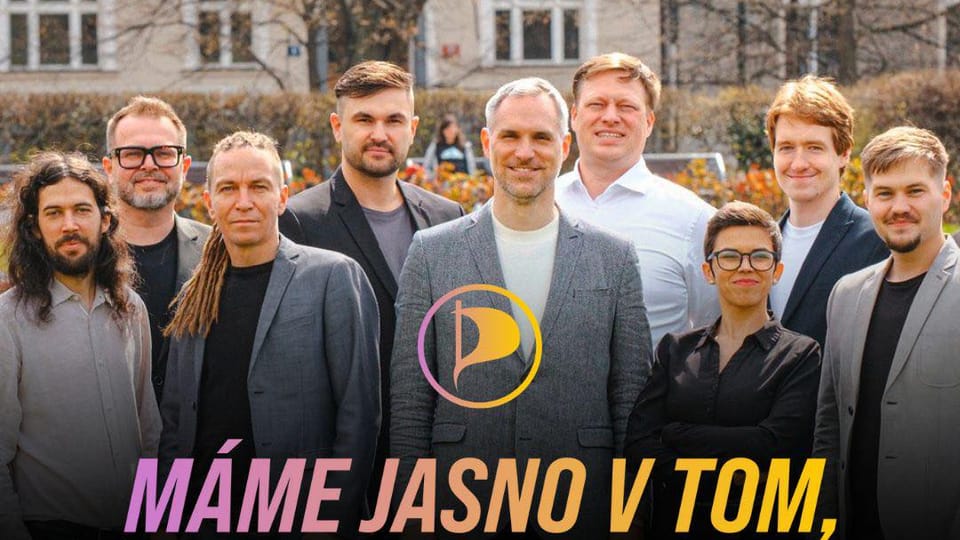
At its founding, the Czech Pirate Party was meant to offer a center-left, progressive alternative in Czech politics, which has been mostly dominated by centrist and center-right views. But after a series of setbacks, from mismanaging building permit digitization efforts to failing to secure enough seats in the 2024 European Parliament elections, the Pirates reshuffled their leadership and distanced themselves from traditional progressive campaign topics like tax reform, environmental policy, and broader social equity concerns. Was that a worthwhile gamble?
I spoke with Klára Votavová, research fellow at the Europeum Institute of Foreign Policy, about the current state of the left in Czechia. We discuss why, despite growing dissatisfaction with the status quo, the Pirates are hesitant to tackle progressive policies head-on, and why their role in the opposition might boost their popularity in the country.

First, let’s discuss whether you see the left as failing in the Czech Republic, or if you still consider the Pirates as occupying the center-left, let’s say, space.
“First, I think there’s a difference in how the left is defined in the Czech Republic versus, say, the US. Sometimes the left and the liberal camps are kind of merged together.
“Anyway, I think the left is indeed failing in the Czech Republic. The left would include parties advocating for redistributive policies, progressive taxation, and so on. I think there is demand for addressing social issues, things like rising food prices, energy costs, and housing, which is a huge problem in the Czech Republic. And if you look at the programs of major parties, these issues are mentioned, but the solutions are often about deregulation or, even the left-wing Stačilo!, which didn’t make it to the parliament, said we want to tax, but mainly foreign companies, so there was a nationalist angle to it. So, that traditional social-democratic approach, where we might have progressive taxes, is just missing. There’s no real constructive response to the demand for resolving social issues. Also, Czechs don’t tend to identify as left-wing, so nobody wants to claim that label, and no one is really proposing solutions [from the left].

“As for the Pirates, I don’t think they’re left-wing. They don’t define themselves that way either, and they haven’t for a long time. After their failure in the European Parliament election, they rebranded as a centrist party. A lot of left-wing members of the Pirates left the party. I mean, speaking of the Pirates, you may have noticed there are two green MPs elected under the Pirates’ banner, and they might be more left-wing, with left-wing rhetoric. Most of the Pirates’ deputies are female, which is interesting, and some of these women might focus on social issues or left-wing solutions, but they wouldn’t necessarily label it that way.”
Zdeněk Hřib has called [their election result] successful, although they initially aimed for third place. He’s framing it as a success, especially compared to the [results of the] more extremist SPD and Motorists. Other more traditional progressive or further left-wing parties seem to be focusing on opposing the billionaire class. In this context, this election would have seemed like an ideal opportunity for the left to take advantage of this rhetoric—though, as you mentioned, they don’t identify that way anymore. There appears to be space for a party to focus on issues like progressive taxation.
READ ALSO
We can compare this to the US, where Trump is a billionaire, and Democratic candidates focus on solutions for the working-class, specifically doubling down on progressive taxation and even proposing to get rid of billionaires, as the Democratic mayoral nominee, Zohran Mamdani, has argued for [and has been inordinately successful doing so].
I’m curious why the Pirates didn’t take advantage of this space, especially since you mentioned that people in the Czech Republic don’t really identify as left-wing. So, was it that the Pirates didn’t want to enter that space, and also that people are generally against taxation, viewing progressive taxation not as wealth distribution but rather as taking wealth, even if it’s targeted at wealthier citizens, like millionaires?
“You’re absolutely right. After the past four years, it would have been so logical to offer a left-wing alternative, especially given that the previous government was right-wing and implemented austerity policies. The wealthiest class just kept getting richer, while the rest of the population grew poorer. But this dissatisfaction was mirrored by Andrej Babiš’s proposal: ‘I’m going to fight for you, I’ll give you more money, higher pensions,’ and so on. But he doesn’t look at the structural issues, and he doesn’t want to raise taxes because that’s unpopular. He’d rather get the country more indebted.

“Considering the Pirates, this has always been a problem for them. They’ve been very scared of being labeled as communists. Even a few years ago, they had proposals to deal with empty investment homes, but they didn’t want to push it [because they feared backlash], especially from right-wing media. Anti-communism is still a big thing in Czechia, and that’s one of the reasons why Stačilo! actually failed. And for the Pirates, they tried to sanitize themselves from this. I don’t think this was a good strategy, but that’s what they did.
“Another problem is that within the Pirates, you also find right-wing people, which complicates things. Another major mistake the Pirates made was joining the past government with Petr Fiala, even though they had four deputies and they were dispensable and went there anyway. By joining, they compromised their liberal stance on left-wing policies. They’ve since managed to re-mobilize, but mostly around corruption issues rather than economic issues. And I do think that the Pirates were actually successful, or at least more successful than anyone last year would say. I thought the party would fail to secure enough seats this year and instead they received about 9%.

“One other thing I wanted to mention is that one of the green MPs elected under the Pirates’ banner campaigned against oligarchs, mimicking the Sanders/AOC approach [in the US]. And that actually worked. So, maybe there is demand for this kind of politics, but it’s just not being addressed by most politicians.”
It’s also interesting that Babiš started as a centrist, anti-corruption social democrat. So, there was, at least in 2017, demand for social democratic policies. Similar to Robert Fico in Slovakia, he positioned himself as someone who questioned the fairness of a flat tax system.
I’m just wondering, there must be people around Hříb who have similar intuitions about the current tax system; it’s not exactly a flat tax but it’s a type of two tier flat tax system, and it is not funding the country properly; GDP growth is stagnant even for the region, Poland and Slovakia are doing better than the Czech Republic; the median salary is well below the OECD average, and salaries overall are lagging. So, what you’re saying, correct me if I’m wrong here, is that this was just a conservative pivot and they didn’t want to go for these other issues? Certainly, they had intuitions that acknowledged these things, or at least there were advisors who wanted them to address these things, but they wanted to be conservative to reach this third or fourth place [in the elections].

“I think the tragedy for the Pirates was that when they joined the previous government, they had to position themselves as part of the right-wing group. In Czech politics, there’s this strong narrative that if you’re right-wing, you’re pro-democracy, and if you’re left-wing, you’re against democracy. This kind of narrative led the Pirates to join the right-wing government. They had to pick a side, and they chose the right-wing.
“They also made some internal decisions after failing in the European Parliament elections last year. The Pirates used to focus a lot on international party procedures, such as transparency and internal votings, but they moved away from that model. Many traditional members, who were likely more left-wing, left the party. So, maybe there were not enough people [in the party] to carry these topics.”
You don’t think that the party leaders do have these concerns front of mind, let’s boil it down to progressive taxation.

“From what I understand, their program says they want to reform the tax system to benefit 90% of Czech families, to benefit the most people, and target the wealthiest 10%. I listened to one of the podcasts with Hříb, and he was pushed into saying that, yes, if you have five apartments and some of them are investment apartments, maybe you should be incentivized to sell them or rent them or else you will be taxed more. But he was clearly uncomfortable saying that. They’ve been careful with this discourse in their program, and it’s unclear how much room they’ll have to push these ideas as an opposition party.”
Finally, do you think the Pirates could perform as well as Progresívne Slovensko, the Slovak counterpart, although they don’t overlap significantly? There’s also the issue with SPOLU, where the coalition is fragmenting. Could the Pirates take advantage of this?
“I think that’s possible. The Pirates have a strong tradition as an opposition party. Between 2017 and 2021, they were quite successful at holding the government to account. They’re better positioned now with more deputies before the election; during the Fiala government, they only had four, but now they have eighteen. So, that’s better. They’re also not fragmented like SPOLU.
“I think they could be a strong opposition, and this is a good opportunity for them to grow. With some of the women in the party, there’s potential to push for left-wing or progressive solutions. The green deputies could certainly be a force in this regard. I always thought it was a mistake for [the Pirates] to join in with the past government, where they didn’t really have a strong voice anyway, so maybe this time they can turn it around and grow after this.”
Related
-

Czech Parliamentary Elections 2025
At the beginning of October, Czechs will head to the polls to elect a new Chamber of Deputies, the lower house of Parliament.










