From Prague to Sumatra: František Příbrský and the fight to save the Slow Loris

František Příbrský is a zoologist, field conservationist and nature lover who has devoted his life to protecting animals in the wild. He divides his time between the Czech Republic, where he is head of In Situ projects at Ostrava Zoo and the island of Sumatra, where he founded the Kukang Rescue Program, an NGO working to protect slow lorises in the wild, primarily against illegal animal trafficking. František recently visited Radio Prague’s studio to talk about his life’s passion – protecting animals and nature. I first asked what took him to Sumatra where he is spearheading efforts to save the Slow Loris from extinction.
“I graduated from the Czech University of Life Sciences in Prague in 2014 and I did my diploma thesis on illegal wildlife trade with a focus on Indonesia. I was traveling around Indonesia to see how wildlife trade worked in practice and to try to find some solution. And I saw a lot of lorises. I was in the streets in Indonesia and I was wondering how that was possible because it is a protected species like orangutans, tigers or rhinos. And I was told that there is no organization which is protecting the slow lorises or which is even focusing on them in any way. So we established the Kukang Rescue Program.”
How does the rescue center work? Do you take in confiscated animals?

“Yes, in the beginning our main goal was to create a rescue and rehabilitation center for slow lorises confiscated on the black market. When someone illegally keep lorises or trades in them, the police or forestry police are supposed to confiscate them and then put them somewhere for rehabilitation. So we accepted lorises confiscated in this way. That's how we started the program. But now we are doing a lot of different things. And actually the rescue center is not our main goal now.”
How many lorises can you take in?
“That's the thing, the rescue center operated well for a few years. And we accepted dozens of lorises. But it's not operating right now.”
And did the local authorities cooperate with you? Was there a willingness to address this problem?

“That's a little bit tricky, because in Indonesia the ex-minister of forestry and environment was not very happy or not very cooperative with foreign NGOs. In fact, she canceled cooperation with the WWF, WCS, and other big NGOs. And that was the time when our rescue center stopped operating, because she was not very open to the idea. So on the provincial level, the place in Sumatra where we work, it is fine. But in general, in the central offices, which is in Jakarta, they were not very open. But luckily, I can say, there is a new president and new ministries. And now it looks like things are getting slightly better.”
Is the lorises' natural habitat endangered or are they mainly threatened by poachers? I've heard they're also regarded as crop pests.

“Well it is the same as for most of the wildlife. If the habitat is lost, then their living space is lost. But actually, slow lorises prefer not the primary forest, but the secondary forest, or even places like fruit plantations and other places close to people. But there, they are pretty vulnerable to poachers because they are quite slow-moving animals, so they are easily caught. And that's why poaching is the main problem for their survival. And that is also why we cooperate with the ex-poachers and why we employ them. So they get a job other than poaching.”
How badly are they endangered?
“When I started to work with slow lorises from 2014 to let's say until 2020, few slow loris species were listed as “vulnerable”. But then there was another research conducted in a few years’ time and the result was that all slow lorises are already endangered or critically endangered. “Critically endangered” is one step before extinction in the wild. So things are pretty bad.”

Do we know how many of them there may be left in the wild?
“We have nine slow loris species, so it differs with the given species. But to be honest, the number is just an approximate estimate. Because they are nocturnal, there is not much research going on.”
The reason I'm asking is how close they may be to extinction….
“I would say there are a few hundred thousand left, let's say, all around Indonesia.”
How effective is the fight against poachers? Because obviously, you can't be everywhere.

“I have to say that we are not a big NGO. We operate in one province. We have several projects. We have around 25 Indonesian employees. And we do different things. But the most effective thing that works for us is working with the community and with ex-poachers. We have one field site on the border of the National Park. And until 2016, there was a group of poachers who would actively go into the forest to poach lorises. They were able to hunt down around 150 slow lorises per month. That's a huge number. So we started to cooperate with them. We gave them jobs as rangers. And since that time there is no hunting at all, as far as we know. And the lorises are coming back, even to the village. They are not afraid of people because most of them never experienced hunting. It has been around 10 years since the project to safeguard them started. And they live around 20 years in the wild, so only the old animals remember the poachers. The young are kind of habituated, like gorillas in Africa. They are not afraid of humans. And we have had a few movie crews over -from the BBC, Netflix - because they found that it's the best place to film lorises. But to answer your question, this all could happen because we work with the local community. And we employ the poachers. So this is actually more effective than to just to confiscate the animals on the black market.”
You are also involved in raising awareness of this problem and in educational projects. I believe that you also helped to establish an environmental school called “School at the End of the World”. Is that right?

“We have two schools actually. One is the Kukang School and the other is the School at the End of the World. It's actually not a regular school, more like an afternoon school. They have Indonesian teachers, four times per week and they have lessons in English and environmental lessons. And all is focused on nature, animals, protection. To help the kids to connect with nature.”
What are your goals now within the Kukang Rescue Program? What would you like to see in the next five years or ten years?
“My hope is that in five or ten years there will be more places where animals are safe. To be honest, I know we cannot save everything. Because in Indonesia there are so many problems. The population is growing quite fast. People are getting better at protecting the environment, but it will take time. And I know that people need to first somehow improve their own living conditions before they can focus on protecting wildlife or nature. There are so many problems - deforestation, poaching, climate change, pollution. So, I know we cannot save everything -but we can save something. Until things get better and Indonesians will be ready to protect what they have by themselves.”
"When we really want something, almost nothing can stop us. I want a world which I do not have to be ashamed of and where people value animals as live beings. I will stand against anyone who illegally hunts, sells and buys animals. I will dedicate the little time I have in this world to efforts to protect the wildlife from being stolen."
František Příbrský
I know that you focus on in situ protection there. But do you also send some lorises to zoos for where they can breed safely?
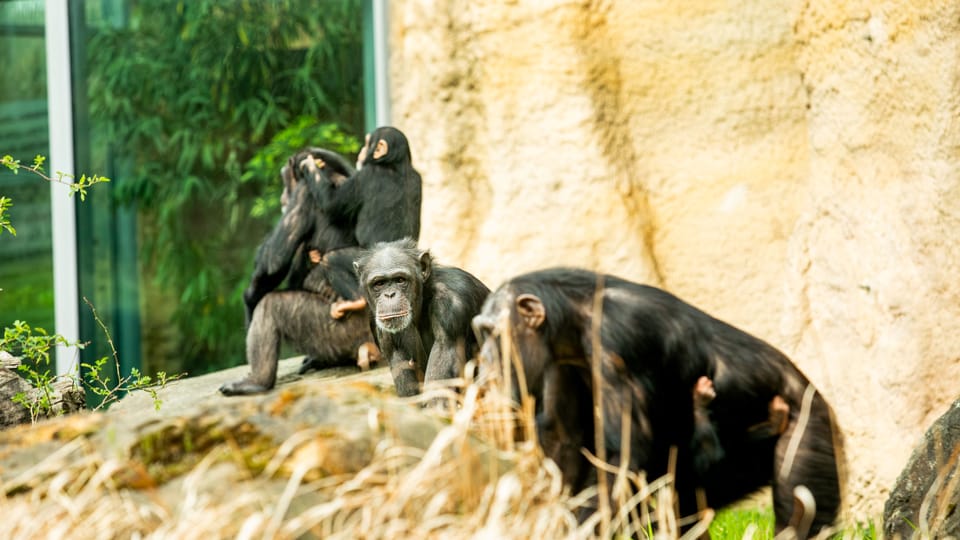
“We don't send animals from nature to zoos. But I work for Ostrava Zoo and Usti nad Labem Zoo and I'm a member of an expert group focused on prosimian primates - slow lorises, lemurs, galapagos, bush babies. And we are trying to create a sustainable population of pygmy slow lorises in zoos so there is still a population for where we can take them and release them back into the wild - in case we lose the battle against poaching for example. This is what zoos do. They focus on conservation breeding. The goal now is to create a bigger population of pygmy slow lorises. The pygmy slow lorises population is growing well in the zoos. But as a rule there are no animals coming from the wild. The modern zoos usually don't get any animals from the wild anymore. Just sometimes from confiscations.”

You are also involved in various educational programs. And you have an educational program called “Stolen Wildlife” focusing on illegal trade in wild animals. Is that so?
“That's true. We established this together with the zoos and with the team from the Czech Environmental Inspectorate – the team investigating wildlife traffickers in the Czech Republic or more broadly in Europe. They know many interesting cases, which are not known to the public. The aim of the program is to highlight these stories, to say what is happening here – trade in rhino horns, tiger skin trade, tiger bones trade –it is all happening in Czech Republic. I like the Vietnamese community, but I am afraid that the Vietnamese community is the one that is involved in this trade. Not all of them, of course. But there are people who are creating the demand for these commodities.”
Would you say that the problem is in the legal framework? Is it adequate? Or does the problem lie in inadequate law enforcement?

“It depends on which country. For example, in Indonesia we have several different projects. And one of them is fighting wildlife traffickers. So we have a team of investigators in the field which is fighting wildlife traffickers with the goal to catch them and have them sent to jail. And I can say that Indonesia for example has quite good legislation, but very bad law enforcement. In Czech Republic, I would say we have also very good law against wildlife trafficking, but law enforcement is also quite a big problem. For example, we don't have a specialized wildlife crime unit which would be great. Some European states or other countries around the world have such expert groups, composed from various specialists – from the police, from customs and from the environmental inspectorate, possibly also a zoologist. Such a group would be a huge improvement for wildlife crime enforcement in the Czech Republic.”
So you are saying there is a significant black market in these animals and body parts in Europe and in this country specifically?

“It is there. For sure. With live animals also, not only with body parts. And this is what Stolen Wildlife is about. It is trying to highlight this topic. Because most people think that this is a problem of Asia or Africa. But actually, it is our problem as well. The Czech Republic is a transit country, but also a target country. For example there were cases of rhino horn trafficking. There were Czechs hunting the rhinos in Africa and through the Czech Republic, the rhino horns were smuggled to Vietnam. So it is still quite a big problem for sure.”
You also have a documentary series on the role of zoos in conservation. What is their role? And are you happy with the transformation that many zoos in Europe are undergoing in terms of animal welfare ?

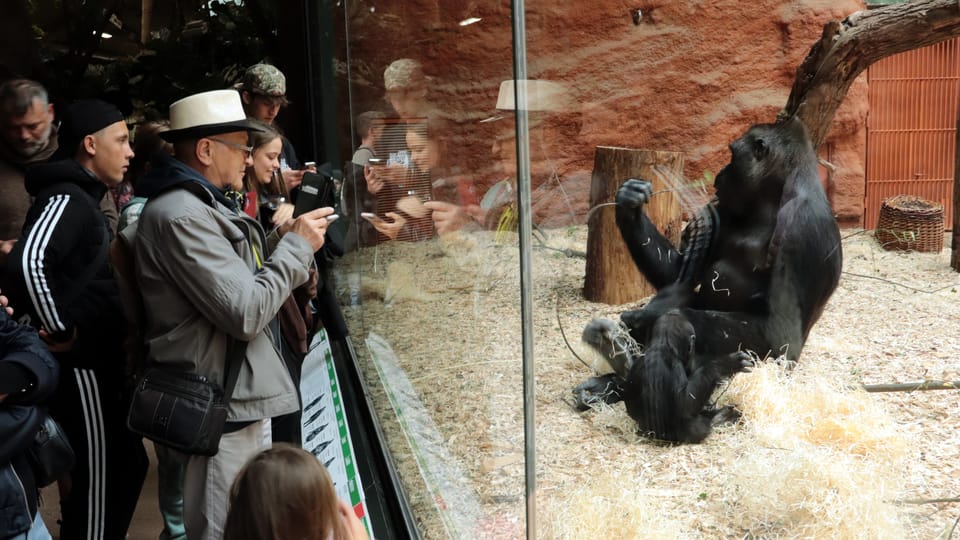
“ It is always the case that more can be done. Because zoos are keeping wildlife from all around the world – and to create the right conditions for them can be challenging. But the bigger, modern zoos have improved enormously in the last few years. And this is what the series is about. To show what all the zoos do. From conservation and breeding to supporting in-situ project all around the world -science, education, different things. And modern zoos have made a big step in the right direction. I am happy about that. But it is a process that is still developing. And there are also quite bad zoos in the Czech Republic. These are usually small private zoos where you can cuddle animals like tiger or lion cubs. And that is not right. The modern zoos are different. They are developing very well and I am happy about that.”
You are now devoting a lot of your time to saving and protecting lorises. What are your ambitions and goals in life? Do you want to continue along this path?

“Until the end of my life, for sure. I wanted to do this since I was young. I went for it and I am doing it. And if nothing very serious happens, I want to continue working for wildlife conservation. I want to keep doing projects in the field because it is helping me to see the reality. But creating documentaries about conservation is, in my view also very important, because it is motivating the young generation to care about nature and wildlife. So I will continue doing that too.”
Are you pessimistic about the way the world is going -how it is treating wild animals? About the fact that their natural habitat is shrinking and their living conditions are changing for the worse…
“I don't think I am pessimistic. I am more like realistic. I see how the population of the world is growing. And how much we are affecting the planet. And I know that the wildlife will inevitably be affected by this, there will be still more and more animals going extinct in the wild.
“But, on the other hand, I am optimistic when I see what people try to do. How many people are starting to care about nature and conservation. And some things are improving. I am happy about the zoos. I am happy about the NGOs. How they are developing. And, as I said before - I think we will lose a lot, but I think we will not lose everything. And what we will not lose we will appreciate and we will save. And in this time of modern technologies –who knows – maybe we will be able to get back even some of the extinct animals in the future.”
For more on the work of the Kukang Rescue Program go to: https://www.kukang.org/cs/