Lucy and Selam come to Europe: 3.3 million-year-old hominin fossils to go on display at National Museum

On Friday 15th, the precious fossils of Lucy and Selam, 3.2 and 3.3 million years old respectively, landed at Prague Airport under strict security measures. They will be on display at the National Museum in Prague for two months, their first trip from Ethiopia to Europe.

Some of us wait a long time before visiting Prague for the first time, but 3 million years is surely an unbeatable record. The bones of Lucy and Selam, two ancient ancestors of humans, arrived on August 15th in the Czech capital. This is the second time that Lucy has been outside of Ethiopia, and her first time in Europe.
READ ALSO
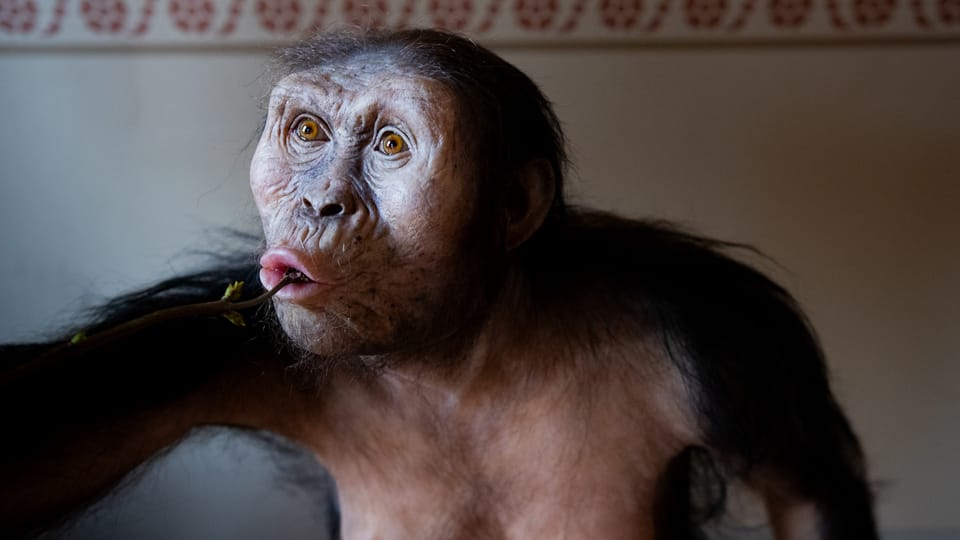
Living over 3 million years ago in the Horn of Africa, the female Australopithecus afarensis would have been just over one metre tall and around 28 kg in weight. Following her discovery in Hadar, Ethiopia in 1974 and her naming after the Beatles’ song Lucy in the Sky with Diamonds, she shot to worldwide fame. About 40% of her skeleton has survived, although the fossilised bones are very fragile. In 2000, Lucy was joined in the present day by Selam (meaning ‘peace’ in Amharic), the remains of an infant hominin who lived about 100,000 years before Lucy, and died aged two years and seven months.

Because of their age and place in our evolutionary family tree, Lucy and Selam are of incalculable scientific importance, as the director of the National Museum, Michal Lukeš, expressed on their arrival:

“We are all witnesses here to a historic moment, when fossils of human ancestors, one of the oldest and rarest ancestors of humans, the iconic Lucy and Selam, flew to Prague from Ethiopia, their place of origin, on a special Ethiopian Airlines flight.”
Their exhibition in Europe is a first, but even in Ethiopia, they cannot be seen on just any day.

“These two exhibits are not permanently exhibited even in Ethiopia itself. We received them from the vault of the National Museum of Ethiopia, so it is a truly exceptional event. Lucy was only exhibited a few years ago in the United States. Selam has only ever been on display within Ethiopia, and both of these exhibits are in Europe for the first time,” says director Lukeš.
The trip is such a rarity that concerns have been raised by experts and the Ethiopian public, on account of both the fossils’ fragility and their status as national treasures. Experts have in particular highlighted the different climates in the two countries. With their own private plane and police escort from the airport, it seems that the highest safety measures have been put in place.
They will be the star exhibits in People and their Ancestors, running in the historic building of the National Museum from August 25th to October 23rd.
“The exhibition will of course take you through the birth of humanity, our ancestors, the individual developments of the human species, and then also through our prehistory.”
Due to exceptional interest, the National Museum, according to director Michal Lukeš, has introduced tickets for specific times and extended its opening hours.