Bitcoin scandal shakes Czech government as opposition pushes for no-confidence vote
A bitcoin donation worth nearly one billion Czech crowns from a convicted criminal has thrown the Czech political scene into turmoil. Opposition parties are calling for the government's resignation, accusing the Ministry of Justice of aiding in money laundering. Political analyst Jiří Pehe warns the scandal could leave deep scars on the ruling coalition ahead of the fall elections.
A growing political scandal involving a massive cryptocurrency donation from a convicted criminal has rocked the Czech Republic, just months before parliamentary elections. The affair centers around the Ministry of Justice’s acceptance of bitcoins worth approximately one billion crowns from Tomáš Jiřikovský, a man previously convicted of drug trafficking, embezzlement, and illegal arms possession.

The donation, made after Jiřikovský’s release from prison, was used by the ministry in a state-run auction, generating over 950 million crowns in proceeds. However, the origin of the funds remains murky, and critics say the state may have unwittingly helped launder proceeds from criminal activity.
“This case is really quite serious because, of course, the origin of the money was or still is unclear, and the ministry obviously didn't do its due diligence,” said Jiří Pehe, political analyst and director of New York University Prague. “The worse possibility is that this was a scheme in which a Czech ministry helped a convicted criminal to launder the proceeds of crime.”
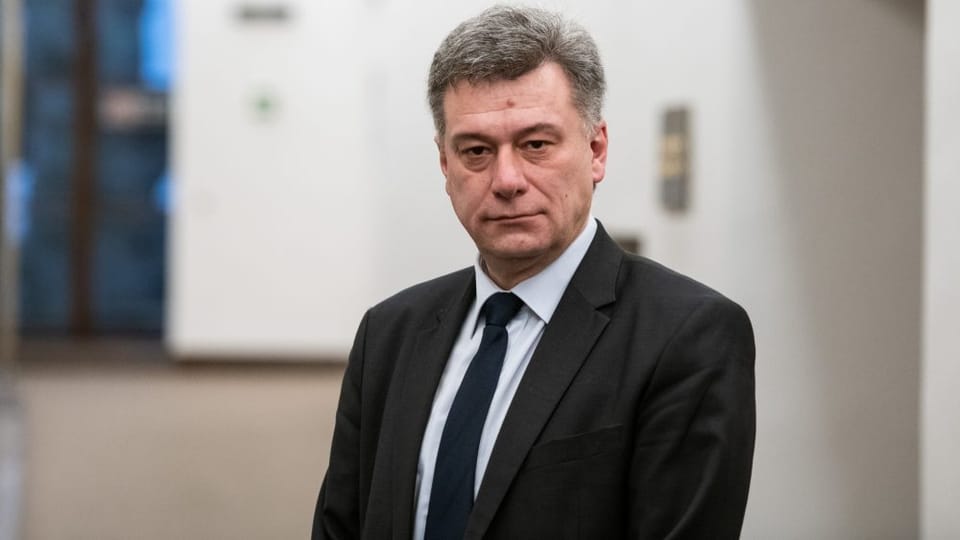
The controversy prompted Justice Minister Pavel Blažek (Civic Democratic Party) to resign. But that has not stopped the opposition parties ANO and Freedom and Direct Democracy from demanding the resignation of the entire cabinet. They have requested a special session of the Chamber of Deputies and are likely to initiate a vote of no confidence.

While such a vote is unlikely to succeed—given the governing coalition’s majority in parliament—the debate is expected to draw public attention to a series of missteps that could haunt the coalition, SPOLU (Together), in the lead-up to the October elections.
“At this point, the opposition has to call for a vote of no confidence or at least for a parliamentary debate,” Pehe noted. “Given the seriousness of the whole case, it's actually good that it will be discussed and perhaps we will learn some new details.”
Adding to the pressure on the ruling coalition is the close political relationship between Prime Minister Petr Fiala and Blažek (both Civic Democratic Party). Critics say Fiala, as a longtime ally of the former minister, cannot plausibly claim ignorance of the affair.
“A lot of people will probably see Fiala as someone who is at least a suspect of sorts in all of this,” Pehe said. “They will not believe that he, as a close friend and associate of Blažek, didn’t know about the whole affair.”

The scandal could also shift the dynamics within the coalition itself. Pehe suggests that the Mayors and Independents, the smallest party in the coalition, might gain short-term political advantage if voters disillusioned with the Civic Democrats look elsewhere.
“They could be sort of a default option for a lot of voters who wanted to vote for Together,” Pehe said. “But given the level of disgust we see on social media, it’s also possible that many voters will simply stay home.”
Further complicating the situation are media reports that the bitcoin wallet used in the transaction may have contained far more cryptocurrency than the ministry initially acknowledged—possibly up to 12.5 billion crowns. Some of the funds reportedly began to leave the wallet before the ministry officially accessed it, raising suspicions about insider activity or tampering.
The National Centre for Organized Crime and the High Prosecutor’s Office in Olomouc are currently investigating the case. Charges under review include abuse of public office, money laundering, and unauthorized handling of narcotic substances.
As the investigation unfolds and more details emerge, the ruling coalition may find it increasingly difficult to shift the public narrative—especially with the elections fast approaching.