The new face of Czech musical composition: Darja Kukal Moiseeva on her career and recent success

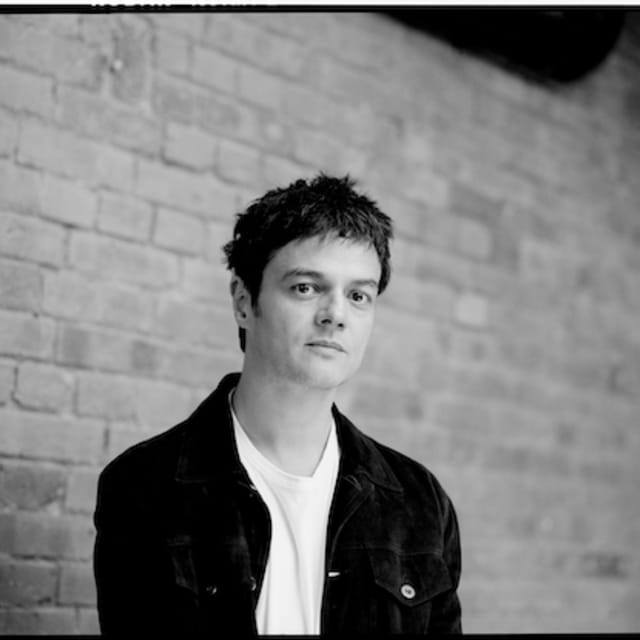
For this week's Sunday Music Show, we’re bringing you a profile of a rising star in the world of composing: Darja Kukal Moiseeva.
Born in 1998 in Karlovy Vary, Darja has already achieved success with her victory in the Under 30s category of the International Rostrum of Composers, a prestigious forum that has promoted new pieces of classical music since 1954.

The jury at the 71st edition of the Rostrum, consisting of eighteen radio delegates from four continents, was impressed by her recording of her original composition Calmness II. This ethereal piece of music was composed in 2022–23, and was performed by Anna Paulová on the clarinet and Štěpán Hon on the vibraphone.
This Sunday Music Show features Calmness II, and an exclusive interview with Darja about her career so far, her creative process, and what we can expect from this talented composer in the near future.
Darja's journey into composing and creative process
When people set out into the world of music, they may want to play a specific instrument and to perform. However, you have gone about this differently. When and why did you decide to focus on musical composition, as opposed to playing a particular instrument?
“It was at the end of my primary-school education. At the time I was playing the piano, I sang and I composed music. Composition just got to me really differently. I just enjoyed it very much, and I didn't quite feel good when I performed other music, like when I sang or when I was playing the piano. I felt strange; not like that it didn’t fit, but when I composed, I thought, ‘yeah that's mine, I want to do this, and I want to do this right’. That's when the decision was made.
“I'm so glad that my mum supported me, because she's also a musician, and she prepared me for my conservatory exams. She guided me, so I’m really extremely grateful to you, Mum, if you're listening!”
I’m curious about your creative process. With Calmness II, how did you go about composing it?
“I composed it when I felt mainly restlessness around me. I needed to fix it, and maybe I could fix it with my music. So that's when I started to think about calmness. As I was writing it, because I write everything by hand, with a pencil and paper, I wrote some words which I would like to project into the music. These were peace, calm, not rushing anywhere. That's when I started to think about how I should create it with musical words, how I should make its form, how I should work with the instruments.”
If someone were to Google this piece of music, they won't see you; they'll see the two musicians who you worked with, for example in the official video. I'm interested in that relationship. How important was it to you? How important was their input?

“I think it was very important, because both Anička and Štěpán were very helpful, open and very enthusiastic in showing me how their instruments work, what they could bring me technically, and what the opportunities are. It was a great inspiration for me to work with such amazing people like Anička and Štěpán. It's a dream for a composer, so I'm really extremely grateful for the opportunity.”
When you listen to the final piece itself, the official version, can you hear their input?
“I think it blends all together, because we connected so deeply at the musical level, and humanly. Everything was just amazing. I couldn't imagine how it could be at the very start. So it was just wonderful to hear the final record. I was like, ‘oh my God, that's us, but it sounds like it’s in a different universe’. I was really shocked, but in a good way.”
Victory at the International Rostrum of Composers
I'm also interested in this most recent piece of news, which is your victory in the Under 30s category of the International Rostrum of Composers. What was the story or the process there? Did you submit the piece to this competition?
“No, I just received a message from Martin Klusák and Lucie Hradilová. They work here as well at Czech Radio. And they were curious about whether they could present me to this International Rostrum. I said yes, and that I would be really glad. Then they said to me that it would be in a month, and that I needed to send them all the information about the composition and the recording. I thought, ‘who knows? Maybe it will be something’. Then it won!”
When did you find out that you had won?

“I was at work and Martin Klusák wrote me this message: ‘okay, Darja, you will receive some really good news, but I won't say a word now’. Then I received an email from Lucie Hradilová, with a letter of congratulations. I remember I was just reading it at work and I was shocked, really glad and grateful. I remember I called Anička and Štěpán. I was like, ‘oh, wow, we did it’. It was such an amazing day for me.”
I can imagine. The Rostrum is quite prestigious – I mean, it's been going on for seventy years?
“Seventy-one, and I was represented by the Czech Radio, for the whole Czech Republic. It's still in me, the emotions.”
Making music with the next generation
If people were to find you online, it's clear that working with children and encouraging their musical talents is very important to you. Where did this focus on preschool-age children come from?
“At the beginning of my studies, because I work in a musical school, as I said, and I got inspired by my mum, who encouraged me from a young age to have joy in music, just enjoy it. As I was working at the musical school here in Prague and we had to mark all these children for their playing. I didn’t know if I wanted to give them bad marks, but upstairs they told us, ‘you need to mark all of them and you need to mark them bad if they don't play it quite right’. I didn’t want to do this. I was really sad about it.
“I was thinking, ‘how can I improve it? How can I bring joy with music?’ As I said, my mum inspired me and I wanted the children to have their first experience in music to be a happy one. Music is about happiness. So that's when I started my own course for preschool children.
“I just love how they are full of joy from music. That's the point. I show them what music can bring into their lives. We improvise with them, with the three-year-old children. We play some fairy tales on the piano. They're just full of joy and their eyes are sparkling. That's what I want to do: to spread joy and love through music.”
And this is based in Prague, right?
“Yes, it's in Vinohrady. I have the opportunity to rent a small room in a private kindergarten. I'm really happy about it and grateful to the owner.”
I'm sure all of your current pupils will remember you fondly for years.
“I would love that.”
Looking to the future
Turning back to your compositional career, finally, what can we look forward to? What's next for you in your career as a composer? Will there be a Calmness III, for example?
“Oh no, I think I should end with the letter S at the end of my compositions. I have calmness, I have gloominess, I have stillness. Maybe that’s enough. I don't want to be connected with names ending with S only.
“I'm currently working on a trio piece for violin, accordion and guitar, which is a pretty unique combination. I'm really enjoying it. It will be premiered in August at a festival. It's called Podkorkonožské hudební léto. I'm really glad that I'm finishing it now and in one month I will hear it played live.
“Then I was commissioned to write a piece for solo voice with piano by the National Theatre. So, it's really big, and I thanked them for the opportunity. Then I will be working on an orchestral piece for the Janáček Philharmonic Orchestra in Ostrava. It was also commissioned.
“As I'm saying it now, it feels insane for me – in a good way. It's happening, everything I ever maybe not even dreamed about. Now it’s happening. So, I’m really glad and grateful.”
Related
-

Faces of Czech Music
Dvořák, Smetana, Janáček, Martinů – Czechia can boast a number of renowned figures from the past, but what about Czech music today?