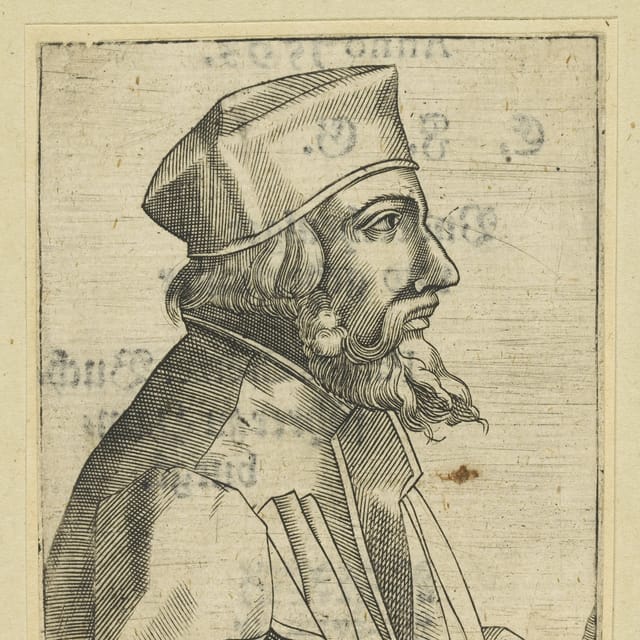
Jerome of Prague: The Hus follower also burned at stake for heresy

It is 610 years since the death of Jerome of Prague (Jeroným Pražský), who sought to defend Jan Hus but ended up burnt at the stake for heresy himself.

Exactly 610 years ago, on May 30, 1416, the Czech philosopher and university professor Jerome of Prague died in the German town of Constance. He had traveled there to support his friend Jan Hus, but was arrested, forced to recant his views, and ultimately put to death after reaffirming his commitment to Hus’s teachings.
Jerome of Prague is one of the most significant figures of the Czech Reformation movement of the early 15th century. For readers unfamiliar with Czech history, his fate is linked to a period when the Church was grappling with widespread disputes over authority, doctrine, and power.
Jerome was an educated philosopher who taught at universities in Paris, Heidelberg and Cologne. He belonged to the circle around Jan Hus, a cleric who criticised conditions within the Roman Catholic Church. When Hus was summoned before the ecclesiastical court in Constance in 1414 and imprisoned, Jerome decided to travel there to support him.

However, he did not receive the protection he had requested. While attempting to return to Bohemia, he was arrested and brought back to Constance. He spent nearly a year in prison under exceptionally harsh conditions. Under pressure and after being tortured, he recanted his views, but later described his recantation as a mistake caused by fear. He reaffirmed his adherence to Hus’s teachings, thereby sealinghis fate.
He was condemned as a heretic and burned at the stake in the same place as Jan Hus, less than a year earlier.
Related
-

-

In search of Jan Hus
On July 6th, it will be 600 years since the death of Jan Hus, the celebrated priest and reformer, who was burned at the stake for heresy against the Catholic Church. In…