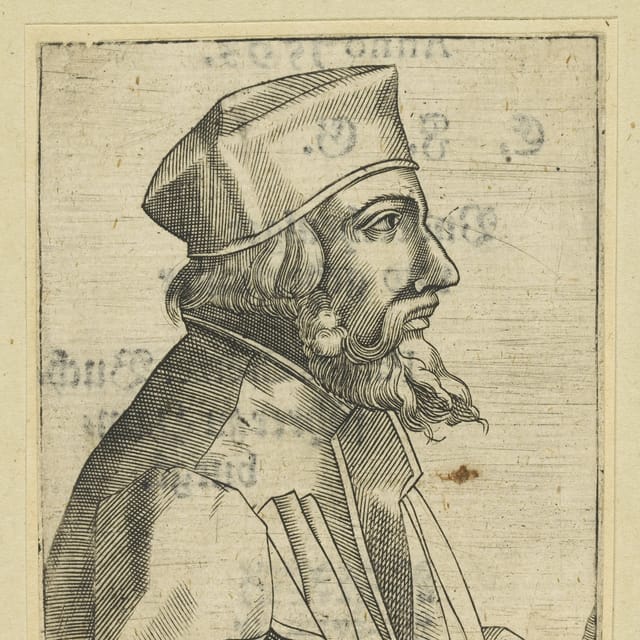
Jan Hus in European culture: A story that transcended borders

On Monday the Czech Republic is commemorating a national holiday: the anniversary of the burning at the stake of Master Jan Hus. The story of this medieval priest has long transcended the borders of the Czech lands. Hus has become an inspiration for European writers, painters, filmmakers, and musicians, who portray him as a martyr, a rebel, a prophet and the moral conscience of Europe.
Hus as literary hero

Jan Hus has appeared in European literature since the 15th century. German humanists described him as “a scholar who died for the truth,” while Polish chroniclers viewed him as a symbol of resistance against ecclesiastical power. In the 19th century, he became a favourite figure of the Romantics. For example, the German poet Friedrich Schiller mentions him as an example of a man who refused to submit to authority. In Poland, Hus appears in the works of historian Joachim Lelewel, who regarded him as a precursor to the Slavic emancipation movement.
Hus on the silver screen
European cinema has repeatedly returned to the story of Master Jan Hus, with each country interpreting it in its own way. As early as 1926, a silent film titled Johannes Hus was produced in Germany, portraying him as a tragic hero in the struggle for truth. Several decades later, Otakar Vávra directed his famous epic film Jan Hus (1954), which became the best-known cinematic adaptation and was screened abroad as well. In 1986, Hungarian television aired the film Husz János, which focused primarily on the trial in Constance, and a Polish production explored the topic in the 1997 documentary Jan Hus – Heretic or Hero?, which examines how various European traditions perceive Hus. Together, these films show that his story can be read as a drama of conscience, a political conflict and a religious revolt, and that his legacy resonates across European cultures. These films demonstrate how different nations interprein some cases as a religious conflict, in others as a drama of conscience.
Hus in music and the visual arts
Hus’s story also inspired European composers:
- Carl Loewe (Germany): the ballad Johann Hus (1840), which dramatizes his final moments.
- Václav Suk (Russia): Jan Hus (1892), a symphonic poem
- Rudolf Karel (Czech Republic): Jan Hus, a symphonic poem from the composer’s early years.
In the visual arts, the best-known work is Ladislav Šaloun’s monument on Prague’s Old Town Square, but European collections also preserve Renaissance illuminations from Constance, German Romantic paintings and Polish historical cycles.

Hus in international monuments
- Constance (Germany): Memorial at the site of Hus's execution, visited every year by pilgrims from around the world.
- Krakow (Poland): The Jagiellonian University preserves one of the oldest known portraits of Hus.
- Bethlehem, Pennsylvania (USA): The Moravian Church holds the memory of Master Jan Hus in deep reverence. For this Protestant church, which traces its origins to the Czech Unity Of The Brethren, Hus is regarded as a spiritual forefather and martyr of the faith. The city of Bethlehem, founded by Moravian exiles on Christmas Eve in 1741, remains a centre of this religious and cultural heritage.