How should Czechia deal with its Communist past? Interview with Kamil Nedvědický

More than three decades after the Velvet Revolution, the legacy of the communist regime continues to shape debates in Czech society. In the latest episode of the Czechast podcast, Vít Pohanka speaks with Kamil Nedvědický, First Deputy Director of the Institute for the Study of Totalitarian Regimes in Prague. Their conversation explores why the communist coup of 1948 was unconstitutional, why many crimes of the regime were never punished, and why understanding the realities of life under communism remains crucial for younger generations today.
According to Kamil Nedvědický, First Deputy Director of the Institute for the Study of Totalitarian Regimes in Prague, the way the country addressed communist crimes after 1989 still shapes public debate today.

Speaking in the Czechast podcast with Radio Prague International’s Vít Pohanka, Nedvědický said the question is not just about history, but also about how younger generations perceive the past.
“My answer is that it can be a very big problem in the early future that so many young people can discuss about the communist regime in some revised form,” he says. “It might become attractive for some people to present the ‘positive sides’ of communism to a younger generation that doesn’t know the real facts.”
The challenge of justice after 1989

One of the central issues, Nedvědický says, is the difficulty of bringing justice after the fall of the regime. Unlike the situation after the Second World War, the Velvet Revolution in 1989 was peaceful and did not lead to a complete break with the previous legal system.
As a result, many people responsible for abuses during the communist era were never prosecuted. “People who were responsible for the communist era are not in prisons,” he says. “They are living without problems in this new society.”

This situation, he argues, has left many victims and their families feeling that justice was never fully achieved.
Part of the problem lies in the legal continuity that followed the transition to democracy. Instead of creating an entirely new legal framework, the democratic state inherited elements of the previous system.
“The communist law, which was constructed only to support the illegitimate communist totalitarian regime, was adopted in the new democratic legal system,” Nedvědický explains. “Because of that, it became very difficult to punish people responsible for communist crimes.”
Forty years of dictatorship

Another reason the communist past remains difficult to confront is the length of the regime itself. While Nazi rule in the Czech lands lasted six years during the Second World War, communist rule lasted more than four decades. “That is not the same,” Nedvědický notes. “Forty years is a very long time.”
During those decades, the system shaped the lives of millions of people. Some actively supported the regime, others resisted it, and many simply tried to navigate everyday life within the restrictions imposed by the state.
This complexity makes it harder to draw clear lines between perpetrators and victims.
Explaining the past to younger generations
For younger Czechs born after 1989, the communist period can sometimes feel distant and abstract. Nedvědický believes this makes education particularly important.
“We can talk about millions of victims or about repression and terror, but it can remain abstract,” he says. “When we show concrete stories of people who lived through the regime, it becomes much more understandable.”

The Institute for the Study of Totalitarian Regimes therefore focuses not only on academic research but also on presenting historical information to the public.
Traditional academic books remain an important part of the institute’s work, but they are not always the easiest way to reach younger audiences.
“Our books are the result of research and they can have hundreds or even thousands of pages,” Nedvědický says.
To make history more accessible, the institute is increasingly experimenting with new formats, including documentaries, educational projects and digital tools.
Among the ideas currently being developed are interactive experiences and virtual reality projects designed to help people understand what everyday life under a totalitarian regime looked like.
Learning from history
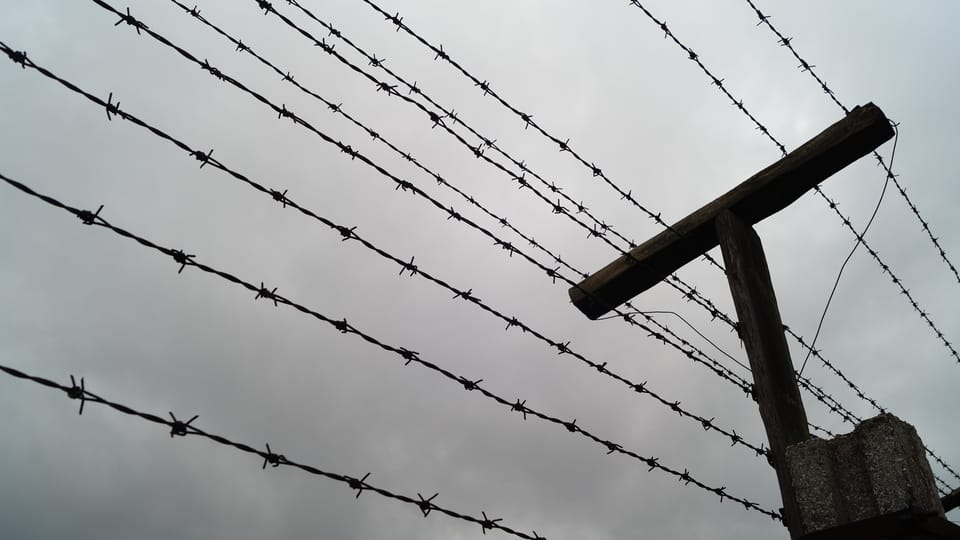
Nedvědický believes that studying totalitarian regimes is not only about remembering the past but also about protecting democratic values in the present.
“Freedom and democracy are not something stable,” he says. “They are a process. We must cultivate them.”
Understanding how authoritarian regimes functioned in the past can help societies recognize potential dangers in the future.
“Knowledge about Nazi and communist regimes can help protect our society against authoritarian tendencies,” he adds.
More than three decades after the Velvet Revolution, the debate about how to understand the communist past therefore continues—not only among historians, but across Czech society.
The full conversation with Kamil Nedvědický is available in the Czechast podcast hosted by Vít Pohanka.
Related
-

-

Prague hopes to turn ex-hospital where Jan Palach died into ‘Museum of Totalitarianism’
Fifty years ago this January, Jan Palach doused himself in petrol and set himself alight on Wenceslas Square to protest the Soviet occupation of Czechoslovakia. Prague…
about programme
Czechast, Radio Prague International
Czechast is a regular RPI podcast about Czech and Moravian culture, history, and economy.






