FM Lipavský in Ukraine: Czechia backs Kyiv before Alaska Summit

As the United States and Russia prepare for high-stakes talks on Ukraine later this week, the Czech Republic is intensifying its diplomatic engagement with Kyiv and its allies. Foreign Minister Jan Lipavský (SPOLU) is on his sixth visit to Ukraine since the start of Russia’s full-scale invasion.
Sybiha: No place for appeasement
At a joint press conference in Kyiv, Ukrainian Foreign Minister Andrij Sybiha said his country seeks a just and stable peace based on the UN Charter and international law, and that any policy of concessions — so-called appeasement — is unacceptable. Both he and Lipavský referenced the 1938 Munich Agreement, under which Czechoslovakia was forced to cede border territories to Nazi Germany.

Sybiha stressed the need to secure a ceasefire first: “We need to hear from the Russian side its agreement to a ceasefire on land, in the air and at sea. This will open the way to future negotiations on peace in Ukraine.” He repeated that President Volodymyr Zelenskyy accepted the U.S. proposal for an unconditional ceasefire five months ago, but Russia has not done so.
Long-term support and concrete results
Lipavský reaffirmed that Czechia’s commitment to Ukraine will remain as strong as in previous years. He emphasised that cooperation spans the military, development, humanitarian, and reconstruction fields, as well as ongoing political and geopolitical discussions related to NATO and the EU.
He highlighted tangible results from the visit, including the signing of a contract for a Czech donation to the Olena Zelenska Foundation’s “School of Superheroes” project. The funding will expand the capacity of three schools in the Dnipro region for children with severe disabilities and illnesses. Lipavský added that Czechia plans to increase its presence in eastern Ukraine, including in high-risk areas, insisting that “we must not be afraid of Putin” and that such regions require visible international engagement.

Addressing the broader security context, Lipavský warned against repeating the mistakes of appeasement in 1938 and stressed that national borders must never be altered by force. He said Russian President Vladimir Putin now has a unique opportunity to accept a ceasefire, but any move toward negotiations has been driven not by goodwill, but by Ukraine’s resilience and the West’s political, military, and economic support. This, he argued, is a clear lesson that the international community must maintain and strengthen its backing for Kyiv.
Support for reconstruction and European integration
In addition to symbolic gestures, Lipavský’s visit has a practical dimension. He is promoting opportunities for Czech businesses to contribute to Ukraine’s post-war recovery and reaffirming Prague’s support for Ukraine’s integration into the EU and NATO. “My visit is, of course, about Czech–Ukrainian relations – about supporting our companies so they can have a good share in the recovery and reconstruction of Ukraine. It is also a political message that we stand with Ukraine in its fight against Russian aggression, which is in our shared interest,” he said.
Sybiha thanked his Czech counterpart for Prague’s participation in the ammunition initiative, its backing for Ukraine’s EU membership, and for ending dependence on Russian energy sources. He also praised the growing bilateral trade. Lipavský noted that EU entry will require continued reforms, including in the fight against corruption.
Humanitarian law under strain
On Tuesday, Lipavský addressed an international conference on humanitarian law in Ukraine, underscoring the strain on legal norms established by the 1949 Geneva Conventions in the face of both traditional warfare and emerging technologies. “From ongoing armed conflicts marked by grave violations of the rules of war to the use of new technologies reshaping the battlefield, international humanitarian law is being tested as rarely before,” he told participants.
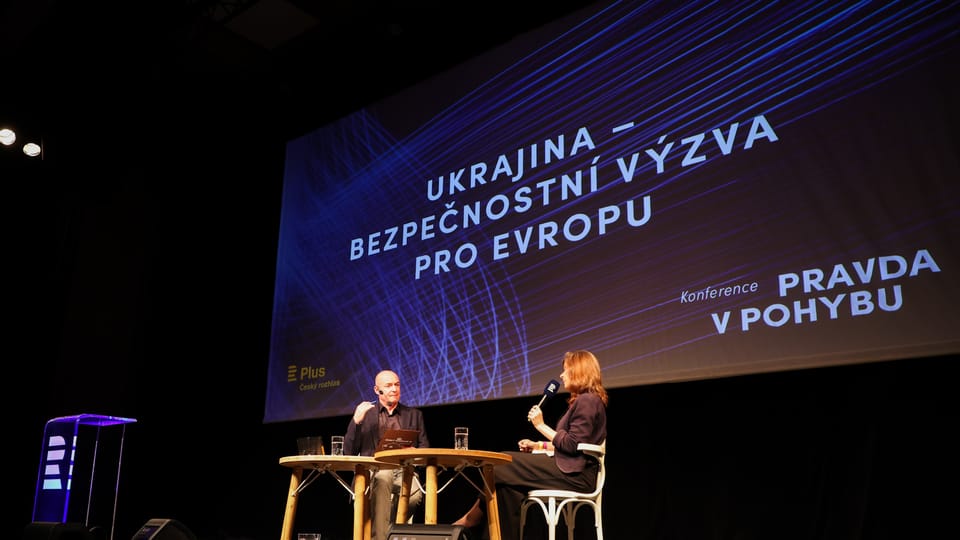
The minister condemned Russian attacks on civilian areas, repeated strikes on infrastructure, and the targeting of schools, hospitals, and residential buildings, noting that children have been among the main victims. “These are not unfortunate consequences of war. They are flagrant violations of the very rules that we — Russia included — undertook to respect. They remind us that the Geneva Conventions must not only be honoured in principle but enforced in practice. For every violation, there must be full accountability,” he said.
Lipavský also highlighted the challenges posed by drones and artificial intelligence in military decision-making, insisting that the core principles of the Geneva Conventions — distinction, proportionality, and prevention — remain the essential framework for limiting the brutality of war.
Clear stance before the summit
As the Alaska summit approaches, Prague’s stance is clear: it will support peace efforts, but only those that preserve Ukraine’s territorial integrity and sovereignty. As Lipavský put it, Ukraine itself must decide “what it is willing to agree to and what it is not. Territorial integrity is one of the inviolable principles.”