Czech Palestinians reflect on Gaza, identity and Czech attitudes towards the war

Three years after the Hamas terrorist attacks on Israel and the beginning of the devastating war in Gaza, Czechast turns to two Palestinian voices with longstanding ties to Czechia. Anthropologist Yasara Abu Ghosh and editor and translator Lamis Bartušková Khalilová reflect on their personal histories, their complex identities and their disappointment with Czech political and media responses to Palestinian suffering. Their conversations complement earlier Czechast interviews exploring Jewish perspectives on the conflict.
READ ALSO
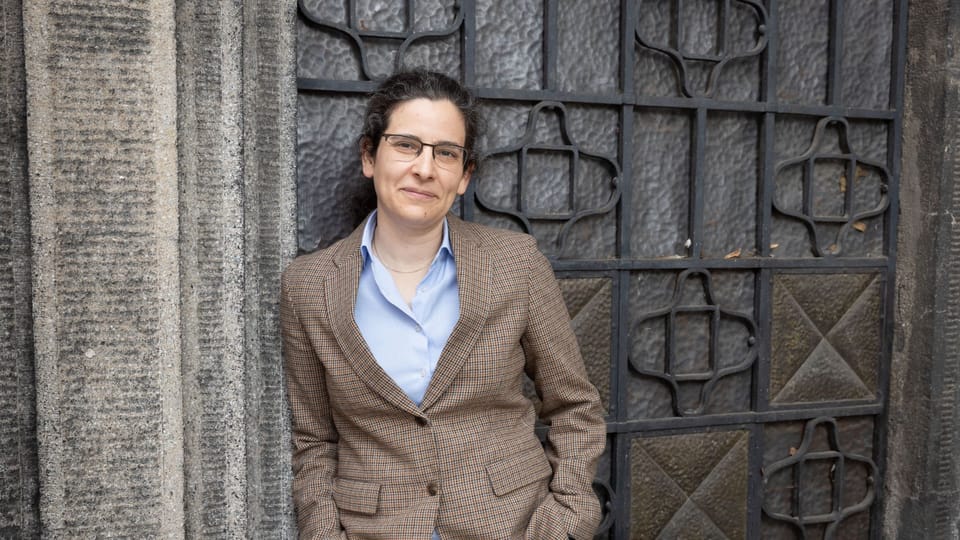
A few weeks ago, Czechast explored aspects of Jewish identity and perspectives on Israel and Palestine through conversations with two Jewish women who live in Czechia or maintain close connections with the country. Those interviews remain available in the Czechast archive. This time, I wanted to hear from Palestinians whose lives are similarly intertwined with Czech society, and to give them the opportunity to describe their experiences in their own words.
Two Palestinians, two personal histories
My first guest, Lamis Bartušková Khalilová, was born in Czechoslovakia to a Czech mother and a Palestinian father who had become a refugee in Syria. She grew up in the United Arab Emirates before returning to Prague for university in the late 1990s. She later worked with nonprofit organisations in the Middle East and North Africa, focusing on democratisation and women's empowerment. Today, she works as a freelance editor and translator.

Lamis describes herself as belonging to a third culture, neither exclusively Czech nor Palestinian. She has never visited Palestine, yet her family's history remains central to her identity. She also recalls how meeting Israelis in Prague helped her see the Israeli–Palestinian conflict from a different perspective, at a time when she still believed a peaceful settlement was possible.
My second guest, Yasar Abu Ghosh, is a Palestinian anthropologist who grew up in Prague. His father came to Czechoslovakia to work for the International Union of Students but could not return to Jordan for political reasons. Yasar attended Czech schools and recalls experiences that, looking back, he recognises as forms of racial prejudice.
His research focuses on trauma and marginalised communities in Europe and the Middle East. In our conversation, he discusses the contrast between Czech politicians' strongly pro-Israeli positions and a more hesitant public. He also explains why he became involved in legal action following controversial remarks about Palestinians by Czech government minister Martin Dvořák.
Listening to different perspectives
The purpose of these conversations is not to suggest that Israeli and Palestinian experiences are identical, or that one community's suffering diminishes the suffering of the other. The atrocities committed by Hamas on October 7 and the enormous loss of Palestinian civilian life during the subsequent war both deserve attention, understanding and serious scrutiny.
Czechast is a podcast in English about all things Czech, including the experiences of people who have made Czechia their home while maintaining ties to other cultures, histories and communities. Yasara Abu Ghosh and Lamis Bartušková Khalilová offer two such perspectives.
Their stories are also a reminder that the Israeli–Palestinian conflict is not merely a distant foreign-policy issue. It affects people who live, work, study and raise their families in Czechia, and whose understanding of the country is shaped by both their Czech experiences and their Palestinian heritage.
Listeners interested in the Jewish perspectives featured recently on Czechast can find those conversations by going back a few episodes in the podcast archive. Together, the interviews offer different personal reflections on a conflict whose consequences continue to reach far beyond the Middle East.

about programme

Czechast, Radio Prague International
Czechast is a regular RPI podcast about Czech and Moravian culture, history, and economy.






