Anna Shavit on campaigning with early ANO, “very polarised” 2025 elections – and potential coalitions

Anna Shavit is one of Czechia’s top experts on political marketing and has herself worked on campaigns for the likes of Karel Schwarzenberg and Andrej Babiš’s ANO. So how does electioneering for October’s general elections compare to previous years? And – going by her personal experience of the billionaire politician – would Mr. Babiš have any qualms about forming a government with anti-system parties? I discussed those questions and more with the Charles University academic.
What first drew you to the whole field of political marketing? What was the appeal?
“I guess I wanted to know how campaigns are organised. I’m a political scientist by training and whenever I as a student was reading about elections it would basically just be focusing on the parties, alliances and the results and post-election coalitions.
“And of course 20 years ago it was still about the political programme; it has changed drastically since then.
“I was very interested in how it happened and there was very little information about the actual campaigning process.
“Twenty years ago they already had study programmes in Poland, so I studied political marketing in Poland. They actually had that field, focusing on opinion polling, surveys, data.
“Then, when USAID still functioned of course, I went to the USA as a Fulbright scholar, which was also instrumental for getting to know the field.
“But that was a really funny period, when nobody cared about the campaign.
“It was seen as an instrument, something you had to do. I’m talking about the era of posters and rallies basically.”
One thing jumped out at me from your bio, which was that you were a volunteer on a campaign for Hillary Clinton. What campaign was that?
“That was the primaries. In 2007/2008 I applied via the web page.
“My heart was set on working on the McCain campaign, but the only people who got back to me when I registered were the Clinton people, so I did some canvassing for the primaries around the Boston area.”
You were going door to door?
“Yes. That was fun. People first thought I was a Russian with a weird German accent, or a German with a Russian accent.
“It was super interesting, first of all as a European to get this experience, because that was an unknown.
“Second, how people responded. Of course we did it in the swing states and you have to do it there.

“It’s important, so they are used to it; they are the most spoiled voters because at every election during the primaries and during the general election they are actually approached and interviewed.
“There were all these questions, which would go back to Bill Clinton, and it was very good training because after the fourth house it stopped being personal.
“You weren’t like a robot but you don’t take it personally. You explain what you’re doing and why and you ask them for whom they’re going to vote.
“But to see the mechanism was a very cool experience. And it was a beautiful winter. It’s a long time ago [laughs].”
You were the chief strategist for Karel Schwarzenberg when he ran for president in 2013. He was the kind of liberal candidate standing against Miloš Zeman, who of course won. Where did Schwarzenberg’s campaign go wrong?
“Miloš Zeman was surrounded by a lot of people who were really focussing on getting him elected.
“Karel Schwarzenberg was great, a really strong figure, but very distant to Czech voters: an aristocrat, and so on.

“I think we did really fantastically for the first round and we didn’t really have a great strategy for the second.
“Back then the debates were very decisive and that was not the strong point of Karel Schwarzenberg, who was partially challenged by his speech [impediment], and Miloš Zeman is a fantastic orator who would do anything, and say anything.
“Also I met with another colleague, Jakub Landovský, who is director of the Aspen Institute and is an expert on defence and security, and back then he worked as the campaign strategist for the Social Democratic Party candidate.
“We remembered how we met: We gave a talk at Riverside school [in Prague], and if I look over my other experiences I do not understand how I would have the time to give a lecture to students.
“That was maybe one thing. Maybe it was all too relaxed. We didn’t do enough opinion polls, because to be fair we didn’t have money.
“So I think the campaign was great, but we were a little bit navigating in a vast ocean without clear direction, especially for the second round.
“Presidential campaigning in this country is tricky in terms of coming up with a programme. So what you talk about is very general.”
Anna Shavit
“Also the political context is important, because this is 12 years ago and now a lot of things have changed.
“Presidential campaigning in this country is tricky in terms of coming up with a programme. So what you talk about is very general.
“Also Mr. Schwarzenberg limited the topics. He didn’t want to talk about family or anything personal, which the voters are into.
“So it wasn’t very easy to come up with a clear message of what kind of president he would be.”
The same year as Schwarzenberg failed you became an advisor to ANO and Andrej Babiš and helped the party get 19 percent and enter government for the first time. You took a similar role in 2017, when ANO came first. ANO were founded only in 2012 – how did they rise so fast?
“This is fascinating in terms of the campaign and also the data, which are always a picture of a certain era.
“ANO was, let’s say, a baby, or by-product, of a lot of political scandals and huge disillusionment with the back then traditional, or old, political parties.
“It started as a protest movement, supported by an excellent campaign.

“And Andrej Babiš is of course a controversial figure, but he’s a great campaigner.
“I would like to emphasise that when I talk about this it’s from my memory, which is not the best.
“And also I’m describing Babiš between 2013 and 2017. This is history.”
Today he’s somewhere else.
“Yes, I would think so.
“He was really highly motivated. He wanted to do it and he thought he could do good for the country.
“And what was fascinating about him, and I think people really liked about him, was he didn’t see obstacles. I think that also came from being a billionaire.
“Andrej Babiš is of course a controversial figure, but he’s a great campaigner.”
Anna Shavit
“He was really focussing on overcoming all the hurdles, which is very un-Czech, in a way, or regional; he’s Slovak-born but [laughs] let’s not dwell on these details.
“But we called him an ‘ordinary billionaire’. He was very down-to-earth.
“And when we said, We could do this, but it will cost a lot of money, he would say, Of course, let’s do it.
“He also had a small team. There was also Alex Braun, who’s a Czech-American strategist. Alex does all the polling.
“Then there was Petr Topinka for creativity and of course Marek Prchal for social media.
“But we worked in a close circle with Babiš and we were moving very fast compared to others. And there were no financial limits –obviously for him that was not limiting – and he wanted to try new things.

“The big difference, and this is getting into political management, is that parties have structures. Now I think ANO is also much closer to a classic party.
“But then you could make a decision within minutes. And I also worked for different parties where you would debate it for two weeks and then nothing was left of it.”
Do you genuinely believe – and his critics would say it was otherwise – that Babiš was aiming to do good for this country, rather than to do good for Andrej Babiš?
“Well, I had a long conversation with him. Basically every campaign starts like that. You need to know the candidate and find the moments in his story which are interesting.
“I also asked him about the [alleged] collaboration with the StB, the Czechoslovak secret police, during communism.
“He said he’d never done it and that was very important for me in my decision, because I sort of knew it was sort of playing with fire [Shavit also consulted the matter at the time with a historian familiar with Communist-era files].
“But to answer your question, it’s interconnected – a successful Czechia is good for Babiš.
“Babiš wants to do good, but he doesn’t ask if it’s good for you and what do you want.”
Anna Shavit
“But I think he genuinely has a social sense.
“But here we differed – and I think this is where he differed with many people… he thinks he will do it all: You will get the food, you will get the roads – and he doesn’t understand that people might want different things.
“He wants to do good, but he doesn’t ask if it’s good for you and what do you want.
“So we very often clashed about various values. I don’t think he is a democrat at heart, that he would fight for values like freedom – because he doesn’t need to, he’s a little bit beyond that.”
Do you think he has any ideology? It sometimes seems to me that he gives people what they want, that he maybe bases a lot of his policies on focus groups and that kind of thing.
“Oh, he does, definitely. The data. But he also really values hard work.
“He’s a successful businessman so a lot of things are like a transaction for him.
“He’s also used to, if there is a problem, finding 10 people who can solve it letting them compete over it – and then he picks one.
“The biggest question for many people is if he is pro-Russian or anti- Russian. As I said he is a businessman and the core part of his business is based in Germany.
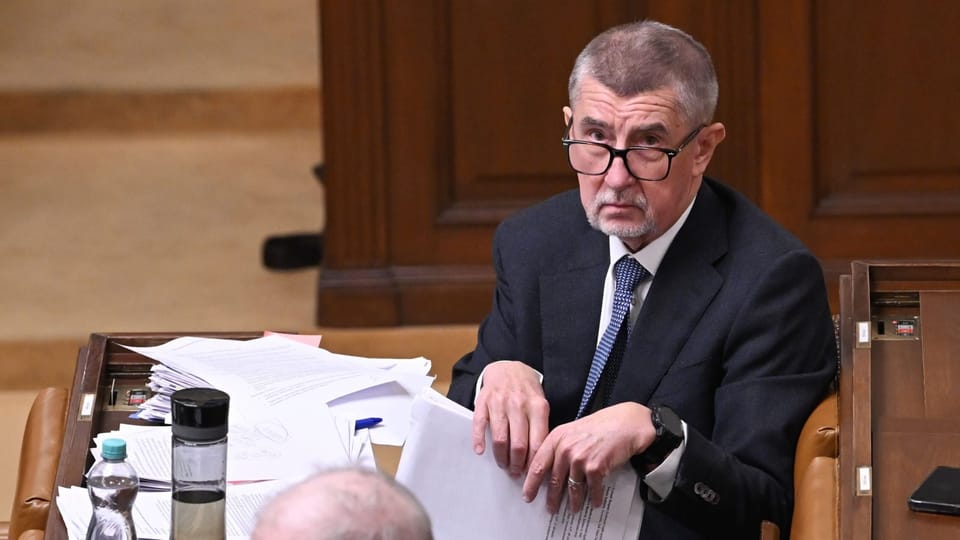
“He got burned, these are his words, in China, so I don’t think he wants to flirt with China or Russia. But this is solely based on his experience as a businessman [laughs].
“I would say he’s pro-Western. He very much values that he knows languages, he wants to be a world leader, etcetera.
“The problem is when he is rejected he will go the other way.
“But as I said his ideology is hard work – it’s not conservative or social democratic.
“I think it’s very business-oriented, which is something that you can see with Trump, and Babiš started with this even earlier.”
But is there a gap between how he might like to be seen by his peers and what he’s telling the public?
“No, I think he’s authentic. This is one part of success and charm, that he’s very authentic.
“He’s very popular with people like him, people who are also in business.
“But you won’t have a debate with him about liberties, because he would say, Why debate this when we live in this society?
“In my opinion he would be successful in any regime, and he was during communism. It doesn’t really limit him.”

Moving on to the upcoming elections, generally how does campaigning this time compare to last time out?
“The campaigns are visible. All the parties are very active and, I would say, extremely skilful with social media.
“This brings into question what will happen when [laughs] Meta stops allowing for payment for political advertisements [in Europe], which will happen, I think, two weeks after the elections.
“The elections are very polarised. It’s difficult to find any content.
“I think for a lot of voters the whole campaign is a little bit annoying, but it’s mainly happening online.
“The elections are very polarised. It’s difficult to find any content.”
Anna Shavit
“The parties also understood that you have to do some form of canvassing, which in the Czech context means you drive from village to village and city to city and meet with voters.
“This is called in the US ‘listening tours’, when you go somewhere to talk to people.
“I think they are all doing that.
“It’s also a matter of a mixture of timing and a little bit of luck – if you can read the emotions and opinions in society and sort of fit that with what you are proposing.
“Also we will see what Babiš does… A very sad and not nice thing happened two days ago [September 1] when he was hit with a crutch at a meeting. That was very un-Czech.

“Let’s see how he will use this. If he will sort of rise above and be a sort of statesman, of if he will use his typical, Look at me – the ruling coalition did this, they’re even hitting me.”
Because they’re spreading “hatred and fear of Babiš”.
“Yes.”
About the usage of social media, you think the parties are skilled at it? Recently I spoke to the influencer Kovy and he said he thought that they were trying everything because they didn’t know what worked.
“OK. This might be the case.
“If I take them party by party, interesting in this regard are the party that one doesn't know if they are called the Mayors, Starostové, or STAN. They have a crew of people in their 20s who are extremely good with X and Instagram.
“I remember a debate with a politician where we said, Please take a photo – we need some content. They didn’t do it.”
Anna Shavit
“What I meant is that everybody has reached a sort of level where this is a normal tool, they understand they have to use it.
“I remember a debate with a politician where we said, Please take a photo – we need some content. They didn’t do it.”
How much do voters pay attention to actual policies now, and how much is it all about vibes?
“I think it’s both/and. Because you of course do have vibes.
“There is an extreme hate against the current government, including among the voters of those parties.
“They are like when you have a hurt lover [laughs]. They really believed things would change and when you talk to them, some of these people – who can be successful business people – can be really disappointed with the current government.

“And when you ask them if they will then vote for Andrej Babiš they say, Yes, because he cannot really break our hearts, because we don’t expect anything from him. He’s more predictable.
“This is the worst bunch of voters. We always called them ‘ex-lovers’; it’s so difficult to get them back.
“The issues? Emotions in the end win elections, which is rather scary, but we really have a couple of issues which are very much emotional, so they may work.
“One of them is emissions allowances, which the European Commission will introduce in 2027 and which will increase prices for every single household.
“So this is a very polarising topic. But if Babiš becomes prime minister that will be his problem.
“There is an extreme hate against the current government, including among the voters of those parties.”
Anna Shavit
“Then you have the Bitcoin affair in the ODS [Civic Democrats, biggest party in three-party Spolu/Togetehr].
“So there are a lot of topics, but they’re not really being debated substantially, because the opposition will say, They did it wrong, but they won’t say what they themselves will do.
“So it’s only about who is screaming about an issue louder.
“But you can find really solid topics, like defence. Also – this is super interesting – nobody is opening the Ukrainian issue, not even the opposition who are critical in that regard.
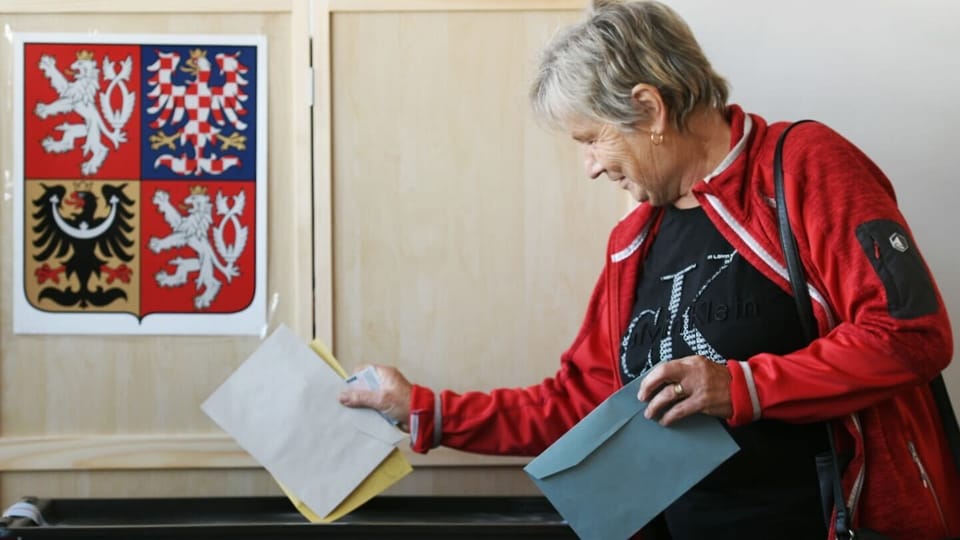
“But getting back to social media, I watched some of the first TV debates and the candidates, especially from the opposition parties trying to make it into Parliament – and if you are polling around 5, 7 percent you really have to campaign hard [the cut-off to reach the lower house is 5 percent] – meaning Stačilo! [Enough!], a coalition of various parties including the Communists, and Motoristé [Motorists], a party that are now positioning themselves as conservative…
“And they are very aggressive online. But in the debates, when they are among their peers and the competition and they can talk, they were very weak, neutral, not really attacking anybody, trying to be very polite; you can see they learn and prepare for the debates.
“But they are much stronger behind a keyboard than in reality.”
The Spolu, Together, alliance, the main grouping in the current coalition government, are pushing the line that voters have to save democracy, from, the implication being, Andrej Babiš and all the smaller parties on the other side of the political spectrum. Is that a good strategy? Or did they already throw that dice some years ago?
“Very often the Czech elections are really focused on this topic of communism or anti-communism.
“In 2021 it was ‘anti-Babiš’, but this emotional one issue usually decides elections in the end, because of the past, clearly.
“This is super interesting – nobody is opening the Ukrainian issue.”
Anna Shavit
“But now here it [Spolu’s call] also translates as pro-Western, pro-defence, pro-Ukrainian, pro-EU.
“I don’t think it’s entirely fair towards Andrej Babiš. It can much better describe the other parties, but I think it is also bringing a very dangerous narrative – that there is an option for another regime.
“This [laughs] gives a lot of energy and topics to the opposition, who are saying, This system doesn’t work, we have to change it.
“This is a new narrative. If you look at the polling in Czechia for a long time, there was a pro-NATO, pro-EU consensus.
“And I think that Spolu, though I understand why they’re saying what they’re saying, are a little bit polarising the whole situation more.
“But what else can they say? This is what their voters listen to. In the end they will say, OK, they didn’t do much but they are anti-Communist, I’m going to vote for them.
“If you’re the ruling party all you can say is, Let us finish what we have started.
“And the government is being criticized, even by its own members, and everybody is saying they didn’t accomplish much; I’m not saying Babiš and his, previous government accomplished anything.
“But in this climate it’s very difficult to say, Guys, let us finish the job. So they need to mobilise voters.”

So it’s a good strategy, is it?
“Let’s see. It seems that voters might have had enough of it, but in the end you really decide pro or anti.
“So I would not say that the Czech elections are very pragmatic and that voters decide… you know, we are not artificial intelligence, we really decide based on our feelings.”
About what happens after the elections, you’ve been around Babiš and you know him to some degree. Do you sense he would have any qualms about going into power with Okamura’s party [SPD, Freedom and Direct Democracy], who have been charged with spreading racial hatred, or the pro-Russian Stačilo!? Would he have any concerns about international reputation or anything like that?
“It’s a very interesting mixture.
“Also [President] Petr Pavel announced today [3 September] that he will ask his advisors and lawyers to produce an analysis as to whether he can ask Babiš to create a government.
“Because at present Babiš is still having some trials and he has conflict of interest.

“So I think this is another drop in this [Babiš] narrative of ‘everybody’s against me’.
“There can be various scenarios. It’s very difficult to imagine such a massive result that would let him make a minority government with the support of those parties.
“Or he will have to invite someone to create a coalition government. That’s very dangerous, because he did it and then he sort of eats the party and destroys them – that happened to the Social Democrats.
“And yes, the possibility is Stačilo!, the Communists, or the Okamura party.
“I don’t think he will care that much about international reputation. He also won’t give them powerful ministries.
“The democrat in me doesn’t like the idea of a government with Okamura, and I don’t think Okamura wants to be in government, because it’s much nicer to be opposition.
“Very often the Czech elections are really focused on communism or anti-communism.”
Anna Shavit
“But maybe, you know, they say the best disinfection is to open everything [laughs].
“So maybe it would be good if the voters would see what kind of politicians they are. And if they are elected maybe they should rule and be in the government.
“And we should hope that we, as a democratic society, survive that.”
There has been a bit of speculation for quite a long time that after the elections we could see a coalition of ANO and the ODS, the Civic Democrats. Both sides are saying absolutely not, never in a million years. But could it happen?
“I could imagine more a coalition of the really strong enemies, which is the Mayors, STAN, and ANO.
“I think Andrej Babiš can secretly hope the Motorists make it in.
“If this scenario, the ODS, a conservative party, and ANO will happen, then Petr Fiala will have to step down. He’s not going to do it.”

But STAN, the Mayors, also say they wouldn’t go with Babiš.
“I know, but people say a lot of things.
“This is also something I’d like to put an emphasis on. Elections, and especially campaigns, are a heightened atmosphere.
“I describe it to students as you’re flirting in a bar and you’ve had five shots.
“You should not take everything that you say, and all the expectations, that seriously. There is not always a marriage involved in this process.
“I don’t think Okamura wants to be in government, because it’s much nicer to be opposition.”
Anna Shavit
“So things will also calm down and it very much depends how the election ends up.
“It’s more looking like some kind of stalemate where we will have two blocks kind of competing.
“Then, of course, there is also the role of the president.
“If he is operating on the basis of an analysis and saying he can’t possibly appoint Andrej Babiš, there is of course the number two in ANO, Karel Havlíček.
“I think if Havlíček was candidate for prime minister the whole situation would be less dramatic, because he would be acceptable to almost everybody.”
So it’s going to be interesting.
“It is. But let’s hope everybody will calm down a little bit.”
Related
-

-

Czech Parliamentary Elections 2025
At the beginning of October, Czechs will head to the polls to elect a new Chamber of Deputies, the lower house of Parliament.