Ukraine war anniversary highlights political divide over further support for Kyiv

As the international community marks four years since the start of Russia’s full-scale invasion of Ukraine, in the Czech Republic, the anniversary has laid bare growing rifts between the president, the government and the opposition over further support for Kyiv.

“We have been helping Ukraine since the start of the war and we will continue doing so, but the priority for this government are the problems of Czech citizens” Prime Minister Andrej Babiš said upon taking office in mid-December.
And in the course of the past two months the government has followed that line, both through its rhetoric and by its actions. Czechia continues to support EU sanctions against Russia and the country has severed its dependence on Russian oil, but the government now puts greater emphasis on support for peace efforts and less on military aid.
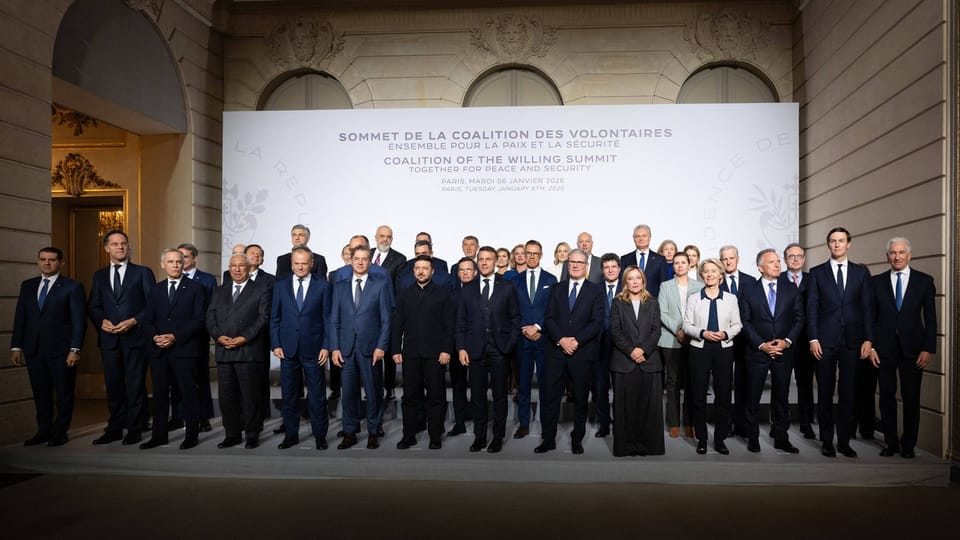
The cabinet slashed defense expenditures in its draft budget for 2026, though not below the 2 percent of GDP target required, and the prime minister made it clear that although the Czech-led munitions initiative, that has secured some 4.4 million rounds of large-calibre ammunition for Ukraine since its launch, would continue, the Czech state would no longer contribute to it financially. At an EU summit in Brussels, the Czech Republic also refused to provide financial guarantees for a loan to Ukraine.
While the cabinet recently extended a special long-term residence status for self-supporting Ukrainian refugees, the majority of the close to 400,000 Ukrainian refugees who are currently living in the Czech Republic remain on a temporary protection status, and the government has promised to review residence permits so as to prevent abuse of social benefits.

In short, the prime minister is delivering on his promise to put the interests and problems of Czech citizens first. In practice this means working to win support for the reform of the EU’s Emissions Trading System, push to overturn the 2035 combustion engine ban and take measures to cut energy costs.
Asked why he would not be attending Tuesday’s public hearing on Ukraine and European security in the Senate, Prime Minister Babiš said he had “more important commitments” focusing on the wellbeing of Czech citizens.

This has caused friction both with President Pavel, who said slashing defense spending in the present day is “irresponsible”, and the parties of the former government, who fear that the new administration will isolate the Czech Republic and put it on the path of Hungary and Slovakia.
The former prime minister, Petr Fiala (Civic Democrats), called on Mr. Babiš to reconsider his stance not to contribute to the ammunition initiative. He further urged him to use his good working relationship with the Slovak and Hungarian prime ministers Robert Fico and Viktor Orbán to discourage them from threatening to block further EU sanctions against Russia, a European loan to Ukraine or electricity supplies over the transit of Russian oil.

Senate Speaker Miloš Vystrčil (Civic Democrats) echoed the call for continued support for Kyiv, saying Ukraine was defending not only itself, but all of Europe. Speaking at a conference on Russian aggression held at the seat of the upper chamber on the eve of the anniversary, he said building a safe world required solidarity, not isolation.
Meanwhile, support from civil society, remains steady. Among the organisations providing assistance are People in Need, Team 4 Ukraine, Dárek pro Putina (Gift for Putin) and Paměť národa (Memory of the Nation). Public fundraising campaigns for Ukraine have raised hundreds of millions of crowns for humanitarian aid and generators in the harsh winter months.
According to Defence Ministry data, the Czech Republic has provided military aid to Ukraine worth CZK 17.4 billion over the past four years. Prague continues to coordinate the ammunition initiative supplying artillery shells to Ukraine. The scheme has secured some 4.4 million rounds of large-calibre ammunition for Ukraine since its launch.