Twenty years of baby boxes in Czechia: One adoptive father’s perspective

This Sunday marks exactly twenty years since the opening of the first baby box in Czechia — a place where mothers can anonymously leave their babies to be cared for and adopted. Today, there are 88 baby boxes across the country, and so far, 277 children have been safely placed in them.
Three-and-a-half-year-old Ema from Prague, a lively girl with curly hair and big black eyes, is one of the nearly 280 children who have been anonymously given up by their parents in a baby box. She was placed there as a new-born and joined her adoptive family when she was two and a half months old.

Although her father Ondřej and his partner had already completed the necessary adoption training, he says nothing could have prepared him for how quickly things moved.
“It was a shock, actually. It was… unimaginable. We had only been registered for a month and a half, and everyone was saying it usually takes longer. So it was really fast.
“I was panicking. We had to call our employers and fix everything, and the next day we went to the city where we had to do all the paperwork. We met the girl about two days later. It was fast, quick, and really shocking. But yes, I remember that day very clearly, and I will never forget it. I was happy, actually. It was shocking, but I was happy.”
Before Ema came into their care, Ondřej and his partner went through a three-month intensive training program, together with other couples hoping to become adoptive or foster parents.
“It was emotionally difficult, because there's a lot of information and experiences you have to process,” he says. “They try to prepare you for the fact that all of these children have biological parents, and at some point, we have to deal with it. It’s part of our children’s heritage and an important part of their lives.

“They showed us how to work through the loss that these children carry, because it’s important to help them cope. This loss will accompany them for a long time—actually, for their whole lives—because it’s part of their identity.”
Although Ema was practically a new-born when she came to live with them, Ondřej believes the experience of abandonment leaves an imprint — even in the earliest days. That’s why, he says, it’s crucial to make adoption part of her story from the beginning.
“For adopted children, it’s easier if you're okay with the fact that they have biological parents somewhere. If you accept that, then they will feel more okay too.
It’s important to start talking about it from the very beginning. Of course, it has to be adjusted to their age, but I think it’s easier for her that way. It’s a fact. It’s just information. And if she grows up with it, it won’t be a shock when she’s four years old.”
The very first baby box in Czechia was opened on June 1, 2005, in Prague’s Hloubětín district. Its launch sparked heated public debate, and it took time and persistence before supporters managed to convince the Health Ministry to approve the idea.

Even now, the concept of baby boxes remains controversial — particularly due to the anonymity involved. Ondřej himself is aware of the sensitive issues, but says the benefits outweigh the concerns.
“For me, I feel that baby boxes are a little bit controversial. For now, my daughter doesn’t know her biological parents, and maybe she never will. I feel she has the right to know them, for sure.
“On the other hand, I’m grateful. We have this beautiful daughter. We have a family. And baby boxes help a lot of people who are in trouble — parents who feel they can’t be good parents. Maybe this is a solution for them.
“But it has disadvantages. I feel that too. I’m sorry for her that she may never know who her parents are. We have no information at all. We won’t be able to tell her anything about them in the future. And maybe she will be sad about that.”
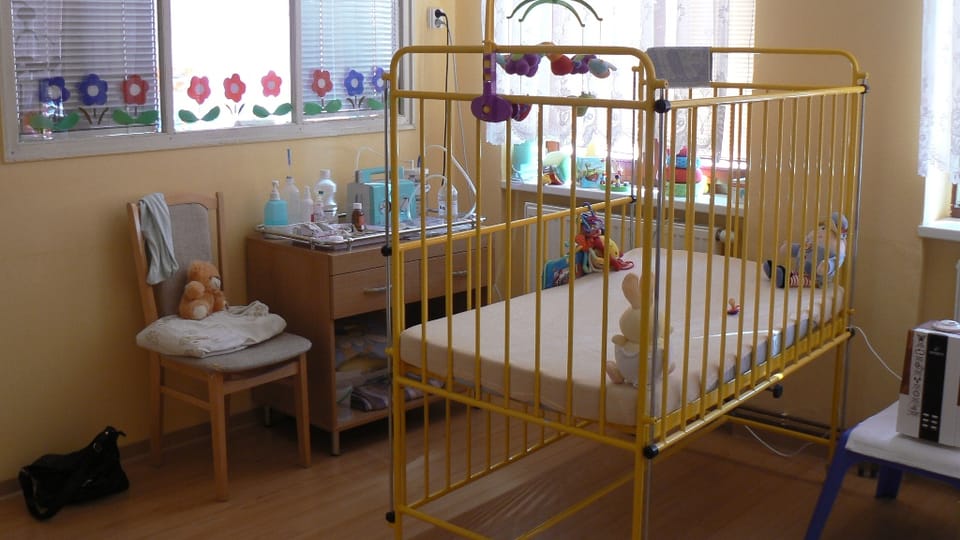
One of the more complex aspects of baby box adoptions is the legal process. Even after a child is placed in a baby box, the biological parents retain their parental rights for six months. Only after that period is the child legally cleared for adoption. That uncertainty can be emotionally challenging for adoptive families.
“It could be difficult if you’ve had this beautiful child in your care for three or six months, and then after five months, the biological parents show up and say they want their rights back. That’s totally fine, but for us as adoptive parents, that could be a tough time.
“You’re trying to bond with the child, and then she could be taken away. You don’t have any rights to see her or be with her. That could be really difficult.”






