Skepticism high in Czechia regarding Putin’s willingness to stop the war

The eyes of the world are on Washington, where President Trump, President Zelensky and EU heavyweights will debate further steps in ongoing talks to secure peace in Ukraine. While Prague is backing efforts to stop the bloodshed, Friday’s meeting in Alaska has evoked deep skepticism regarding the chances of securing this goal without selling out Ukraine’s national interests.

Czech Prime Minister Petr Fiala (SPOLU) joined in a video conference of leaders of the Coalition of the Willing, ahead of Monday’s talks, stressing the importance of maintaining EU unity and expressing strong support for Ukraine, which will now come under pressure to make important decisions regarding its future.
"We agreed that the immediate priority must be to bring an end to the killing, and that clear security guarantees for Ukraine from the United States and Europe will be absolutely essential for further negotiations," Mr. Fiala wrote on X.
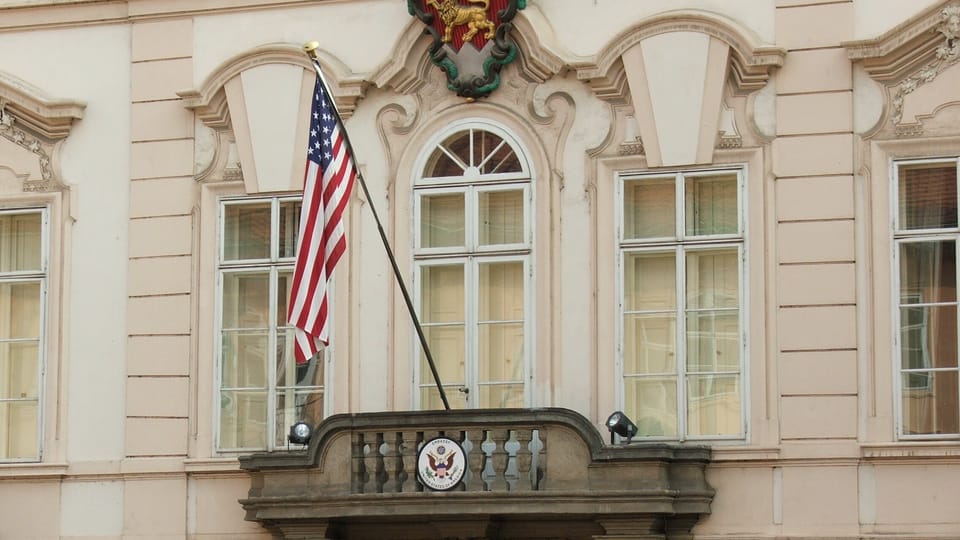
However, in the wake of Friday’s Trump-Putin talks in Alaska, there was a widespread feeling of mistrust in Czechia regarding Vladimir Putin’s intentions. Politicians of the ruling coalition emphasized that not just Ukraine’s future, but that of Europe was at stake. The Czech prime minister was very forthright on that count.
"The Alaska meeting clearly showed that while the United States and its allies are seeking ways to achieve peace in Ukraine, President Putin is striving for maximum territorial gains and the restoration of the Soviet empire," he wrote on X after the closely-watched talks.
Czech Foreign Minister Jan Lipavský (SPOLU) also stressed that Russian imperialism would not stop at Ukraine’s borders and warned against Putin’s ambition to roll back Europe’s security order to pre-1997, i.e. before the Czech Republic and other states of the former communist block joined NATO.

“We heard Putin repeat his demands. His rhetoric has remained the same for three years – rhetoric aimed at destroying Ukraine, destroying its sovereignty, but also directed against us, because it seeks to redraw the map of Europe back to 1997, when we were not in NATO. What matters is that we continue to maintain a strong connection between Europe and the United States. That is happening — we are aligning our next steps. I think it is crucial in this sense that the Czech Republic is part of the Coalition of the Willing, where a number of important discussions are also being made, ” Lipavský said.

Czech Defence Minister Jana Černochová (SPOLU) expressed a similar view, pointing out that the Trump–Putin talks in Alaska had brought no substantial progress toward ending the war in Ukraine.
“They only confirmed that Putin is not looking for peace, but for opportunities to weaken Western unity and spread his propaganda,” the minister wrote on X. She said the meeting’s significance lay precisely in revealing Putin’s true motives and mindset, and stressed the need to preserve Western cohesion and to remain steadfast in supporting Ukraine.

In an interview for Czech Television, Jakub Landovský, former Czech ambassador to NATO, also expressed the view that Putin has no intention of stopping the war. “Russia will continue to exploit the fact that it is still gaining a little on the front every day. That dynamic now works in Moscow’s favor, so it will play for time and continue its aggression, while benefitting from the fact that it is no longer in diplomatic isolation” he predicted.
The main opposition parties, ANO and Freedom and Direct Democracy (SPD), which have criticized Europe for lack of action in trying to seek a peace agreement, said they appreciated President Trump’s initiative and expressed the hope that it would lead to an end to the bloodshed –even at the cost of concessions.
According to Western media sources, Putin is conditioning an end to the war on Ukraine relinquishing the entire Donbas — the Donetsk and Luhansk regions — including its fortifications that prevent Russian forces from advancing further west. In return, he is reportedly willing to freeze the current front lines in the Kherson and Zaporizhzhia regions, which Russia occupies only in part. Russia would also keep the Crimean Peninsula, which it forcibly annexed in 2014.
Russia is also ruling out Ukraine’s entry into NATO. According to Trump’s envoy Steve Witkoff, however, Putin agrees that the United States and Europe could provide Ukraine with security guarantees similar to Article 5 of the North Atlantic Treaty on collective defense.