Saint Ludmila statue, stolen 30 years ago, is back in Czechia

After borders opened in the early 1990s, churches in remote parts of Czechia became frequent targets of art-theft. Valuable statues and paintings were stolen, often ending up with resellers or in foreign auction houses. Now, decades later, some of these treasures are making their way back, among them the long-lost Baroque statue of Saint Ludmila, which was handed over to the authorities in Prague last week.
The wooden statue of Saint Ludmila was stolen in 1994 from the Chapel of the Assumption of the Virgin Mary in the village of Schořov near Kutná Hora. Three decades later, it surfaced at an auction in Stuttgart and was last week officially returned to the Czech Ministry of Culture, in the presence of representatives of the National Heritage Institute, Czech police, and the State Criminal Office of Baden-Württemberg.
Magda Němcová from the Ministry of Culture, who is responsible for the protection of cultural property, says the recovery of Saint Ludmila was unusually smooth compared with most cases.
“The process was unusually quick because the holder of the statue possessed it in good faith, which is a key factor in determining how we reclaim a cultural object. In this case, the holder agreed to voluntarily return it, and so the release of the statue itself was very fast.”

Most recoveries are not nearly as straightforward. The first step is usually to secure the object, often with international police cooperation. Once located, experts confirm its identity before legal claims can be made. This process can take as long as three years, from identifying and confirming the item to returning it to the country.
Recoveries may also be slowed by disputes. Some holders refuse to accept the identification of an artefact, while others alter stolen works to make them harder to trace. A painted statue might be stripped of its polychrome or gilded, and saints’ figures are sometimes modified by repositioning their hands or swapping attributes.
In the case of Saint Ludmila, however, things came together in an unusually favourable way, says Ms. Němcová.
“The holder not only recognized the statue as stolen but also did not insist on compensation, which a good-faith holder is entitled to under European law. It was also extraordinary in another way. In about 97 percent of cases, the legitimate owner has to travel with us to the location of the item to collect it. Here, the generosity of the Stuttgart police meant that the travel costs were covered by them. So, I would say, Saint Ludmila’s return was truly under a double lucky star.”
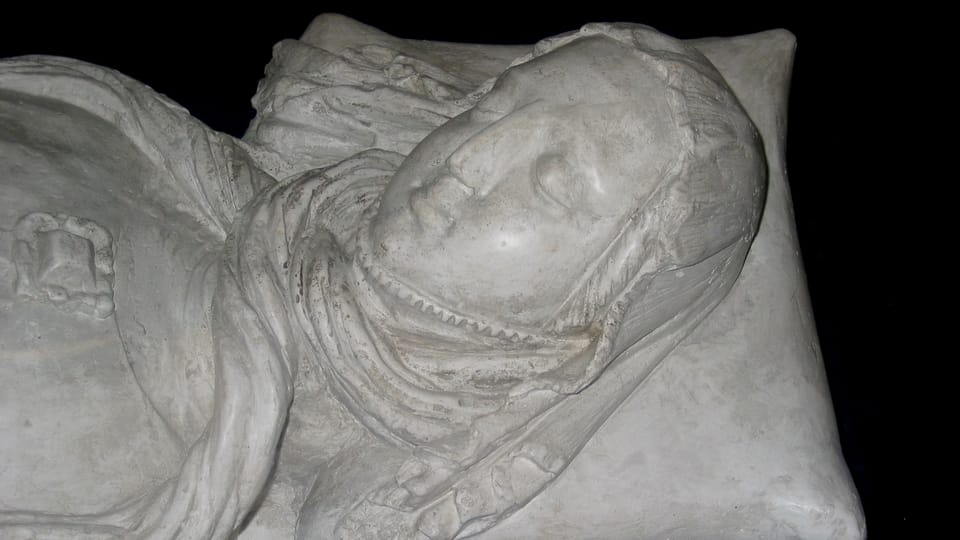
The story of Saint Ludmila is just one of many since 1989. After the fall of communism, churches, especially in the border regions, were looted, and stolen treasures often appeared abroad. Despite modern security measures, more than ten thousand sacred objects remain missing.
Returning them to their rightful owners is a key task for the Ministry of Culture, a tprocess that relies on close cooperation between art historians, police, and lawyers. Thanks to international efforts, a few stolen artefacts have been successfully repatriated in recent years, but many more are still waiting to be found.
The statue of Saint Ludmila will now be returned to the Diocese of Hradec Králové.