Ronald Waterman: one of the last living Dutch Jews who passed through Terezín

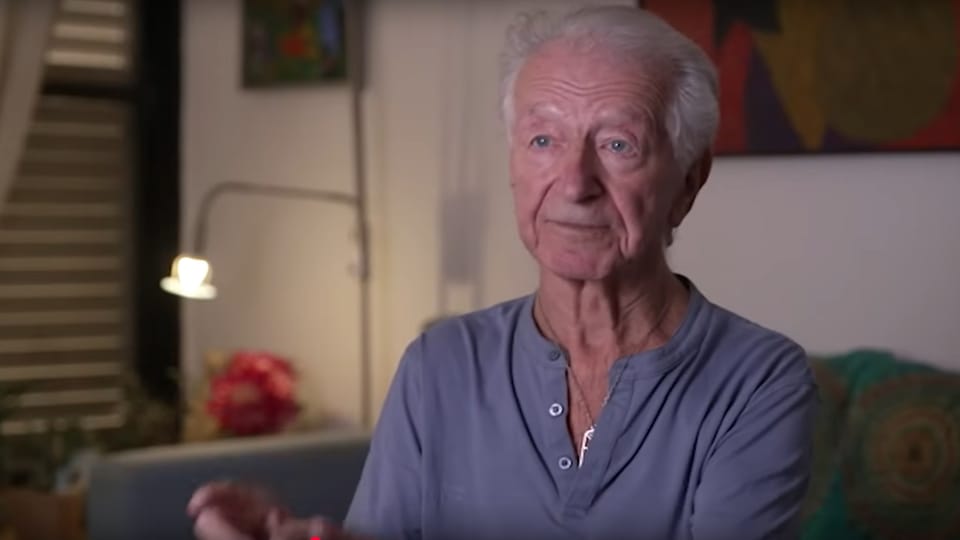
Ronald Waterman is one of the last living Dutch Jews who passed through the Terezín Ghetto during World War II. At the age of 90, he still works, publishes in the field of environmental engineering, and speaks several languages.
Ronald Waterman is one of four children born to university professor Hein Israel Waterman and his wife Marie. He was born and raised in the historic city of Delft, where he lives today. Although the Waterman family was not particularly religious, Hein Israel Waterman proudly identified with their Jewish roots. In May of 1940 the family’s peaceful existence was cut short when the Netherlands was invaded by Nazi Germany. Ron waterman recalls the first indication that something was not right.

“I remember calling my mother in the morning to tell them to stop banging. But it wasn’t banging. It was the beginning of the war, with anti-aircraft guns firing and bombs falling near The Hague.”
A five-year period of Nazi occupation soon began. A German garrison moved into the Waterman home, first a Wehrmacht soldier, then an SS officer. According to Ronald, who was six or seven at the time, the German soldier behaved respectfully, unlike the SS officer, who was very arrogant.
Restrictions on Dutch Jews gradually worsened. Ronald was no longer allowed to attend school, and he was distinguished from other children by the yellow Jewish star he had to wear on his chest. Although deportations of Dutch Jews to the Westerbork camp began in July 1942, the Watermans were not yet on the transport lists.
“My father arranged for us to be registered on a special list called the Barneveld list, which was supposed to temporarily protect us from deportation. Our names were also on the Palestine list, intended for exchange. It was a false hope.”

The Barneveld list included Dutch Jews considered culturally or scientifically significant, such as professors, artists, scientists, and doctors. They were placed in so-called Barneveld facilities to be “protected” from deportation to extermination camps. The initiative came from K. J. Frederiks, Secretary-General of the Dutch Ministry of the Interior, and the plan was also nicknamed the “Frederiks Plan.”
Besides people like Frederiks, ho tried to help Jews, there were many collaborators.
“I remember the collaborators from the NSB (Nationaal-Socialistische Beweging — the Dutch Nazi political party that collaborated with the Germans). They stole our family silver. We couldn’t do anything,” he recalls.
Dutch police often actively assisted in the arrest of Jews and one day they came for the Watermans. They assisted the German uniformed order police in arresting them and taking them to the police station. “We felt like criminals,” adds Ronald Waterman, who was seven at the time.
The Germans then transferred the family to The Hague, but after his father argued they were on the Barneveld list, they were released and returned home. As it later turned out, they only stayed in Delft for a few weeks.
At the end of March 1943, the entire family, father, mother, and children, were interned at Schaffelaar Castle in Barneveld, one of three places where Dutch Jews from the Barneveld list were held. The other locations were Villa Bouchina in Doetinchem and Biezen Castle, also in Barneveld.
The Watermans feared for their future and lost all their property.
“I was a child and my parents dealt with these troubles. On the other hand, I was happy to finally be surrounded by children who also wore the yellow star on their chests. Many scientists lived with us at the castle. I helped a biologist catch insects. Those insect specimens, all those beetles, butterflies, and bees, were preserved and are now housed in the national natural history museum in Leiden.”
At the end of September 1943, SS units surrounded the castle, and on September 29, Ronald and his entire family were deported to the Westerbork camp. Every week he had to watch transports leaving for the East, as more and more Dutch Jews disappeared without trace. Later, he fell ill and spent time in the camp hospital.

Less than a year later, the deportations to the East caught up with the Watermans. On September 4, 1944, they boarded transport XXIV headed for Terezín. “We spent two days and two nights locked in a cattle car with about 75 other people and only one bucket as a toilet,” he recounts. On September 6, 1944, they arrived in Terezín — known to them by its German name, Theresienstadt.
“The arrival was terrible. I remember the shouting and beatings, then they herded us into barracks. I desperately needed to pee, I still remember that, but I couldn’t find a toilet,” he recalls of his first moments in the Terezín ghetto.
In November 1944, the Nazis ordered urns with the ashes of deceased prisoners, previously stored in the columbarium, to be dumped into the river. Prisoners formed a roughly one-kilometre-long chain, passing the urns under guard supervision, and poured the ashes into the Ohře River. According to his memory, ten-year-old Ronald Waterman also took part in this process:
“The urns had names and numbers on them. We passed the urns among ourselves. One boy said that his grandmother was in that urn. It was very emotional and unforgettable.”
Toward the end of the war, evacuation transports arrived in Terezín, which Waterman watched from the windows of the Hamburg barracks where Dutch Jews were imprisoned. “The sight of the emaciated and dying prisoners in striped uniforms stays with me to this day” he says.

At that time, a typhus epidemic broke out in Terezín. Ronald’s two brothers contracted it but luckily survived.
Almost miraculously, all members of the Waterman family survived: Prof. Dr. Ing. Hein Waterman with his wife Rosette, and Ronald’s older siblings Jaques, Abraham, and Anette returned to the Netherlands after the war. But after liberation, they faced another shock: their house in Delft had been occupied by strangers. They couldn’t return and stayed with a host family.
In 1947, Ronald Waterman started secondary school. He devoted himself to his studies, because, as he says, he wanted to be useful to the world. Besides environmental engineering, he was also involved in regional politics. He didn’t talk much about the Holocaust until recent years. Nevertheless, he still keeps many written documents about his imprisonment in Terezín in his personal archive, including the famous Terezín banknotes.
During our interview, he even sang a song in Czech, “Two Blacksmiths in Town,” which he learned in Terezín, and expressed the wish to visit Terezín once more. Hopefully, his health will allow it.
Related
-

10 Incredible Stories From World War II
Jiří Klůc has travelled around the world to find the last survivors of WWII and record the stories of soldiers and ordinary people caught up in the conflict.
-

80 years ago: How did WWII end in the Czech lands?
Eighty years ago, the most destructive and lethal war in history approached its end. In this series we map the last stages of the war and its aftermath on Czech territory.