Czech composer Karel Havlíček on scoring Hollywood trailers and the art of film music

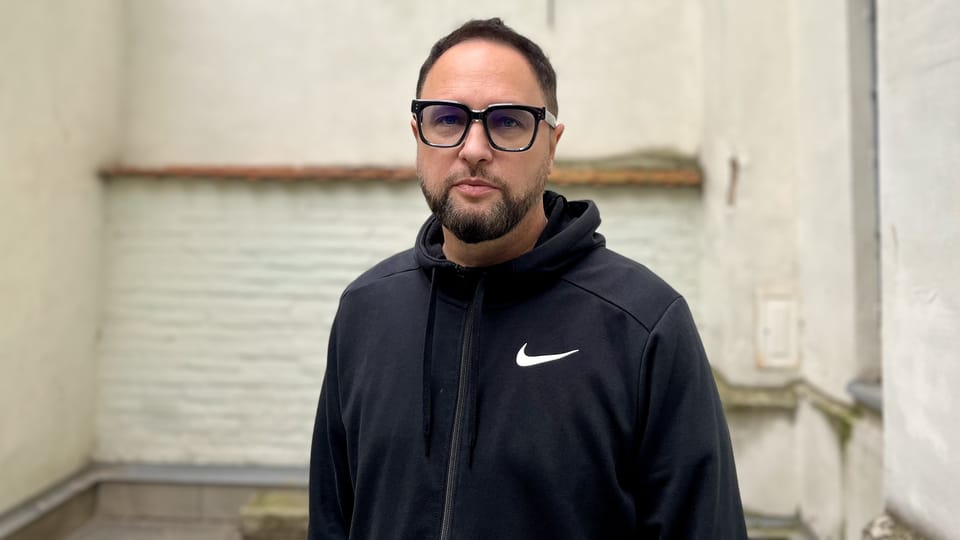
Karel Havlíček is a composer who works between Prague and Los Angeles. His CV includes the music for the trailer of hit TV show The Penguin and the score for the major Czech film The Brothers, while he also created the theme music for the main evening news on Czech Television. I spoke to Havlíček, who is in his early 50s, at our studios in Prague.
What were your beginnings in music? Do you come from a musical family?
“I didn’t want to be a musician standing at the front of the stage and singing.”
“Kind of. My father played a few instruments, like violin and guitar.
“But my parents weren’t happy when I told them, at the age of 14, that I had decided to be a music composer.
“I didn’t want to be a musician standing at the front of the stage and singing – like every kid wants to be, a hero.
“I wanted to be the guy writing songs and describing the world around me.
“My father said I had to do something normal, because it was during communism and being a musician or actor was like being a class B person in the system.

“They were against it and said I should be a lawyer or something regular [laughs].
“I started by myself, exploring instruments. I started with the piano, which was a great idea, and have stuck with it until today.
“So I was kind of beating a path by myself.”
In the 1990s you played in the indie band Southpaw with Jiří Burian, who is now very big in more senses than one under the name Kapitán Demo. What are your strongest memories of your time with Southpaw?
“It was huge. I met them in 1998 and we started in 1999.
“[Being in Southpaw] was like a kid’s dream, just having fun.”
“Jirka Burian and I were both composers so we started together – and I had never worked with someone before.
“I was a little bit afraid and didn’t know what was going to happen, but we were really like one person.
“It was very fast and working together was so great.
“And also the shows. There were a lot of shows, a lot of travelling.
“The band was like a kid’s dream, just having fun, so I really have great memories of this period.

“But it was also heavy, you know. Sleeping on the floor and sleeping in garages, because there was no money for proper hotels.
“So it was pretty raw, but real. The interaction, seeing the audience when you play new songs – it was a big school for me.”
Were you equally as interested in rock music as you were in film music?
“Back then I was listening to rock and electronic music, because Southpaw was an indie-slash-electronic band.
“And also classical music – and right now I’m 100 percent in classical music.”
Now you’re known for doing music for films and TV series. When did you first become aware of film music and how it works on the viewer?
“I remember when I was a kid and my father took me to the cinema and I saw Star Wars, which was maybe my first movie.
“And it was super loud to me, in the cinema, and I was, like, Wow, that’s the thing that I want to do, this wave of loud music.
“I wanted to manipulate the audience’s feelings.

“Then I started describing the world around me and doing short pieces on a computer.
“I was doing more and more and it was step by step.
“I started with small jobs – commercials, short movies – and then really slowly started doing big ones.
“And till today I also play my own music with an orchestra.
“So it was a really long journey.”
Are there any particular composers of film music who you admire, or maybe draw inspiration from?
“My favourite was Johan Johansson, who was great. I remember Sicario and all these movies where he was bending a live orchestra.
“For me Jan Muchow was the guy where I said, Wow, he did it!”
“I always appreciate it if there’s something new in the music.
“I also like the classic composers, like Hans Zimmer, Olafur Arnalds, Max Ricther. There are a lot of names.”
How about Czech ones?
“Jan Muchow. He was my inspiration because for me he was the guy where I said, Wow, he did it [laughs].
“And also Karel Svoboda.”
What is the secret to creating film music that really works on an audience?
“Music is another story-telling line in a movie.
“You have to follow the cinematic visuals and add another layer of story-telling.
“The main thing is to understand what’s going to be on screen and to help to achieve a better overall movie.
“Also you need to understand the director, because everybody describes music in their own way and you have to read what they really want between the lines.”
Are some directors more hands on? Do others just let you do your own thing?
“A lot of directors and producers will speak to it, and you have to be skillful, to use psychology, to read people.
“You also have to have room for your work – sometimes you’re under big pressure because a movie is a product, they need to sell that product, and they say, Do something [laughs].
“But I enjoy doing music and I want to keep that positive energy – and want to keep business to one side.”
One of your best-known projects has been the Czech film Bratři, or The Brothers, for which you were nominated for a Czech Lion. It’s about the story of the Mašín brothers group, who shot their way across the Iron Curtain in the early 1950s. How is scoring a film set in the past compare to working on one set in the present?
“This is history, so the first question is, Will it be historical music or modern music?
“And usually it’s a blend. You’re using real instruments, an orchestra, and blending it with new, electronic stuff.

“It was the same with The Brothers. There were a lot of calls from the director, Tomáš Mašín, and the producer, Petr Bílek.
“We talked a lot about instrumentation, how big the orchestra was going to be and how big the score was going to be.
“We started with acoustic guitars, when the brothers were talking to each other.

“Then there’s electronic music during the escape, in the forest, and it ends with a big orchestra when the big army search for them is on.
“So it was very colourful. I tried to make one piece, so everything is compatible; when you hear it you go, This is The Brothers – I recognise the music.”
Do you always work with real instruments and real musicians?
“I always prefer it.
“When we have AI knocking on the door, I always want to keep living people playing the music – that’s what it’s all about.
“Of course I start with demos, because it’s very expensive to use an orchestra.
“You’re taught everything here. That’s helpful in the States.”
“We start with demos on the computer and try out different chord progressions.
“When the directors say, OK, that works, I go to an orchestra and then we record those parts, live.”
You also work in the US, where you did for example the music for the trailer for the huge TV series The Penguin. Your website says that you “work between Prague and LA”. How did you first start making some kind of impact in Hollywood?
“I have a twin brother, Maxim. He’s a painter and he moved to Los Angeles more than 30 years ago.
“So it was very easy for me – part of my family was there, so that was my safe harbour in LA.
“I met people there because my brother, as a painter, was part of the community. That was really helpful; he introduced me to directors and people like that.
“I started step by step. We were in a pub and a director told me had just finished shooting a commercial and was doing post-production, but he was having trouble with the music composer.
“He said he had to have something the next morning. That was 8 o’clock in the evening. I said I could work the whole night and deliver another option – and I won the project.
“So I went to the studio and met other people.
“I started with small projects and it step by step – similar to how it had been here in Prague.”
Is there a big difference between working on Czech productions and Hollywood productions?
“I think there is [laughs], because of budget.

“There are always more people in the studio. You’ve got more studio technicians, music editors.
“Here you have to do everything by yourself: editing versions, alternate versions.
“In the States you have a lot of people who help you and you can focus more on the work.
“Also you have more time to look for new ways.
“That’s great. Sometimes you reach a dead end, but still you tried.
“Here you have no time and less money, so you have to work more.
“But you’re taught everything here. You can do everything.
“That’s helpful in the States, because if something happens you can deal with it; you know everything.
“So it was pretty good to start here, to know everything, and then to move there.
“It’s an advantage.”
Are people in the industry in both places equally demanding? Are the Americans more professional?
“I think in America it’s more like a product. They see a movie as a product from the beginning.
“They do a lot of research and target audiences, everything like that.
“Here, I think, it’s not that much about money – it’s more about art.”
How much time do you spend in the US? Are you there for, like, half the year?
“Right now I have a baby and family here, so I’m here a little bit more.
“I also opened a recording studio here so right now – since Covid, let’s say – my base is here.
“I do everything remotely. In the Covid time remote working was at its peak and everybody said, It worked – let’s keep it that way.”
Just this morning I heard an interview with an American musician who was saying that he writes songs with other people – and now does it over Zoom. Do you also work that way?
“I do. It’s more than Zoom – there’s a special plug-in in your composing software, so it’s very easy.
“Yes, we do it a lot.”
Can you describe the process a little bit?
“I don’t like it that much, because I really want to see the person – and I love to have a conversation before recording with the people who play with me.
“To just have fun and relax for an hour or two. You try to get on the same wavelength – and then just grab an instrument and play.
“In Zoom, it’s more technical. You see someone you’ve never met before in person, so it’s a little bit different.
“But sometimes if we do a quick project – like a commercial, where there’s time pressure – there is no other option and you have to use remote recording.”
You do music for trailers. I was not aware there was any such thing. How is music for trailers different from music for movies?
“It’s totally different. A trailer is like an advertisement for a movie, which means you need more commercial music than cinematic music.
“There are also waves of what is catchy right now in the pop charts, so you use the same sounds.
“Remakes of old songs in a modern way are also on the rise.
“So if you watch trailers, a lot of the same patterns are repeated.”
If you’re doing a trailer for The Penguin, for example, do you use music that’s also in the series, or is it something totally different?
“Totally different.
“If there’s a mega-hit in the movie, they will use it sometimes – and somehow tweak it.
“But usually you start from scratch and do a new, short version capturing the atmosphere of the movie.”
Are there people who only do trailer music?
“[A trailer] is like an Instagram video – you have to get engagement in the first few seconds.”
“Sure. And they are the best, because they’ve trained really, really perfectly.”
That’s amazing. I had no idea about this.
“There are trailer houses, with editors, directors and music composers doing only trailers.”
And what makes good trailer music? Does it have to be punchy?
“Sometimes it’s good if it’s a remake, because people recognise the song.
“It has to catch the interest. It’s like if you see an Instagram video – you have to get engagement in the first few seconds.
“There must be something that’s unique and ‘wow’ at the beginning.
“There also has to be dynamics, story-telling with the music and big cuts – like very loud and very quiet.”
You also did the music for the Události, main evening news on Czech Television. What’s the background to that?
“It’s pretty old music, maybe 15-plus years old now.
“There was a big competition for the new music.
“They said there should be a legacy from big composers like Smetana and Dvořák – and it’s the brand music of the station – so it was pretty stressful like that.
“Also there’s the issue of repetition. If you hear music that’s repeated every day, sometimes you start to hate it.
“It should be on the edge – really visible, but not too much. So it was tough.
“When I started they said it was for Události but that they also wanted music for the whole of ČT24, the news channel.
“And when I finished the head of the station called me and said he wanted to meet me. And he said, My friend, why is it revolution not evolution?
“So then I tried to do it as best I could, with a fresh feel, and he said, OK [laughs].”
After 15 years or whatever, are you sick of it?
“No, I’m not. I still love it. Also if I see other stations I think it’s still the best [laughs].”
Also it seems to me that work like this transcends regular soundtrack work. It reminds me a bit of Brian Eno doing the start-up music for Microsoft Windows – everybody knew it. And everybody in this country can recognise that piece of music.
“Yes, for sure. Which is great – it’s awesome.
“Sometimes big things come in but I don’t see them as big. I just do them and then I see, Oh, it’s huge!
“So thank God I didn’t realise that before, because I would be nervous [laughs].”
What are your hopes for the future, Karel? Obviously you’ve achieved a lot already, but what are your ambitions still?
“You know, I’m living my dream, so I want to keep it that way.
“I can wake up and I don’t need to go to work. I just do great stuff.
“So I want to keep that way. I love the process of making music.
“I don’t need super movies or super trophies – I just want to keep doing the music, because it’s the best.”