“Totally fresh” documentary If Pigeons Turned to Gold chosen as Czech submission for Oscars

If Pigeons Turned to Gold has been selected as Czechia’s submission for the Best International Film at the 2027 Academy Awards. A raw and inventive documentary, it explores addiction in director Pepa Lubojacki’s own immediate family. But can such a film have a chance at the Oscars?
If Pigeons Turned to Gold (Kdyby se holubi proměnili ve zlato in Czech) has been selected by the Czech Film and Television Academy as the country’s nominee for the Oscars next year.
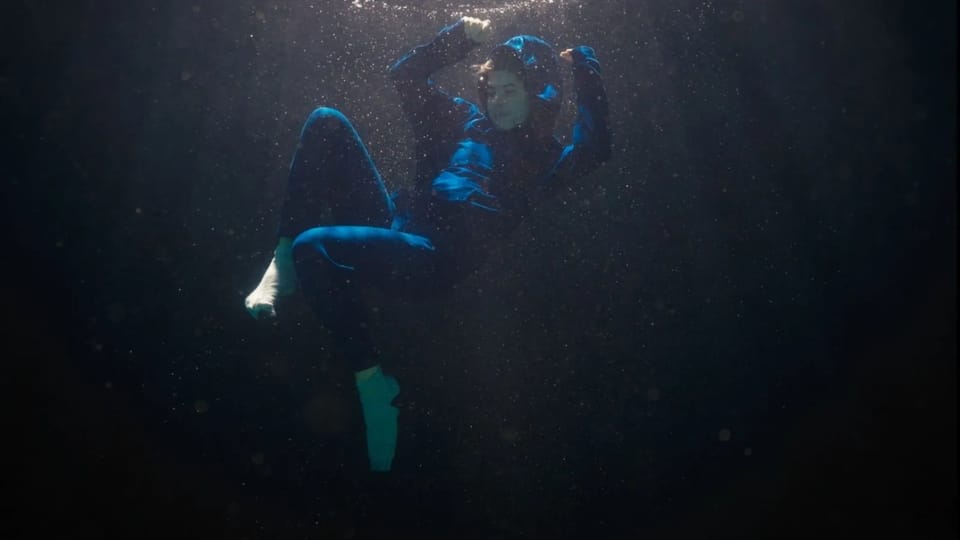
The documentary was directed, written and co-edited by Pepa Lubojacki, who also did a lot of the camera work, including on a mobile phone.
The raw film is centred on the sometimes shocking impact addiction has had on close members of Lubojacki's own family.
“I wanted to break through the stigma surrounding addiction and life on the streets. It also involved some anger at the system, because my cousin lost both his legs after he didn’t receive prompt hospital care.
"I also experienced police violence against people on the streets, including my own brother. I wanted to get all of this out of me, but I never imagined that this would become a major film.”
Vojtěch Rynda is a film critic. I asked him what made If Pigeons Turned to Gold special – and what its actual Oscar chances might be.
“I think one of its main qualities is what Pepa Lubojacki herself describes as brutal honesty. It’s an approach of really letting it all go and being as honest as possible. About herself, about her family, about relationships and about addiction.
"So that’s one thing. Another one, at least for me, is the totally free-form structure or approach that she uses. She uses everything from hand-held cameras to AI to stylized piegons talking. That’s what makes it totally fresh and almost intoxicating.”
How do you view the fact that the Czech Film and Television Academy has selected this film as the country’s submission for the Oscars?

“To be brutally honest myself, I think that they finally realised that films about famous Czech personalities and World War II don’t have as big an impact outside the Czech Republic as they thought.
"So this is the second year in a row that they chose a documentary, after I’m Not Everything I Want to Be [by Klára Tasovská], about the photographer Libuše Jarcovjáková. And I think it’s a wise move, because these films are – for the lack of a better word – not as ‘academic’. They are very fresh, very personal, and they have a universal appeal.”
But still, this is a highly unconventional documentary. Do you honestly believe that the voters in the Academy in Hollywood would select this film as a nominee for Best International Film?
“One the one hand, I think t’s very brutal and very intense for the Oscars Academy. But on the other hand, it has already won the Best Documentary prize at the Berlinale.
"So I think that could open some doors. And I think the originality of the movie is something that could help it in the eyes of the Academy.”