Czech farmers turn to sunflowers, experiment with figs and olives, as drought and heat intensify
Due to drought and heat, Czech farmers are looking for new crops that can better withstand such conditions. Increasingly, they are opting for sunflowers instead of rapeseed. In the eastern parts of the country there have even been attempts to grow figs or even olive trees.
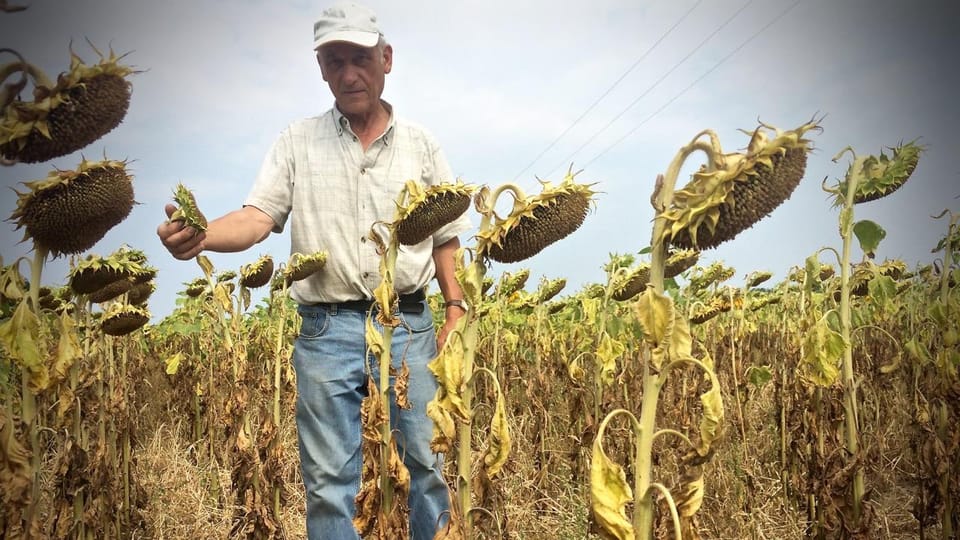
People driving through Central Bohemia can now admire vast fields of ripening sunflowers. According to data from the Czech Statistics Office, farmers sowed sunflowers on 33,000 hectares this year, 12,000 more than last year. Jan Bursík who runs the Domašín Farm says it was a good decision.
“I have been looking for more alternative crops that can cope with climate change long term, because we are dealing with it more and more every year. I had been thinking about sunflowers for some time, for several years already. Now an opportunity arose in terms of sales as well, so we currently have 45 hectares.”
Bursík says sunflowers have coped well with this year’s extreme weather.
“They handled the drought noticeably better than other crops. Ripening is relatively quick. The entire pattern of crop growing is changing. Crops that are normally harvested in October, such as buckwheat, will be harvested almost two months earlier,” he adds.
The Patákovi family farm, also located in Central Bohemia, has also switched to growing sunflowers. Its owner Lucie Patáková says they started growing sunflowers two years ago.
“Last year was a trial-year, it was a nice change and another crop to add to our commodities. This year we were already counting on it, and there was demand for it as well. We sold it directly from the farm in bags and sold everything this way, so this year it was clear that we would continue and even expand. Last year we had three hectares, this year we planted eight,” she says.

Czech farmers around the country are increasingly trying to adapt to extreme summer heat and a lack of rainfall, says Barbora Pánková, a spokesperson for the Czech Agrarian Chamber. In Moravia, which traditionally has a warmer climate, this is even more prominent.
“In South Moravia and other warmer regions, there have even been attempts to grow figs or even olive trees. For now, however, these are individual projects rather than a trend that would fundamentally change the structure of Czech agriculture.”
According to Pánková, adapting to increasingly severe drought and high temperatures is essential, and farmers are also looking for more resilient varieties of conventional crops. But when an extreme year such as this one arrives, even those measures cannot guarantee good yields.
“This year is once again showing us that simply changing crops is not enough. We entered the summer with a significant lack of moisture, and high temperatures then hit crops during a sensitive stage of development and negatively affected their yields,” she says.
Farmers are thus relying on technological development that may further increase the resilience of crops to these excesses in the years to come and improving existing irrigation systems.