“When I go to the US people only know Kundera” – Jan Zikmund on bringing today’s Czech writers to the world

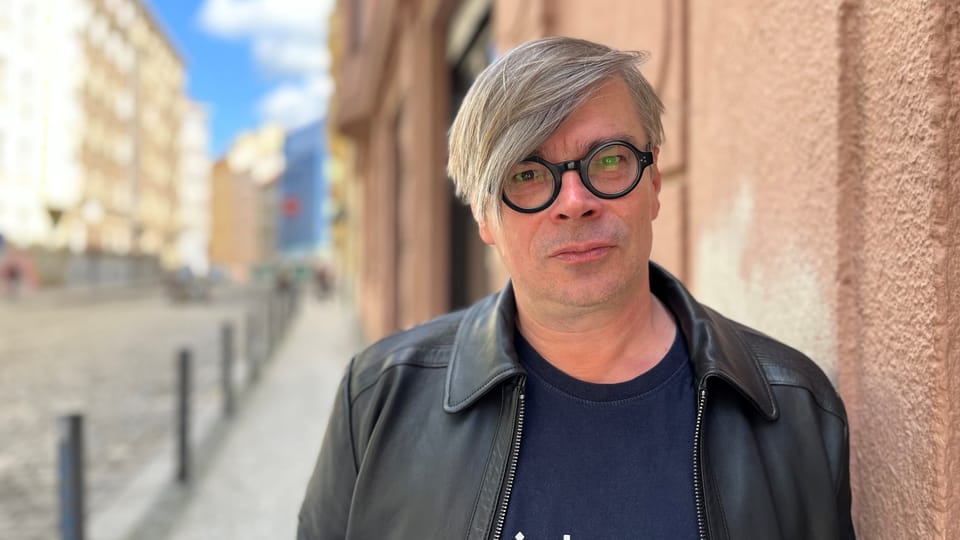
Earlier this year, Jan Zikmund launched Zikmund Literary, an agency that primarily aims to help Czech authors find readers around the world. But how does he plan to achieve this? How do books from this country tend to fare in foreign markets? And what other states can Czechia learn from in this arena? I discussed these questions and more with Zikmund, who is in his mid 30s and previously helped promote Czech writing in English-speaking countries at the state-funded Czech Literary Centre.
“I felt there was a need for a new literary agency here. There are a lot of writers and poets that have no foreign representation.
“There are some publishing houses, like Host, Paseka and Argo, that have people that are focusing on promoting their books abroad. But there are other publishers that don’t do this service for writers.
A lot of writers and poets have no foreign representation.
“This year Czechia will be the guest of honour at the Frankfurt Book Fair, which is a big thing, and, not just because of this, I felt that there was room for a new agency.
“And because I learned so much at the Czech Literary Centre, I had this desire to use my contacts and knowledge and build something on my own, something independent.
“I spent six years at the Czech Literary Centre and I thought I’d like to try something new and focus on specific authors, rather than representing the whole of Czech literature, which I was doing there.”
Are there any other agents offering the kind of services you are now offering?
“Yes, there are another three or four agents that are already representing some Czech writers – and I think they’re doing a fairly good job.

“But the Czech literary scene is quite big, and there are all these different genres; so it’s not just fiction – there are comics, there is poetry, there is sci-fi.
“I think most agents focus on fiction, and I would like to maybe focus also on the other literary forms and genres. So that’s kind of a difference.”
When it comes to literary fiction, what’s the position of Czechia today on the world “market”? Do many Czech books reach readers internationally? If they do, how much success can they really have?
“There’s been a debate for years about this issue.
“A lot of people say we don’t really have anybody prominent, anybody that would be a world-class writer.
“That’s partly true, but partly false, I think. When I go to the US people only know Kundera [laughs].
“They always mention Kundera. Maybe some people know Hrabal or Klíma. But people don’t really know anybody contemporary, that’s true.

“But at the same time, I think there are some writers – like Marek Šindelka, Radka Denemarková, Jaroslav Rudiš, people like that – who have had success in one particular country.
“In the case of Rudiš and Denemarková, that’s Germany. Šindelka has been doing very well in the Netherlands. We have some writers who are quite popular in Poland.
“So I think that this kind of local prominence has been there, and these writers could build on that.
“I feel that we have talents here, and some great writers, but I think that we are still looking for our Olga Tokarczuk, in a way – somebody who would jump one level higher and gain worldwide recognition.”
But is the problem then that Czech writers aren’t at that level and it’s not really about marketing or reaching outside the country’s borders? That’s what it sounds like.
“That’s hard to say, because very often it’s about the promotion, and about having a good literary agent [laughs].
“It’s also about being lucky sometimes.
“Sometimes all it takes is some big American publishing house that maybe knows your agent and then you get published by a big press – and then other countries start paying attention and say, Oh wow, we should also publish this person.
“So sometimes it’s about luck as well.
“And that’s also why I’m starting a literary agency.
“I think Czech literary agents are also improving and I feel that once they function very well there’s a much bigger chance that at least one or two fiction writers will get a bigger reputation.”
Are there any particular countries from which the Czechs could draw inspiration from, which maybe punch above their weight in this regard?
“I think generally we should look north. Finland for example. They were the guests of honour at the Frankfurt Book Fair in 2014 and they had a very nice and successful presentation there.
“They collect stats about the state of Finnish literature abroad and I know from their stats that they’ve had a lot of interest from UK and US publishers, especially in the years after the Frankfurt Book Fair – maybe the year of the book fair and then a year or two later.
“I think they’re doing a very good job there. They have a wonderful literary centre in Helsinki.
“They are a similar size – it’s also a fairly small country and small language – and I think we can definitely draw inspiration from them.
“And then obviously Norway, Sweden, Denmark – these countries have been doing a very good job, I think.”
Given that the Czechs are going to be the guest of honour in Frankfurt this year, do you think they’re well prepared to make the most of this opportunity?
“I think the Czechs definitely are ready. The Moravian Library and the Czech Literary Centre are doing a good job in preparing this project, and we will see how the presentation in Frankfurt looks.
“But what is important to point out is that the agency work and the effort to bring Czech writers into foreign languages is very much dependent on the Czech Ministry of Culture and their grants.

“These grants support the publication of Czech books abroad, so foreign publishers can apply for funds that cover the translation costs and printing costs.
“And without these grants the whole Frankfurt project will not be as successful.
“So my hope as an agent is that the Czech Ministry of Culture will keep those grants active, and that there’s going to be a lot of funding in those grants. Because that way Czech writers have a chance to be published abroad.”
I speak to people in many areas of the arts and pretty much everybody I meet is facing financial stress, at least. How are Czech writers and the Czech literary scene in general faring economically at the moment?
“It’s hard for me to judge the whole scene, but most recently there have been some cuts in grants for Czech literary magazines and festivals.
“That’s really concerning, because as you can imagine, editors of Czech literary magazines are doing the job for little money and they can’t pay big fees to contributors.
“So if they have even less money, it will just make the job much harder for them. That’s a big worry.
“It may take a year or two before we see the Frankfurt effect.”
“In terms of foreign promotion, I think that in the past few years Czech Ministry of Culture grants for foreign publishers have been really working very well.
“Compared to some other countries, we have very functional grant support.
“I only hope that the Ministry of Culture knows this and that they keep this programme alive, that there’s going to be a lot of money, even after Frankfurt, in this grant programme.
“Because it may take a year or two before we see the Frankfurt effect and it’s important that we are ready for the interest coming from, let’s say, the US, Spain and other countries.”
To backtrack a little, or to take a diversion, it has struck me in the past that there were Czech writers who enjoyed success in, for example, the 1980s, who perhaps weren’t fantastic writers but still had an international profile, or sympathy, essentially because of their story. Would you agree with that?
“I agree with that. The same goes for the whole country. I think we were more appealing to Western readers.
“Because obviously writers here were under pressure during the Cold War – it was kind of exotic that some Polish or Czech novel or poetry collection would be published in the West.
“So our political situation made us more interesting, more appealing.
“RIGHT NOW, it’s a bit more difficult, but I think there is definitely still the potential for us to be interesting.”
When it comes to different genres, which are the ones that you think could give Czechia some international hits? Or that could sell relatively well?
“I think it’s definitely comics, or graphic novels.
“When I was still working at the Czech Literary Centre we had a lot of success promoting Czech comics abroad.
“A lot of people say we don’t really have anybody that would be a world-class writer.”
“I know that several Czech graphic novels have recently been published in French translations in France, and France is probably the most important comics country in Europe, if not in the whole world.
“So that’s been great. And also there are other graphic novels published in Germany, in the UK, in Spain.
“Some people even say it’s a golden age of Czech comics right now. There are some established comics artists, like Jaromír 99, or Jaromír Švejdík, and Lucie Lomová.
“But there are also many up-and-coming talented artists like Štěpánka Jislová, Kateřina Čupová.
“Some people even say it’s a golden age of Czech comics right now.”
“That’s really something special, I think, so graphic novels definitely are appealing.
“And then my background in poetry, and I believe we have several world-class poets.
“I’m lucky to represent people like Petr Hruška or Milan Děžinský, who has just been published in the US by a very, very good publishing house there.
“So I think in the world of poetry we also have something to offer.”

You also work as a translator and editor at Karolinum Press. About your own translating work, are there any particular projects that you’re most proud to have been involved with?
“I work at Karolinum Press as a literary editor, so I focus on editing translations.
“But apart from that I am also a freelance translator, I would say.
“For example, last year I was very proud of one specific project, which was an anthology of contemporary American poetry, which was published at Odeon.

“I was the editor of that and also translated one-fifth or one-quarter of the book.
“That anthology was a long project, but I feel it was important, because the last anthology before this one was published in 1990, so shortly after the revolution.
“The most recent thing is that at the end of May my translation of Joshua Mensch’s poetry book Because will be published by Druhé město in Brno.
“Joshua Mensch is a Canadian poet living in Prague for a long time. His collection Because was published by Norton in 2018 and was shortlisted for the biggest Canadian award, so I’m very happy that now the Czech edition is going to be available as well.”
Do you write poetry? Can somebody translate poetry if they’re not a poet at all?
“I don’t write poetry myself, but I’ve always had a lot of fondness for poetry, and I feel I can understand poems well.
“And I almost don’t want to be a poet at this point, because I feel that I can be more objective in a way.
“I’m not expecting any favours from poets [laughs] – I can just read their work, translate their work, edit their work.
“I feel that what you’re saying was maybe more true let’s say 50 or 70 years ago, when most poets still wrote in form – they were still using rhymes and metre.
“Then it’s much more difficult to translate. Sometimes it’s almost impossible really.

“But right now, most people write in free verse. And even though I think it’s still harder to translate than fiction – I think you need to pay attention to other things than when you translate prose – it’s more manageable. It’s definitely something that non-poets can do.
“And my last point on this: When somebody asks me this question I always reply, Look at Martin Hilský.
“He’s one of the best translators we have ever had. He’s been able to translate Shakespeare’s sonnets so well it’s hard to believe.
“I don’t think he’s a poet either, so it can be done.”
I translate a bit, for instance articles, or occasionally books, and in terms of payment: you get paid per page. How does it work with poetry? A lot of thought must go into it, but it can’t really be measured in that way.
“Yes. It’s kind of complicated. In theory, you can be paid per line, or per poem.
“But usually payments for poetry translations are just symbolic. For most people I know who translate poetry it’s like a passion project, that they’ve been working on sometimes for years.
“So it’s not great, but it’s understandable, because poetry, and especially poetry in translation, doesn’t sell well – so the publishers can’t really offer big payments.
“It’s usually just a labour of love.”
Getting back to your literary agency, how many writers do you have? Are you looking out for more? What are your plans in that regard?

“At this point my agency represents 15 authors, but I would like to add more.
“I’m also specifically looking to add more writers and poets from Slovakia, and potentially Poland and Germany; I don’t want to focus just on Czech writers.
“So I’m going to be adding more, but obviously I need to be very careful not to add too many writers, and to only add writers that I would really like to work with long-term.”
Where would you like Zikmund Literary to be in let’s say five or even 10 years?
“For independent literary agencies, I think the main goal is to basically survive [laughs] – to have enough funds to do the agency work.
“I would like the agency to be self-sufficient at some point, and that would allow me and my colleagues to have the time and energy for the writers.
“In terms of the portfolio, as I said I would like to add more authors. And I would like for the portfolio to be really international.
“I would also like to do this agency work in the opposite direction, kind of; also from English into Czech and Polish and so on.”
“I also consider adding some American writers, especially American poets, and I would like to help them to be published in Europe.
“So I would also like to do this agency work in the opposite direction, kind of; not just from Czech into other languages, but also from English into Czech and Polish and so on.
“Basically in the coming years I would like to create a network of publishers and translators who like the authors that we represent. And hopefully this will lead to more publications abroad.”