Milan Hlavsa and The Plastic People of the Universe: Artistic freedom in an unfree world

When it comes to Prague’s underground culture, which developed from 1968 until the Velvet Revolution in 1989, few bands—if any—left a deeper mark on this period than The Plastic People of the Universe. This phenomenon brought innovation, unprecedented creativity, humor, and lyrics oscillating between poetry and brutality to the Czech music scene. Yet during the harsh years of the totalitarian regime, their inspiring existence became above all a symbol of hope for freedom.

On March 6, the founder of this legendary band, musician Milan Hlavsa – known as Mejla – would have celebrated his 75th birthday. To discuss who Hlavsa was, how such an extravagant band managed to function under the constraints of the regime, and what legacy it left for future generations of musicians, I spoke with Peter Markovský, host of the Slovak Radio programme Hudba o piatej – Bigbítové avantgardy.
So what were the beginnings of Milan Hlavsa and The Plastic People of the Universe?
Markovský: Mejla Milan Hlavsa was born in 1951 and grew up in the Prague district of Břevnov, which is also connected to his musical beginnings. Out of the many bands he appeared in, we should definitely mention The Undertakers, which operated in the Břevnov area. Four founding members of the future Plastic People passed through that band—although they were never there all together at the same time. Each of those four members—Milan Hlavsa, Jiří Števich, Pavel Zeman, and Michal Jernek—played in The Undertakers. Later they met and founded The Plastic People of the Universe.
Which bands, including foreign ones, influenced the creation of The Plastic People?
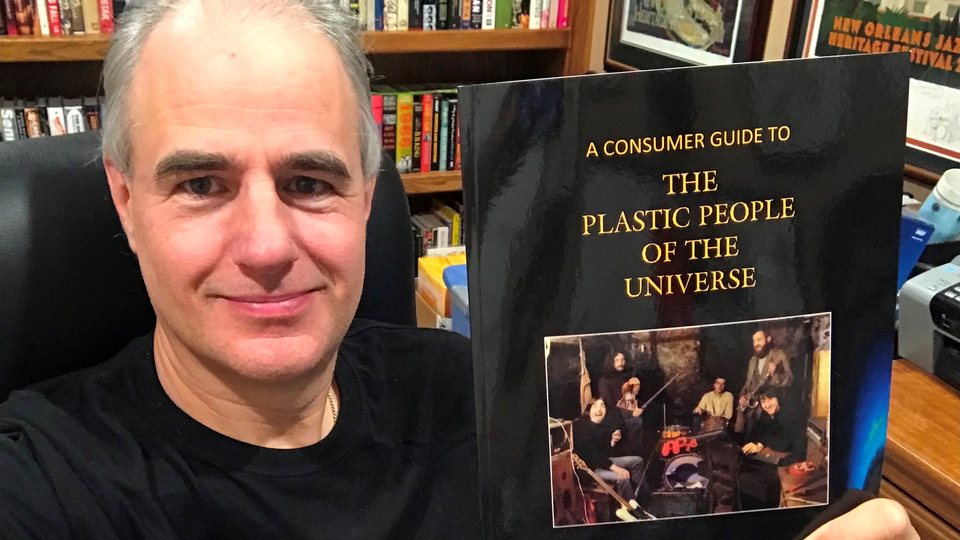
Markovský: At the beginning they were definitely influenced by The Rolling Stones. Later Milan Hlavsa got hold of the first Velvet Underground album at a party—the famous one with Andy Warhol’s banana on the cover. That was basically the turning point: realizing that music could be made like this. That became the main influence that led them to form the band.
They were founded in autumn 1968, shortly after Warsaw Pact troops arrived in our country. Can the founding of the band be seen as a direct reaction to this violent act?
Markovský: No. Mejla Hlavsa repeatedly emphasized that the creation of the Plastic People had nothing to do with the arrival of the occupying troops—not even as a protest. They simply met, formed a band, and played, regardless of what was happening at the time.
How did the band function during that period? How did they gain an audience?

Markovský: At the time they were quite a phenomenon on the Prague rock—or “big beat”—scene. It should be mentioned that before them there was already a band called The Primitives Group, which followed a very progressive musical direction—psychedelic rock. They played a lot of repertoire from Western bands, but their interpretation was very distinctive. Besides the music, they also introduced strong visual elements: they performed in makeup and masks, wore costumes, had fires burning on stage, and used various visual effects. Later The Primitives Group became connected with The Plastic People of the Universe thanks to Ivan Martin Jirous, who became the artistic director of the Plastics. Through this, various artistic directions merged: modern art combined with Celtic mysticism, Baroque elements, and more. All of this seemed very progressive to audiences and helped them build a large fan base—both among young people and among members of the artistic elite.
How was it possible that The Plastic People existed at all? I assume they were a thorn in the side of the former regime—so how did they avoid interventions at their concerts and somehow remain tolerated?
Markovský: Until about 1972 they played more or less without problems. But around that year, the regime’s pressure started to increase. So-called requalification exams were introduced: every band had to perform in front of a commission, play their repertoire, and pass these auditions in order to perform publicly. They also had to meet certain requirements—such as appearance rules. Bands had to wear suits, have short hair, change English band names into Czech ones, and of course their lyrics had to pass censorship.
And the Plastics didn’t meet any of those requirements.

Markovský: Exactly. Although they did try to pass the auditions twice, and once they even succeeded. But two weeks later their license was revoked with the explanation that the “morbid nature of the submitted repertoire does not meet the requirements of socialist society.” After that the Plastics basically decided they wouldn’t negotiate with the regime anymore and would simply play their own way.
Did communists just look the other way?
Markovský: They didn’t really look the other way, but there were always ways around the rules. The Plastics began organizing private events—often weddings of people from the underground scene. They would play there essentially as a wedding band. Everything was formally written for invited guests, including invitations. The downside was that the Plastics ended up playing for basically the same group of people over and over.

In Czechoslovakia, during the period when the band was most active, censorship was strict. Many artists were not even allowed to perform, let alone release albums. Did the Plastics manage to release an album?
Markovský: Yes, but not in Czechoslovakia. It happened in exile. Their first record came out in 1978 in France. This was arranged by their former member, the Canadian Paul Wilson, who had lived in Czechoslovakia and played with the Plastics for a while. He released the album together with Ivan Hartl, who after emigrating from Czechoslovakia began publishing exile literature and music. The first album, Egon Bondy’s Happy Hearts Club Banned, was released in France.
But the band didn’t physically record it there—it was only released there.
Markovský: Exactly. The album was recorded under very improvised conditions at Houska Castle north of Prague, where the castle steward was Svatopluk Karásek. He was an evangelical priest whose license to conduct services had been revoked by the regime. He was also a folk singer and participated in underground events. He allowed not only the Plastics but also another related band, DG 307, to record their album in the castle’s spaces.
Looking at later years, what is the legacy of The Plastic People of the Universe? Which other bands did they inspire?

Markovský: Because of their isolation in the 1970s—and because recordings of the Plastics made their way to the West and were legally released there—they were paradoxically sometimes better known in the West than behind the Iron Curtain. It was actually harder to access their music here than in the West, where you could simply buy the record. For example, guitarist Gary Lucas—who played with Jeff Buckley and was a member of Captain Beefheart’s band—mentioned that the Plastics had a huge influence on him when he bought their record at the time. And the band Portishead, which has given very few interviews in its career, once said that The Plastic People of the Universe are a big inspiration for them.
And what is Milan Hlavsa’s legacy within The Plastic People of the Universe?
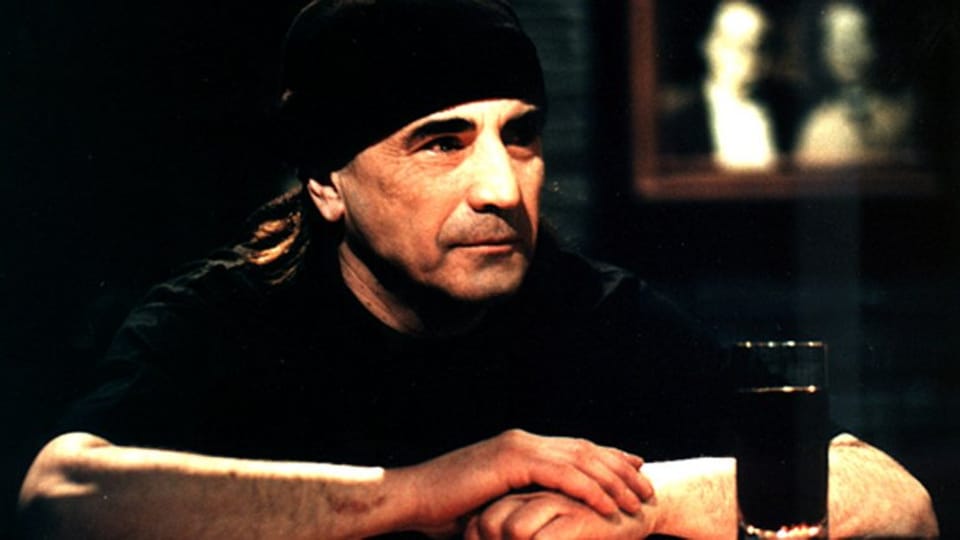
Markovský: Mainly that Mejla Hlavsa was the exclusive composer of the music in the earlier period. He wrote all the songs musically. He only started writing lyrics later, sometime in the 1990s. But as far as the music goes, he was the sole author—from the 1960s until his death in 2001.
For you personally, what does this person mean? Is he someone who influenced your own work or musical direction?
Markovský: Definitely. I’ve been interested in the Czechoslovak underground and the Plastics since I was about sixteen. I’ve even played their music in a tribute band that focused not only on the music of The Plastic People but also other underground bands. For me, Milan Hlavsa is a symbol of artistic freedom—something that can exist even in an unfree world.
Related
-

Michal Pavlíček at 70: guitar legend of Czech music
Czech composer, guitarist, singer, producer, and lyricist Michal Pavlíček, one of the most prolific and diverse Czech musicians, turns 70 on February 14.
-

“It was year zero”: Miloš Hroch maps ‘90s Czech shoegaze scene in new book
A new book by Miloš Hroch traces the early 1990s shoegaze music scene in this country, when Czech bands made a splash internationally for perhaps the only time.






