Is 1990s Prague architecture really that ugly?
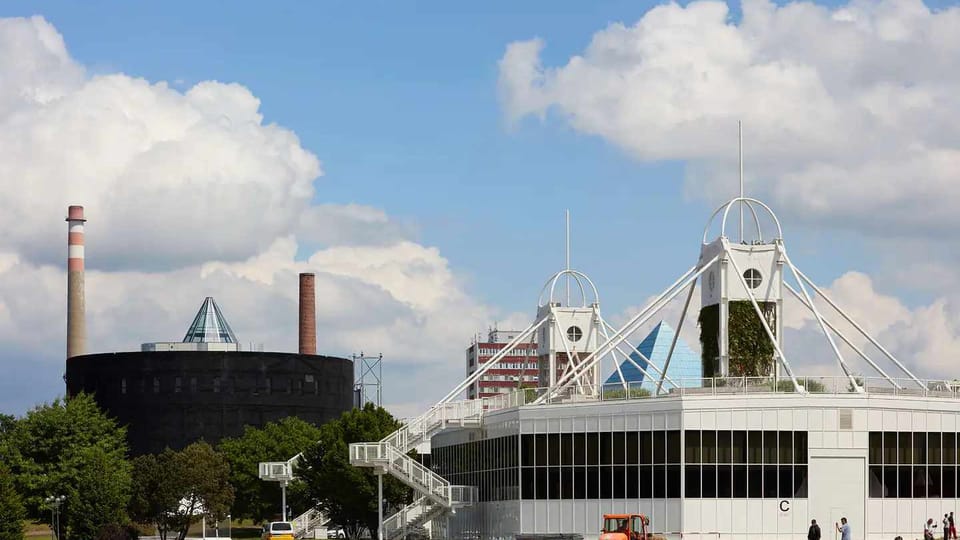
The 1990s were a period of optimism following the fall of communism in Czechoslovakia. The country underwent a rapid crash course in capitalism, and its sudden shift was also reflected in its architecture. Today, 1990s buildings are often mocked for their excess and perceived lack of taste. A new book and exhibition, DEVADE, aim to challenge that judgement. But has enough time passed?

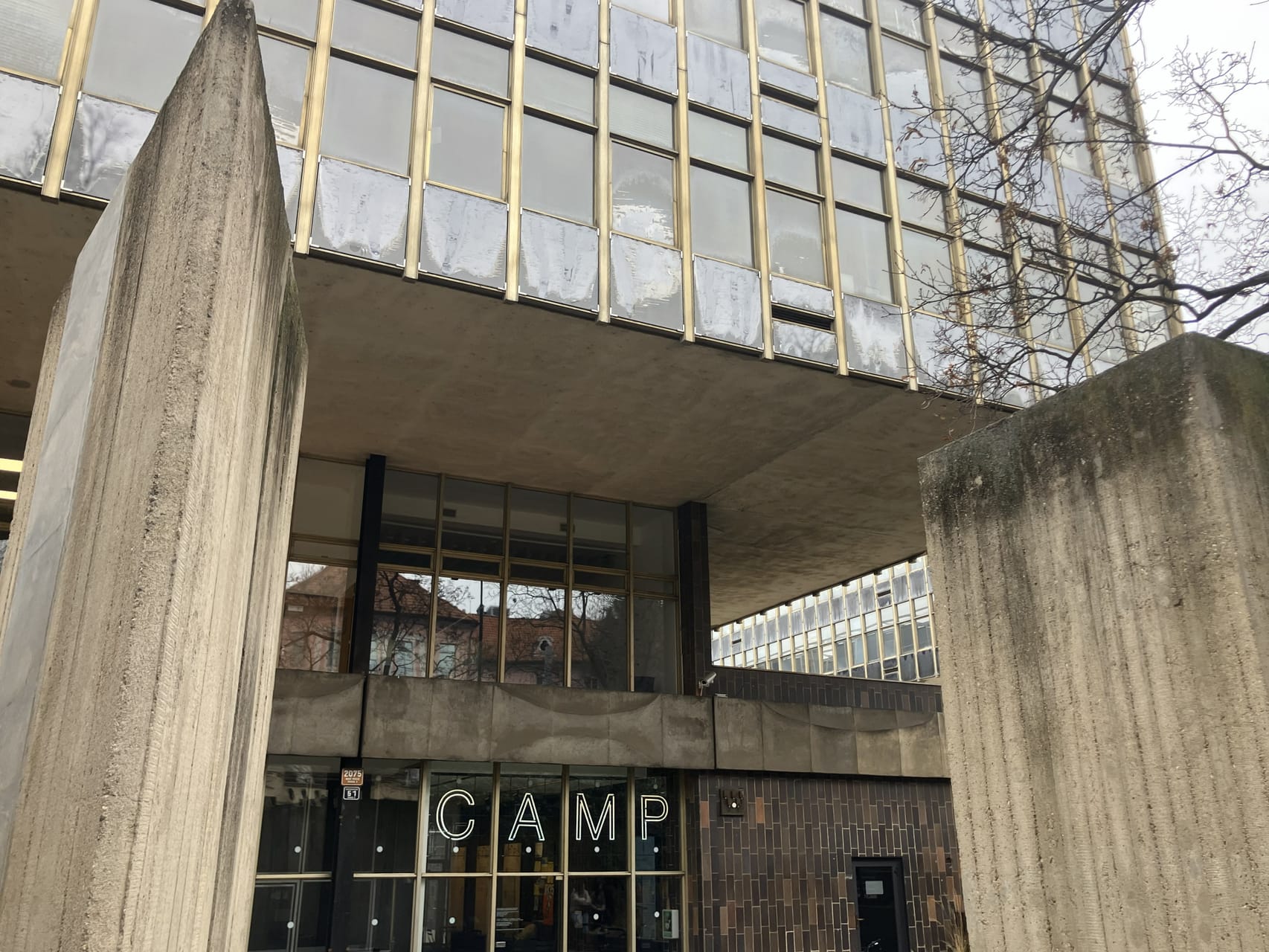
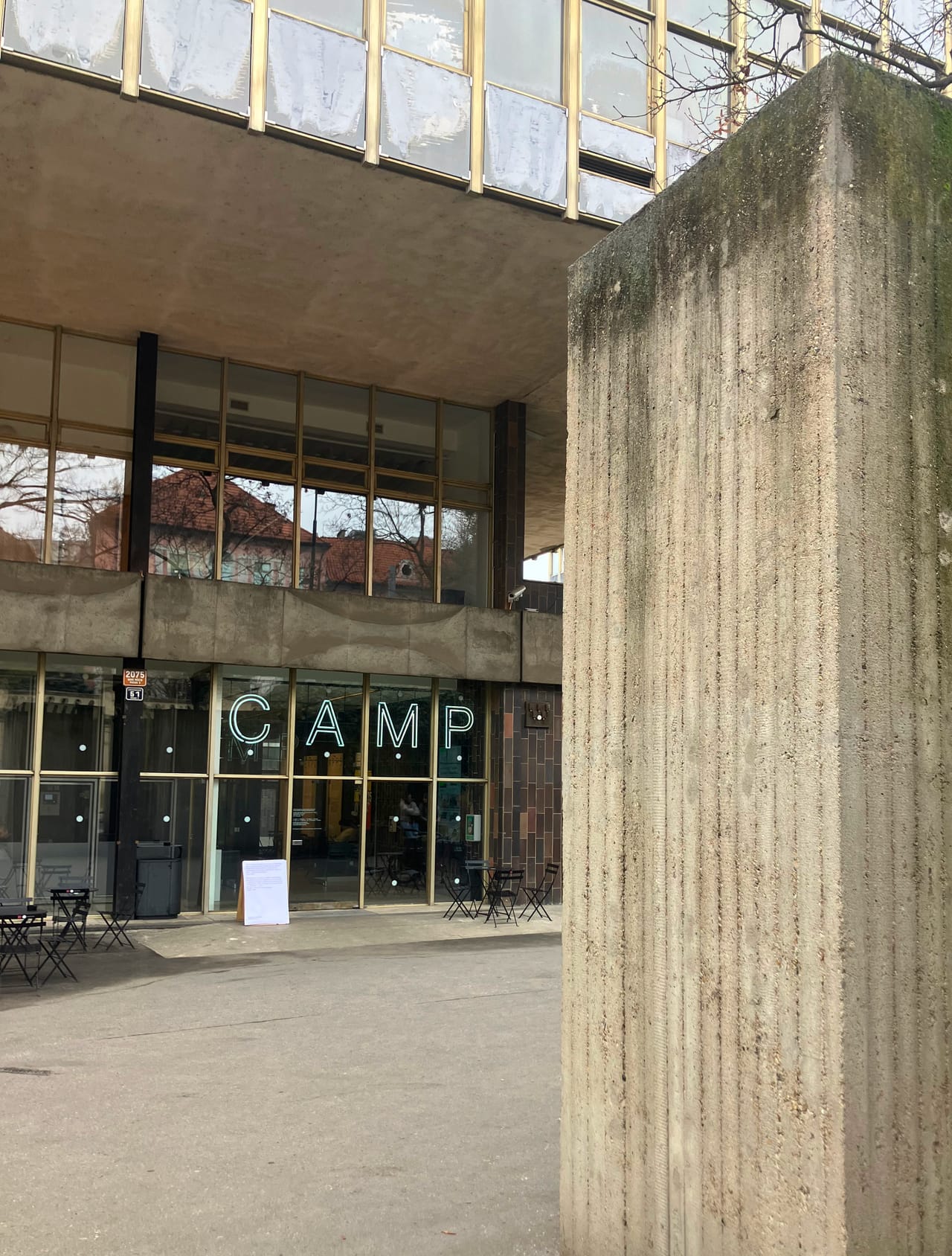
To find out, Radio Prague International spoke with Štěpán Bärtl, Head of CAMP. The exhibition opens today, January 28, at CAMP — the Centre for Architecture and Metropolitan Planning in the heart of Prague.
How do people nowadays view Czech architecture of the 1990s?
“It definitely brings out a lot of emotions, both positive and negative. It was an era of extreme freedom in every sense of the word, and architects, like any other profession, had to tackle it.

"The book we published and the exhibition place 1990s architecture between austerity and disco. On the one hand, there is a search for continuity with interwar functionalism and the kind of architecture that existed in Czechoslovakia. On the other hand, there is disco – very bright, with lots of colours and shapes. That’s the beauty of it: everyone has an opinion.”
Lots of people associate 90s architecture more with the "disco" side - with “entrepreneurial baroque” and catalogue houses.
“It’s usually the most cliché or the loudest buildings that stick in our minds. But the book and the exhibition capture 30 buildings and 30 different themes in a way. We pass many of these buildings every day – for example, Palác Myslbek, which was once thought to be a disaster for the centre of Prague. Yet, 30 years later, it’s still there, integrated into its surroundings, and in a way, it works. These buildings are also from the 90s – that’s the more strict and austere way of looking at architecture.”


The exhibition DEVADE aims to take 1990s architecture more seriously for what it is, rather than to stigmatise it. But there’s also a touch of humour and there are memes throughout the exhibition. It’s not just serious then, is it?
“The book is based on serious research. But there is an attempt to make fun of ourselves a little bit as well. Because when you say something is form the 90s, it has certain connotations. And so, we asked the Dynamický Blok collective with their sarcastic humour to give us their take on the decade. The resulting memes could be perceived as quite controversial by some.

“It has been 30 years since the 90s, but they still seem very recent. That's why I think people have a lot of opinions on the architecture and this exhibition might offend some. That said, I think it's a very serious effort to take a look at an era that hasn't really been shown in this way before.
"We've done a lot of work on post-war architecture. However, it always ends up being done only when demolition is in sight. So, this is an attempt to pre-empt that stage and to do something before these buildings get demolished. At some point people will come up and say: should we really keep this? They will probably not demolish the Dancing House, but I'm sure there will be discussions about other buildings."
Such as the Hotel Don Giovanni? The hotel is a bright pink, baroque-style palace near Prague’s Želivského metro station.

“I actually love the hotel from the outside. I used to live quite close to it, so maybe it’s just Stockholm syndrome – but I really do love it.”
So, the exhibition is an attempt to protect these buildings because they are a part of Prague’s cultural heritage.
“Definitely. I think in general, there's a lot more discussions now about whether we should destroy buildings at all – shouldn't we be able to find new ways to use them?
“I think that looking at the 90s as a series of themes creates so many opportunities and raises questions around urban planning, too. We are still dealing with many things from the 90s at the Prague Institute for Planning now, such as: How to build a city that works? And many of these things started in the 90s.”
Is there anything we can learn from the 90s? Nowadays Prague seems to be building a lot of grey buildings, but don’t we need more disco?

“I always love more disco, but it’s always a matter of taste. What I think we can learn is how fast things happened back then – from the building permit to the actual construction. After 2000, we got a bit cautious and tightened the process. Now we’re trying to speed things up again, but more carefully. It’s a kind of action and reaction. The 90s were a wonderful burst of energy, both positive and negative, and what followed was the reaction. Now we’re trying to look at it from a distance, even though that distance is still quite short.”
But has enough time passed to study 90s architecture in an objective way?

“I think so. The interesting thing is that the collective of authors that wrote the DEVADE book – Matěj Beránek, Jan Bureš, Radek Šrettr Úlehla, and Adéla Vaculíková – are all born in the 90s. So they have a very different understanding and look at the decade without nostalgia and without negative connotations – it’s a fresh take. Obviously it's not the only perspective and in the programme accompanying the exhibition, we will meet a lot of the architects who actually built in the 90s and we try to create this dialogue. It's not just us saying what we think about the 90s, it’s trying to take a step back and to look at it from a safer distance.”
Do you have a personal favourite among the buildings?
I actually really like metro line B stations, which were built in the 90s. I think they are wonderful and quite well made. I think that's not an obvious choice, but I think that the Metro station Rajská zahrada or towards Lužiny – especially the ones that are above ground – are really well done.
Related
-

“These designs are bold”: new CAMP exhibition gets its debut
A new exhibition at CAMP features 10 architectural projects from the Global North and South that bring sustainable solutions in housing and building transformations.
-

New CAMP exhibition draws attention to importance of “living better with nature”
A new exhibition titled ‘Planet Prague’ opens on Wednesday at the Centre for Architecture and Metropolitan Planning in Prague.