“Threats alone are disaster for NATO”: Michal Smetana on Trump, Greenland and future of European security
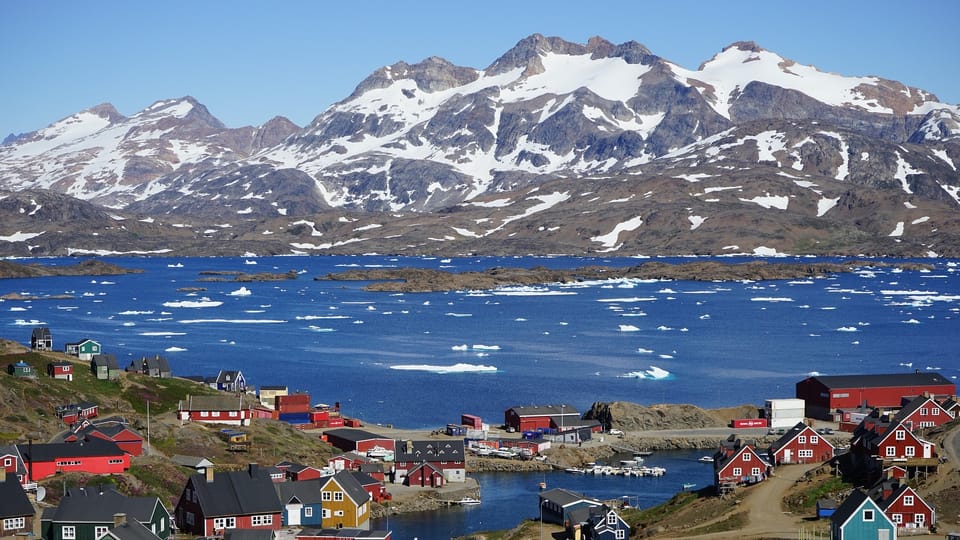
The Trump administration’s refusal to rule out taking the Danish territory of Greenland by force has caused shockwaves in Europe, with the threat to a fellow NATO member raising grave questions about the alliance’s future. If NATO does cease to exist in its current form, what will that mean in practical terms for European countries such as Czechia? I discussed that and related questions with Michal Smetana, a security expert at Prague’s Charles University.
Since Trump’s intervention in Venezuela, we’ve seen some talk from US officials about the country’s “need” to take Greenland. How seriously should we take that?

“In my view, even if the likelihood of actually using military force to acquire Greenland in the end is relatively low – though it’s definitely not non-existent – just the very fact that the US president is using threats of using force to basically attack the territory of an ally in NATO is an extremely serious matter.
“Because it gives us a kind of additional cue about how little the current US administration regards European interests and how little the US administration regards the values that have underpinned the international order for decades.
“After Venezuela, there is basically little reason to believe that the current US administration wouldn’t go to great lengths to do anything they want, in the logic of their transitional politics, in order to achieve their interests, which are not necessarily aligned with those that Europe has at the moment.”
Czech government representatives have been pretty careful in their statements so far, it seems to me. What’s your sense of how they really see the US view that the country should control the Western Hemisphere, and is willing to use force to do so?
“Honestly, I have no idea.
“After Venezuela, there is little reason to believe that the US administration wouldn’t go to great lengths to do anything they want.”
“Just judging from posts on social media, I’m sometimes puzzled at how much many politicians are applauding the current administration’s actions.
“I’m not talking about Greenland but different actions: just the Venezuela or Iran cases can be mentioned, among many others.
“I’m puzzled at how much they are applauding, without realising that the very fact that the US is using force against countries that we don’t really like doesn’t mean that they wouldn’t eventually use force against countries we do like [laughs], that are our allies.
“I see this as quite short-sighted.
“To their credit, there have been a few Czech politicians that have expressed their disapproval of the US actions in Venezuela and obviously also of US rhetoric towards Greenland, and Europe overall.
“To their credit, a few Czech politicians have expressed disapproval of US actions in Venezuela and of US rhetoric towards Greenland.”
“I would say that the majority of the political representation is quite cautious in making any kind of bigger statements.
“This is a bigger issue in Europe in general, right? Because Europe realises that the US we are seeing in the mid-2020s is a very different US than the one we saw for a very long time.
“That said, Europe is also realising that it still needs the US and is still trying to somehow walk a fine line between trying to please the current US president and somehow not completely selling out the ideas that the EU is built on.
“But walking this line is becoming more and more difficult in the current climate.”

Also isn’t it completely naive to think that they can keep flattering Trump and somehow things will work out OK?
“I think so. I think that this whole approach has been wrong from the start.
“I feel that Trump doesn’t really respect [laughs] this sort of approach.
“I think he has little regard for current European leaders and I think this attempt at flattering and basically only stepping back all the time is not really yielding any meaningful results – and that the US will eventually do what they want anyway.
“I would say that at some point making some more principled and hard-line stance would actually gain us some more respect [laughs] from the current US administration, which basically sees just a conglomerate of different European countries that are very weak.
“They basically don’t regard them as an equal partner.”
What will it mean for NATO if the Americans do use force to take Greenland?
“Well, I would start by saying that already the current situation, with these verbal threats being issued by the US, is a disaster to NATO.
“Credibility that the US would come to help any allied countries is going down radically.”
“NATO obviously continues to exist, but the power of NATO as the most powerful alliance in human history is not based merely on the fact that it includes a number of countries with substantial military forces – it’s based on the idea that we believe that once war breaks out other countries would come to help, even if it doesn’t seem to be an advantageous proposition for them, because it may be very risky.
“NATO is basically based on this claim, whose credibility needs to be underpinned all the time.
“That’s why this whole logic of allied assurances is one of the things that the US has been doing from the beginning of the Cold War up until quite recently.
“And in the current climate, this credibility that the US would come to help any allied countries is going down quite radically. We see that in our research in many countries and in interviews with NATO officials and representatives of countries, etcetera.

“To answer your question, if the US did actually use military force to acquire Greenland, despite the fact that there wouldn’t be open conflict – because I don’t really think that Denmark or Europe would use military force to defend Greenland – it would spell the end of NATO as we know it.
“Most likely even formally, but informally it would basically be a hollow alliance; we would be talking about Europe needing to be on its own when it comes to alliance politics.”
What do you think is more likely in that scenario – for NATO to somehow exist without the US, or for there to be a new European military alliance including all the countries except America?
“In this situation, if the US really used military force against Greenland, which is using military force against another NATO country, my most likely prediction is that NATO itself would practically dissolve, most likely even institutionally, and Europe would be forced to do something on its own.
“It wouldn’t be called NATO, because NATO by its very name, and the North Atlantic Treaty that was signed in 1949, was built on the idea of transatlantic cooperation.
“Besides other definitions, NATO is a regionally defined alliance.
“So most likely there would be an attempt to do something new.
“Though we are still overlooking one country which is not on the European continent but is mentally more aligned with Europe than the US, and that’s Canada.
“I definitely don’t think that Europe would want to break its ties to Canada, which we have no doubt is a reliable partner in the alliance.
“But principally I think we would have to work out some new arrangement not including the US.
“Again, we are just speculating about things that haven’t happened yet.
“Also we don’t really know what will happen after this administration in the US.
“We might see some reversal of a new administration, trying to reverse many of Trump’s policies and coming back to the original arrangement, in which case this could still survive.
“Or we could see continuation with someone like, I don’t know, JD Vance continuing in US politics and making things even harder for Europe.”
Again you haven’t got a crystal ball, but if there is some new European alliance do you think all the current European members of NATO would be willing to join it?
“Very hard to say. We are [laughing] talking about a world that probably was hard to imagine just a few years ago.
“Perhaps even two years ago many of these scenarios that are taking place in front of our eyes would be really far-fetched.
“Perhaps even two years ago many scenarios that are taking place in front of our eyes would be really far-fetched.”
“I mean, Trump talked about Greenland in his first administration, but nobody really believed that it would come to this sort of development that we are seeing right now.
“Even things that before were considered to be bluster and a very unconventional way of talking about politics we are now seeing as potentially credible scenarios.
“So we’re in a world where it’s really hard to predict any of these new developments, very hard to say how things may turn out.”

What about here in Czechia? What does all this really unprecedented and scary, to me at least, instability mean for Czech security?
“It should be scary. There are at least two things I want to mention.
“First is all that all these people that are applauding Trump’s strong-man, belligerent foreign policy should be very careful about the world that they are wishing for.
“Because a world in which the United States, Russia and China are completely unhinged is still very different from the world that we have seen so far.
“Many people believe that the world has always been like that, but that’s incorrect.
“People don’t see to what extent all these international norms, rules, have been shaping priorities, policies, reactions to different developments.
“It’s not like a development in which either there are some norms that prohibit some behaviour and everybody follows them or there are no norms at all.
“There has always been the sense that many of these softer tools, like international law or international norms and rules, kind of shape the costs and benefits of different actions.
“That doesn’t mean it will always prevent war, it will always prevent some actions that are unlawful. But they are at least shaping these developments, and also they are underpinning some responses from other countries.
“For the Czech Republic this is a difficult world in which we will need to invest substantial amounts of our national treasure into defence.”
“And if we are going back to something like the 19th century great power ‘concert’ politics it will be a world in which smaller countries, like the Czech Republic, are actually on the loss side.
“We don’t have raw power to apply in international politics. We don’t have that sort of military power that the United States, China and Russia have.
“For us this is a difficult world. This is a difficult world in which we will need to invest substantial amounts of our national treasure into defence. A world in which we need to be very careful about selecting partners that we will be relying – and to do a lot to make ourselves a reliable partner as well.
“It’ll be a world which will be very unstable and very risky.”
Speaking about investment in defence, if you look at the recently installed Czech government, do you think that government would be willing to increase defence spending? The previous government did increase spending, after Trump pressured all of Europe to spend more.
“At the NATO summit in June there was agreement on substantial increased spending across NATO. There was a new standard, which the Czech Republic has also pledged to follow, obviously under the previous administration.
“I would say I’m not a person that is very happy about the formation of the current government, and I have little trust with respect to all the parties in the current government in many areas that interest me.

“That said, I am still cautiously optimistic that the signals we are getting from the new prime minister are basically some levels of continuity in the area of defence that might be quite comforting to us.
“But there definitely will be parametric changes in the approach.
“We might discuss how fast investments into our defence will increase, in what areas. There’s quite a lot of leeway for the new government to decide that.
“The pledge that all NATO countries accepted at the last summit is a 10-year plan, or 10-year development, which we should aim for by that time.
“So we will see some parametric changes. But at this point I’m cautiously optimistic that this government will follow the directory of trying to get to that level and increase defence spending in the coming years substantially.”
But if NATO ceases to exist in its current form, would 3.5 percent [the full figure is 5 percent by 2035] defence spending be enough, in your view?
“European security architecture has since the beginning of the Cold War relied on the US being able to come and help Europe in the case that there is a conflict, at the time with the Soviet Union, now with Russia, but also potentially with other actors.
“And there are huge gaps in Europe which are not necessarily about the number of troops but more about unique capabilities that the US in terms of the military, including very unique capabilities in the area of intelligence gathering, etcetera.
“Logistics is another area where the US’s unique capabilities that Europe simply doesn’t have, and has huge limits in.

“So in the case that there is a new NATO without the US, whether formally or informally, in my view no, it wouldn’t be enough [spending] in a world in which a resurgent Russia and China and much more volatility.
“It probably wouldn’t be enough, but that’s mainly because Europe would need to also – in addition to addressing the gaps that we already have now – address the gaps in all the capabilities that they will be losing by the US withdrawing.”
The head of the Czech Army has spoken about the need to reimagine military service. He hasn’t yet directly called for conscription as such, as far as I know. At the same time, in the current government the minister of defence is from the party Freedom and Direct Democracy, who are seen as pro-Russian. Do you think there is any likelihood of conscription coming in here in the future?
“In theory yes. It’s something that many European countries are discussing and some European countries are implementing, to some extent.
“Again, there’s quite a wide range of scenarios – it doesn’t necessarily have to be the type of conscription that Czechoslovakia had during the communist era.
“There are different models in Europe. Many people when they imagine conscription are imagining something that wouldn’t necessarily be the case, if we apply it.
“But yes, it’s definitely one of the options, again.
“In the future Europe might be facing a security environment which is way more volatile than what we have been used to, post-Cold War.
“So this is at least one of the pillars that many European countries will be considering and many will be implementing, to some extent.”
I have several friends who have boys who are speaking about their fears that in 10 or 15 years their kids will have to serve in the army and maybe fight in a war.
“We are talking about very extreme scenarios, but we are talking about them because they are suddenly realistic.”
“I cannot say that it won’t be the case. We really don’t know.
“Am I concerned in developments in world politics and European security? Yes, absolutely.
“That doesn’t mean that there necessarily has to be a war with Russia. Again we are talking about very extreme scenarios, but we are talking about them because they are suddenly realistic.
“And our goal is to do everything in our power to prevent this war. This is the main thing.
“Things like the rebuilding of national armies, investment into defence, purchasing new capabilities are based on the idea that we might get to the point where we will be able to deter Russia from any aggressive action.
“Is it absolutely guaranteed that we will be able to do it? No, absolutely not.
“I know a lot of people in NATO and in NATO countries that are now very concerned that this is a realistic scenario that might take place.
“And we must do everything we can to prevent this scenario, because nobody wants us to get involved in a war with Russia, or any other country.”
Over the Christmas period I read some very gloomy articles about the outlook for the future and I saw one from John Simpson of the BBC, who said he’d been covering conflicts for decades and never did he feel that there was as much a chance of World War III as he thinks there could be now. Is that a legitimate fear, do you think?
“It’s a legitimate fear. Again that doesn’t mean that this is the most likely course of action.
“If you would press me into asking whether it’s more likely that we’ll be part of a major great power war, or [laughs] ‘just’ a war with Russia, in the next 10 or 20 years, I would say it’s still more likely that we won’t, that we’ll manage to avoid that.
“But I think that the probability of this happening has increased substantially over the years.
“We might see some extreme scenarios that we cannot think about right now.

“Very often we replay some past scenarios, but it might be that the development would be quite dramatic but maybe in different directions.
“Many of the things that we are fearing haven’t happened yet and might, right?
“Today we are discussing Greenland. We might also be discussing what will happen with China and Taiwan in the next year. Or to what extent there’s potential for a clash between great powers that will involve nuclear weapons, which is really one of the most apocalyptic scenarios.
“Again I’m still cautiously optimistic in the sense that we have it in our power to prevent some of these things.
“It’s a huge advantage that there is at least some base for cooperation in Europe.
“That may be fragile but for now it’s something that we have. The Czech Republic is a very small country that really can’t defend itself by itself in the case that there would be a war with some substantially larger military power.
“But yes, it’s a world that’s extremely volatile. The European security system has changed dramatically, the whole environment is very different – and it will be difficult for a country like the Czech Republic.”






