Václav Havel: a legacy growing ever more important?

Commemorating exactly fourteen years since the death of former president Václav Havel, candles and flowers are laid in remembrance – not only of a president, but also of an artist, playwright, dissident, and public figure. Havel has come to symbolise the fall of communism in Czechoslovakia in 1989, in which he played a key role. Yet, political analyst Jiří Pehe, who served as Havel’s advisor and knew him well, argues that his legacy goes far beyond this and is increasingly important today.
“I think that what comes to mind today is his legacy, because he fought for a lot of things which are currently endangered, human rights, human dignity, global responsibility. Those were his themes, and today we are living in a world where all of these important themes are under pressure. Pressure from various populist forces.
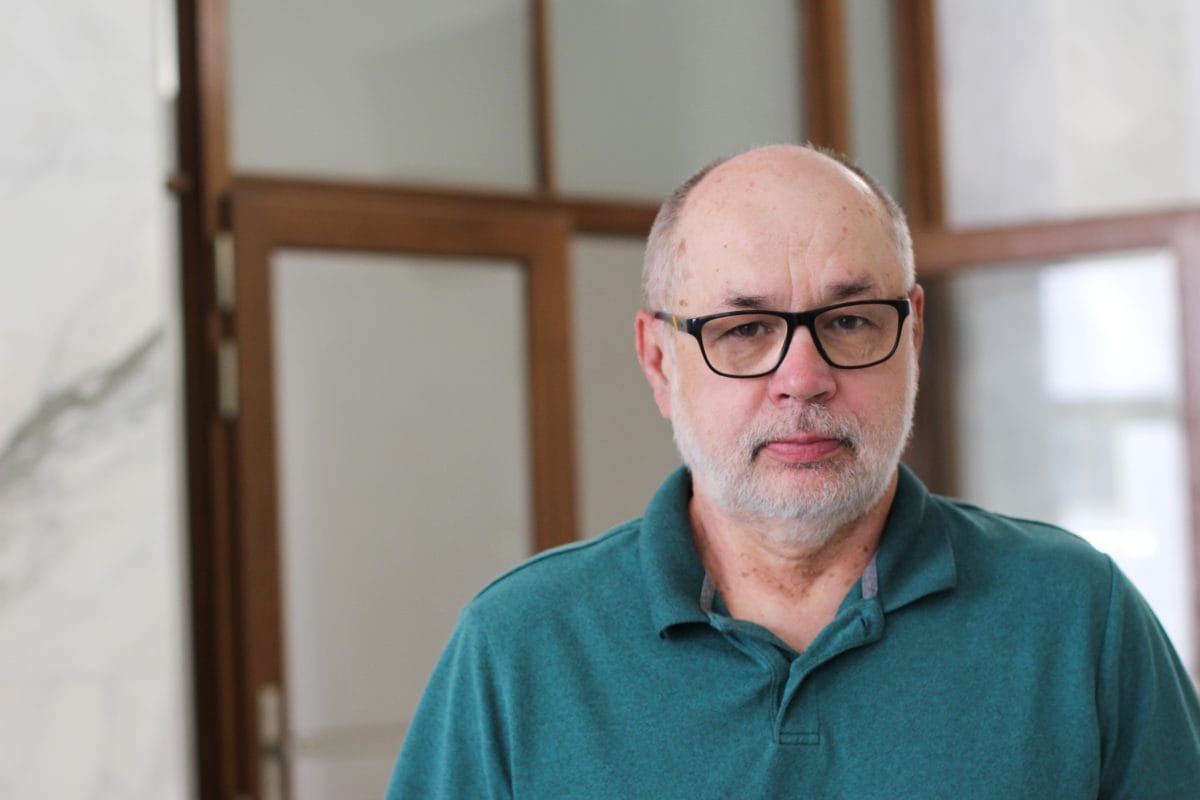
“And then, of course, again and again, his role in bringing freedom to the Czech lands after decades of communist rule. That is something that will stay as part of his legacy, I think, forever.”
You mentioned that his legacy remains important in today's world. But do you think his legacy remains as strong as it was even those 14 years ago in 2011?
“I think that in many ways Václav Havel's legacy is even more important than 14 years ago, because 14 years ago the world was still to some extent in order, I would say, whereas today we see a rise of populist forces, fascist forces and so on. This is something that Václav Havel would certainly speak about and would comment on and would stand against.
“I think that this is something that, if you read his texts today, comes to the fore repeatedly, as he warned against many of the current trends. I think that this is something that Václav Havel stood against in his writings already 10/15 years ago.”
If we think in terms of the Czech Republic, how do you think he would interact with the newly named government?

“I think that he would be quite critical of the current government, and he would certainly stand against the populism of the current government - against the fact that it's casting doubt on our membership in the European Union and, some of the government's parties, even on our membership in NATO. He would definitely be a very strong supporter of Ukraine and would be very active on the international scene with regard to the Russian aggression there.”
You worked with Havel for quite a long time as an advisor. What do you miss about him? What aspects of his character do you think the Czech Republic needs today?
“I think that above all, the Czech Republic would need his wisdom and leadership. He was a very wise man who was also very courageous. He was not afraid to speak on topics that many public intellectuals today may not be willing to speak openly about. He would set a tone. Not having him in the public sphere is, to some extent, a problem for the Czech Republic. On the other hand, he was an exceptional figure and figures as Václav Havel do not come along often. He was a historical figure and I think that we were also very lucky to have had him while he was with us.”
How can he inspire us?
“His ‘theme’ was the truth and he should inspire everyone in fighting for the truth, against disinformation and falsehoods. He would also inspire a lot of people to take responsibility for their own actions and for the state of the world.

“And during the later days of life he was a Green politician, so to speak. He was very much worried about the state of the environment, and so I think that today he would be firmly on the side of those political and civic forces that fight for a clean environment and against the climate change.”
Early in his presidency, during his first New Year’s speech in 1990, Havel highlighted the importance of telling the truth and rebuilding the economy after decades of communism. But he also warned about environmental degradation, noting that “we have ruined the soil, forests, and rivers entrusted to us by our ancestors, and today we have the worst environment in all of Europe.” Improving the natural environment was a priority even then.
Events around the Czech Republic
Every year, people lay flowers at Václav Havel’s cottage in Hrádeček and at Národní třída in Prague. This year, Czech senators will honour his memory at Vinohrady Cemetery, led by Senate President Miloš Vystrčil (Civic Democrats) and other members of the upper chamber.

At the Václav Havel Library in Prague, Havel’s one-act play Vernisáž (Private Viewing), written in the mid-1970s, will be performed in a production directed by Radek Bár (Divadlo na tahu). Vernisáž depicts an absurd and grotesque scenario in which a married couple shows their apartment to a visitor, ironically capturing the resignation and loss of inner freedom of those who adapted to life under the communist regime. The performance, starting at 7 PM, is free of charge.
Havel’s theatrical legacy continues to thrive. Czech theatres regularly stage his works: Vernisáž was recently performed by Prague’s Divadlo D21, and earlier by SUD in České Budějovice, or by the Theatre of East Bohemia in Cheb. In November, the National Theatre Brno premiered a new production of Havel’s Pokoušení (Temptation).






