“Top Czech influencer” Kovy on politics, marriage equality – and life beyond social media

Karel Kovář, who goes by the name Kovy, is one of Czechia’s biggest social media stars. He shot to fame through witty and entertainng YouTube videos over a decade ago and reached a million subscribers on the platform this year, when he was again named the country’s leading influencer. In this interview Kovář discusses a very broad range of subjects, from hosting the Czech equivalent of the Oscars to an online exchange with politician Andrej Babiš.
Could you please say a few words about your family background – I understand that your grandfather had an old-school video camera that you guys used to play around with.
“It was very crucial, I guess, looking back – his constant recording of sometimes very basic moments, with family.
“These moments really made me feel like there is always something to be recorded, even though it doesn’t really seem like something interesting is going on.
“But if you see the recording a few years after that, you realise, Wow, that was actually pretty amazing, because this person is no longer with us, or things like that.”
Around how old were you at the time?
“I guess it was kindergarten and then the first years of school, so I think I was around five, six, seven, something like that.”
Were you instantly performing for the camera?
“Yeah. I guess so. The lens just got it out of me [laughs]. I’m not sure how, but I was always like, Well, the camera is rolling so something interesting has to be happening.”
Today your life is going pretty amazingly. You have over a million subscribers on YouTube, which is mind-blowing to me, considering the population of the country is less than 11 million. What do you regard as your chief skill?
“Chief skill? I hope it’s that I can make things understandable, even though they are sometimes very complicated.
“I feel like this is my task, this is something I should be doing. I try to understand the topic and translate it in an upbeat style through my videos.
“Chief skill? That I can make things understandable, though they are sometimes very complicated.
Kovy
“And sometimes it’s just entertaining people. I always feel like someone is coming back from work pretty tired, coming home from school… there’s a lot going on in the world right now, so maybe they just want to enjoy a little moment, something more upbeat.
“So I guess this is the second part of what I’m doing.”
But you do have, it seems to me, to have an instinct to teach. Is that a fair assessment?
“Probably, yes. I’m not sure if teach is the right word, but I guess it is.
“For me teaching is very much school and sitting behind a desk, listening and taking notes – but it can be much more than that.
“And I was always very interested in teachers who were entertaining and who were able to spark something in you and you were instantly interested in the subject.
“So yeah, I guess teaching has always interested me.”
When it comes to your output, what are the kinds of videos that tend to get the biggest response?
“I would love to say it’s those I expect to get the most attention, but sometimes it’s very surprising.
“Sometimes you make a little video and it blows up. That was the case with my most watched video, which was a parody of the song Despacito a few years ago [2017, 13 million views].
“It happened during 24 hours – it was very quick, but then it kind of blew up.
“Nowadays I guess people are more interested in serious content, which is great.
“I try to focus on that a little bit more, as well. But there is no formula you can just follow and it will happen like a miracle – it’s always about discovering, trying new things and pushing forward.”
Today not many young people watch television. Everything’s online: social media, YouTube, etcetera. But I know you have also done some work with TV channels, such as Seznam TV, and a couple of years ago you did a documentary on the teaching of history for Czech Television. Why do you bother with television when it seems like the medium of the past?
“I truly believe it’s kind of merging with social media and it’s trying to find ways, through streaming and [on-demand services] iVysílání with Czech Television, for example, or Oneplay with Nova.
“I think the TV stations realised that they have to, like, implement themselves into this new age and they are trying to do that – I think pretty successfully – for the last few years.
“But for me it’s about the dialogue between generations. For me, dancing in Stardance [Czech equivalent of UK show Strictly Come Dancing], for example, was a chance to speak to a maybe bit older generation that back then [2019] was not on YouTube.

“Through the little videos after the dances I felt like we were trying to create this bridge between generations: Grandmas and grandpas maybe watching the television with their kids or grandkids, and they have something in common.
“That was a nice feeling and I guess that’s the reason why television is still super interesting to me, even though I don’t watch it as much.
“It always feels like a bit of step up if you do, for example, a documentary for TV about some topic rather than a YouTube video.
“There’s more time, maybe more resources and the team that you have.
“So for me it was an amazing opportunity to create a documentary.”
I presume Stardance meant that you were instantly recognisable to everybody, whereas previously it was maybe younger people who would have spoken to you on the tram or whatever?
“Yeah. I remember I was signing crosswords for some old lady who met me near a Metro station, which was very surprising to me.
“But then Covid hit and we went into lockdown and stuff, so I didn’t notice it much.
“But since then I’ve realised that probably my name and my videos are now much more familiar to people who basically aren’t always watching YouTube and social media.”
This year also you hosted the Czech Lion awards for the first time. It’s not the biggest show on TV but it is the “Czech Oscars” and it does get a lot of attention. How was that experience?
“I was very nervous because I realised there were some huge names that hosted this event in the past, so you’re always going to get compared to them.
“And everyone expects something different. For one person it should be entertaining, for another viewer it should be about a more serious approach.
“So you just have to accept that you won’t please everyone. You have to choose your path and kind of make it your own.
“Everyone expects something different [from the Czech Lion awards ceremony]. You just have to accept you won’t please everyone.”
Kovy
“I tried to apply all these things, and I guess from my side I was pretty OK with the outcome.
“I was very nervous, thinking maybe I would screw up someone’s name or it would go badly or I would forget about one category – and nothing like that happened, so it was pretty great for me.
“And working with the team was just the best; the best people are putting that show together, so it was a big pleasure for me to experience it, yes.”
Also this year I saw you on the red carpet at the Karlovy Vary International Film Festival, interviewing people like Michael Douglas and Dakota Johnson [for the festival’s social media]. Do you get any nerves in a situation like that?
“I guess my position was kind of good, because I was by the end of the line of journalists who interviewed these celebrities.
“I had time to observe and kind of understand their mannerisms and the mood that they came there with.
“So I think it was maybe a bit easier at the end, to kind of guess what kind of approach I should choose to make them feel OK.
“It was very new to me, so I was quite nervous with Dakota Johnson because it felt like she was not in the best mood, probably.
“But I guess it all went pretty nicely and in the end it was a great experience for me, because this was the first time.
“Meeting Michael Douglas and Dakota Johnson and Peter Sarsgaard and Vicky Krieps – every single one of these people are a bit different, they communicate differently.
"And for me the interesting thing is you are the interviewer, there is a huge celebrity and you just have this moment to get something interesting out of them, this little moment to share with them, and you have to make the most of it.”
You are considered the most successful influencer in this country, according to different surveys and reports. You’ve been at the top for a long time. What do you need to do to keep your credibility as an influencer, or to maintain that kind of level?
“I guess the level now is shared. I always kind of refute this idea of having one biggest influencer, because it just shifts so quickly; sometimes people have a viewership for a year and then maybe not so much.
“For me it’s about understanding that you don’t have to be everywhere, and you don’t have to be on the top the whole time.
“Because I think then you try too hard and people will notice and people will be tired of seeing you all the time.
“I always kind of refute this idea of having one biggest influencer, because it just shifts so quickly.”
Kovy
“So I guess it’s about understanding this.
“For me, after so many years of doing this thing, it’s just about enjoying the moments I have with no phone, I have off-line with my friends and family and my partner – and travelling and sometimes not recording, for the first time in my life.
“In the last few years there were moments or weeks when I just switched off, and it was very refreshing, because I’m part of the generation that grew up with social media, with the internet.
“So this is something I learned: It’s not about being on the very top the whole time, it’s about doing what you feel you should be doing and not allowing the pressure to get to you – because then with social media, and you being the person, it can get pretty wild.
“That’s not very good for your mental health, thinking about yourself in terms of numbers and reach and engagement.
“Then it can be defining – you start to define yourself based on the reach that you have, and that’s a pretty dark path.”

And in the past did you have problems with that?
“Yes, it’s very tricky, you know. Sometimes your viewership lowers and then you start to think that your life is not as interesting.
“And I witnessed some of my colleagues being like [laughs], I don’t know if I should say matchmakers or something… you just try to pair up with people who are hyped up or who are very popular nowadays.”
So you associate with somebody else who’s also very well-known, to improve your visibility?
“Yeah, to improve your visibility. And you change your friend group depending on who is more popular.
“It’s not very good for your mental health thinking about yourself in terms of numbers and reach and engagement.”
Kovy
“And for me that wasn’t the path I wanted to take. Because I have many friends from the times when I wasn’t creating anything and I wasn’t on social media, from school, and these friends I’m trying to keep, because they, I guess, keep me grounded.
“I have a few friends who do the same job as me, but not as much as in the past, because I learned that you talk about work the whole time and it can seem much more important than it actually is in your life.”
Big influencers must get a lot of offers to collaborate in various ways. Have you ever in the past done something, or partnered up with somebody or some organisation, and then regretted it?
“Yes. It can be tricky because, you know, you get a lot of offers and sometimes it’s very hard to tell what is OK and what is not.
“I guess it’s my fault, because I still don’t have a manager; I still try to manage everything myself, and maybe that’s the problem.
“But there was one this one ‘charity’ video and organisation that was kind of scammy. I hadn’t noticed that before. That was a few years ago.
“But usually I see these red flags and I try to avoid them. I try to be very sceptical when someone approaches and I don’t know the organisation or the company or the person.
“So I try to do my research, but sometimes something can slip through. It happens, yeah.”
You were already very popular when you were about 20 years old and you came out as gay. Was that a hard step to take?
“I guess it was hard, because I was already out, but not for the people online and people were speculating.
“One thing that bothers me is it’s always the same if there is a celebrity and people are guessing, are they with a guy, are they with a lady?
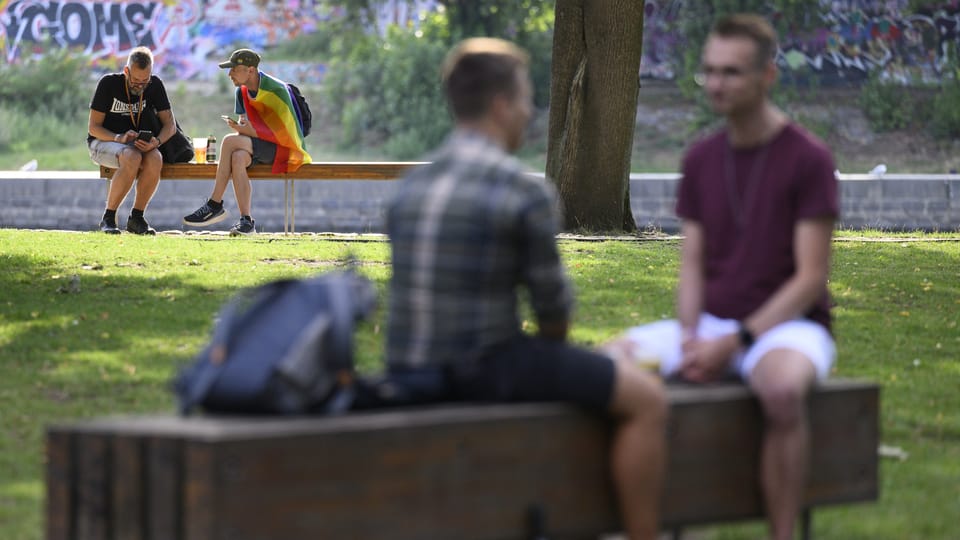
“They kind of pressure the person to come out, which is, I think, problematic, because everyone needs their time to figure it out.
“For me it was during my teenage years.
“So from this point, from today, when I look back I see it as something great, because it allowed me to really understand myself. Because I was trying to understand my identity, so it was a very… self-discovering path that I took for three or four years.
“It made me realise who I really am, what I want to do, why I am the way I am. And I guess not everyone has this chance.
“So yeah, for me it was very hard when I came out to my family and my friends, because I was so afraid that I was going to lose someone; you never know the reaction of the other person. But I didn’t.
“But then I had to it for the second time, through my book and through a video.”
What was the time gap between the two comings out?
“I think it was, like, two years. Something like that.”
I presume the public response was positive?

“I guess the reason was that I first came out through my book, which was basically read just by my followers and people who were interested in me…”
But I’m sure at the same time the tabloids the next day would have jumped on that?
“Yes, sure. But the reason why I wanted to do it through the book was because I knew that if I filmed a video it would be trending and maybe people would be like, You’re just trying to be interesting, you’re trying to force this kind of thing – we’re not interested.
“So I was like, I’m going to do it my way, through the book, to the closest of my viewers and then maybe the tabloids will write something about it.
“Then after a few months I filmed a video and then it felt like it was behind me.
“It felt like it’s part of me. It’s nothing defining – it’s just part of my identity, one of the many things that people know about me.
“And it’s very refreshing for me that I don’t have to identify 100 percent through my sexuality – it’s just one of the many, many aspects of who I am and I can just live and not really think about it and not really analyse it.
“It was very refreshing to come out.”
Living in Prague I think it’s very easy to assume that Czechs are relatively very laidback about other people’s sexuality. Have you ever, though, had any situations where you’ve been made to feel uncomfortable, or even worse, because of your sexuality?
“Well yes, uncomfortable looks and things like that you just learn to live with. Some people can’t help it – I’m not sure if I don’t blame them, but I’ve experienced many of them.
“I think it got a little bit better through those eight years that I’ve been dating.
“But the worst experiences – which is surprising for me still – I had abroad; I had in Oslo, I had in Paris.
“It’s very refreshing for me that I don’t have to identify 100 percent through my sexuality – it’s just one of the many aspects of who I am.”
Kovy
“For me it was surprising because in terms of legislation these countries are well ahead of the Czech Republic, but the atmosphere in the streets sometimes can be a bit different than from it seems through the media, for example, or through legislation.
“But I guess I’m not the right person to ask because I don’t look that different if you meet me.
“There are some people who stick out more and for them maybe it’s much harder with the looks and these little remarks.
“So I guess I’m still pretty, let’s say, ‘normal’ looking, even though I don’t like the word, to people who meet me on the street.”
You are engaged to your partner Míra. But in this country as yet we don’t have marriage equality. What’s your plan with regard to getting married?
“I think we will just celebrate it. I think we will just enjoy our day like it’s a wedding. But yes, it is not and it still can’t be a proper wedding.
“There was a slight improvement, a few years ago, with ‘partnership’ [a bill in 2024 replaced registered partnership, introduced in 2006, and granted same-sex couples more rights].
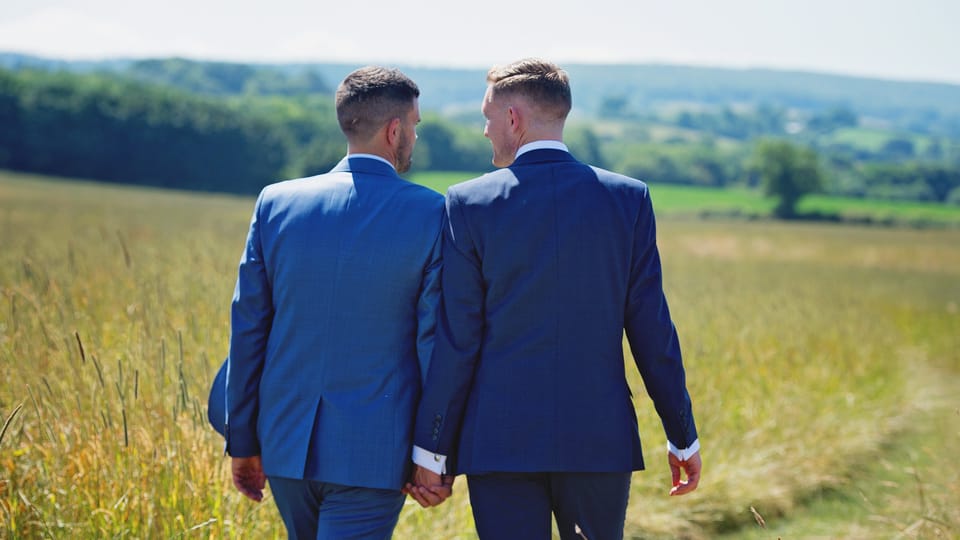
“It’s a bit better than ‘registration’, because before I was like, I’m not a car – why should I be registered somewhere?
“But it’s still not equal. And I guess this is the main point of the whole thing – you have two people who are happy together, who want to maybe create a family, who want to contribute to society, who are paying their taxes.
“Everything is legal, but not marriage.”
Have you got a date for your not-legal wedding?
“[Laughs] This sounds like we are two gangsters with an illegal wedding, somewhere hidden in the woods!
“We still don’t have a date. We are still trying to figure out what would be the best concept for this date and for the big day.
“We’re still trying to figure it out and we are pretty busy with work, so I guess we are still waiting for the perfect moment to come. And we’re looking forward to that.”
Some of your videos take on politics and you have come against Andrej Babiš a couple of times. Given that [his party] ANO are consistently supported by about one-third of voters in this country, are you not concerned about alienating quite a significant part of the population?
“I think it’s not about the fact that I’m, like, attacking him for no reason.
“The last exchange we had was because he just took my tweet and filmed a whole video about it.
“So my video back then [2021] was just a response to his video. It was kind of a little parody and then he never filmed anything about me again, which I guess was successful.
“And I really haven’t filmed anything about him ever since. It was always part of a video that was about the elections – he was one of the candidates, so he had his fair share of minutes but nothing really targeting him.
“It felt very strange to film a reaction video to the prime minister who filmed a YouTube video about you as a YouTuber.”
Kovy
“So I guess it’s not about alienating anyone, it’s just about describing what you see in the campaign, what topics are being brought up.
“I’m preparing videos for these elections [in early October] as well and I’ll be talking about every single campaign, not about ANO and Babiš but about Spolu [Together] as well and STAN [Mayors] and the Pirates and all the other parties that are running.
“I’ll be trying to show the different approaches that these candidates have.
“But yes, in the past, we had some funny exchanges, that’s true [laughs].”
That must feel strange, to have that kind of clash with the prime minister.
“I guess not nowadays, because it happens. Politicians are on social media pretty much all the time, I feel like, for the last couple of weeks.
“But back then it felt very strange to film a reaction video to the prime minister who filmed a YouTube video about you as a YouTuber.
“So I was making fun of that, that they were trying to be YouTubers like we are – Just stick to your job, guys, don’t take our jobs! This kind of rhetoric [laughs].”
As somebody who’s so great on social media, how do you view the way that Czech political parties use it?
“It’s very interesting to see the transformation from the past elections, because there’s just so much content right now.
“So for me, who wants to analyse it, there are hours and hours that I have to go through.
“Because so many politicians understood that if they want to reach the younger generation they have to do it through social media.
“But I think some of them maybe underestimate meeting people in person.
“Because that is exactly what happened to me, and I understood that meeting people face to face and having offline events helps tremendously.
“So I think a lot of politicians these days are too fixated on social media and reach and likes – and I guess they are experiencing the same things as YouTubers a few years ago.”
How much of what they produce is good, in your view, and how much is cringe?
“It depends. In their eyes it’s definitely not cringe. In the eyes of everyone else it’s pretty much cringe. I’m not sure about the percentage.
“Sometimes when I see a TikTok or something I think, This should be a person representing us? Oh God.”
Kovy
“But a lot of content is pretty wild, to me. Sometimes when I see a TikTok or something I think, This should be a person representing us? Oh God.
“But I guess this is the time we live in.”
But also that stuff must work, right? If dancing in a video didn’t work, they wouldn’t do it.
“I think they are clueless. I think they don’t really know what works, so they try to do everything. They try to just reach people and be seen.
“But some of them are pretty effective in connecting these viral trends and dances and little videos with saying something that has substance to it, or presenting their programme or something.
“That is, I guess, the most important part, because it’s one thing being seen in a video and the other thing is that you’re being heard – and people understand you and understand where you’re coming from and what you’re offering.
“And I think a lot of politicians underestimate that. They’re just trying to catch the viral moment, but they’re forgetting that they have to say something through that.”
Social media of course doesn’t stand still. How much do you feel you have to respond to the changing landscape?
“Well, if you stand still, that’s the end, basically. You always have to evolve.
“Sometimes, after these years, it’s almost painful for me, because I’m like, I’m a bit tired – but I guess I should understand this trend again, and again, and again.
“It’s getting pretty fast. Trends come and go in a few days right now. I remember when a trend was there for a month or two.

“But it’s amazing that so many people who back then didn’t have a chance because they didn’t have a camera and lighting and stuff nowadays can create just with their phone and be discovered and have a whole career on social media, which is great.
“But that also means more competition and it also means more ideas.
“I’m excited that the creator economy and the whole space around that is growing, because I think it’s just the ultimate freedom that you have as a creator, on social media.
“And for me I still think this is the most free and creative outlet out there.”
How do today’s teenagers who are active and successful on social media compare to your generation? Is there a noticeable difference?
“Yeah, there is. Because sometimes they really have a plan in their mind.
“For us it was really about, you know, we were bored so we started filming videos and people noticed them and we became popular.
“But back then you couldn’t even plan to have a million subscribers because then YouTube was watched by only a few thousand people, when it was starting.
“I still think social media is the most free and creative outlet out there.”
Kovy
“Right now many young people come and have a specific plan: how many subscribers and donors they want to hit and what’s the best way to do it all.
“They have a team around them or they’re trying to build a team and scale it up as soon as possible. They’re trying to monetise it very quickly.
“They’re very successful with it and I guess that’s the biggest difference. Many of them are very focused.
“And then there is this second half of people who do just it because they feel like they should be doing it, but they don’t really… it’s very effortless and they don’t really have a big plan.
“They are just filming because they want to entertain other people, and after a year or two they just go on with their lives.”
Is there any area you’d like to explore, or ambitions that you have or big projects that you’re hoping to start in the future?
“I guess for me nowadays it’s about finding the best possible directions for what I do, because I still want to feel that I’m growing, I have new challenges in front of me – and I just don’t recycle myself.
“So it’s about keeping the whole thing going and finding new ventures, new people I can partner with and news projects I can be part of that are exciting and challenging and maybe out of my comfort zone – so I still feel there’s a challenge in front of me.”






