Beavers’ comeback: How a once-extinct species is reshaping the Czech landscape

Beavers in Czechia recently made international headlines after a colony in the Brdy region built a series of dams faster than local authorities could finish the planning phase—highlighting just how quickly these animals can reshape their environment. But the attention also points to a broader trend: these once-rare animals are now spreading rapidly across the country. Not long ago, beavers had completely disappeared from the Czech landscape and were only reintroduced in the 1970s. So what helped them return? And how is it that they have even settled in parts of Prague? I discussed these questions with Aleš Vorel, a scientist from the Faculty of Environmental Sciences at the Czech University of Life Sciences in Prague.

"In the Czech Republic, beavers were extinct in the past. In the 19th century, they were reintroduced by the Schwarzenberg family. But after that, due to the damages they caused, they were extirpated from the landscape once again.
"For most of the 20th century, they were absent from the whole of Central Europe. But in 1978, they began recolonizing what was then Czechoslovakia, appearing first in the corner shared by Czechoslovakia, Slovakia, and Austria. After that, they began to appear in western Bohemia, northern and north-eastern Czech Republic as well.
"So they essentially began recolonizing from four directions—Austria, Bavaria, Saxony, and Poland. This established a fairly large population, which is still growing. Currently, we estimate between 10,000 and 15,000 animals, and they now occupy about 65–66% of the country’s territory.

"So there are still regions without beavers, but it's only a matter of time before they will spread everywhere. I would estimate that up to 99% of the country could eventually be colonized."
What factors have contributed to their remarkable comeback? Is it just the fact that they are no longer hunted?
"That’s definitely one key factor, but it’s not the only one. The second important reason is the strong legal protection of beavers across Europe. Also, as I mentioned, they began recolonizing from four directions at once, which accelerated their spread.
"Additionally, the landscape in Czechia and Central Europe has changed since the 19th and 20th centuries. Many waterways are now framed by woody vegetation, and since beavers are vegetarians who prefer softwood trees like willows and poplars, this kind of environment supports their rapid expansion."
And as you said, they now cover most of the Czech Republic. There are even around 100 beavers living in and around Prague. What draws them to urban areas?

"Beavers are what's known as a generalist species. They are capable of colonizing nearly any type of landscape, including urban environments, so it is not so surprising.
“If you have just two basic conditions—water and riparian vegetation—then you have what beavers need to spread. We’ve seen this in many European cities. They have already colonized cities like Vienna and Brno, so it’s not surprising that they are now appearing in Prague as well."
Can I actually come across a beaver even in the centre of the city?
"That's a good question. Beavers are indeed capable of living in central urban areas. But there are still limitations.
"Beavers can travel through the city centre, but they prefer the edges and suburbs—seeing them in the heart of Prague is rare."
"For example, in Prague we have many riverbanks reinforced with concrete. Beavers cannot live in such areas—they can only move through the river, not build territories there. So, although we may see them near central locations like Charles Bridge, those areas are not suitable for active beaver families.
"There are also very few trees on the islands in the middle of Prague, and these inner-city areas are densely occupied by humans, who beavers tend to avoid.
"So, while beavers can travel through the city centre, they prefer the edges and suburbs—places like Divoká Šárka or Horní Počernice. These are areas where people from Prague can actually encounter beavers.
Currently, there are around 100 beavers in and around the city. Do you expect their population to increase, or will it eventually reach some kind of limit?

"There are two aspects to this. Yes, their numbers in Prague will likely continue to grow. There are still many unoccupied streams that can and will be colonized in the future.
"But once all suitable habitats are occupied—once every stream has an established beaver territory—the population will stabilize. That’s a biological rule of large territorial animals. They don’t exceed the capacity of the available environment."
Is it good news that beavers have spread across the country? What ecological benefits do they bring?
"Yes, it is a good story. Beavers are a native species to Europe, so their return is a positive sign.
"They are what we call a 'keystone species'—like wolves, elephants, or termites, which significantly shape our ecosystems. In the Czech Republic and Central Europe, we’re already seeing major environmental changes in areas where beavers are present. They change the water regime and attract rare species that are under pressure from human activity.
"Beavers are a native species to Europe, so their return is a positive sign."
"The wetlands they create serve as habitats for many other species. Moreover, their dams help improve water quality—acting as natural filtration systems, or cleaning stations, for nitrogen and carbon.
"So these are the three main ecological benefits: ecosystem engineering, biodiversity support, and water purification."
Despite these benefits, not everyone is happy about their return. What are the main arguments against having large beaver populations?
"Yes, beavers can be quite a controversial species. They cause three main types of damage.
"First, they cut down trees, which becomes a problem especially in parks. For example, the park around Lednice Castle has suffered considerable damage from beavers in the past.

"Second, they dig burrows into riverbanks. While this isn’t generally a problem in wild landscapes, it can compromise flood protection infrastructure and fishpond dams. In some cases, beavers have damaged dams to the point that entire ponds have drained, including valuable fish.
"Third, their dam-building can flood farmland—crops and pastures. This disrupts farming operations and causes financial loss to landowners.
"Taken together, these three types of damage—tree cutting, burrowing, and flooding—can be quite a burden for local communities. That’s why we often call beavers a ‘conflict species.’ And it raises the question of how to coexist."
When you talk about managing the beaver population, how can that be done? Do beavers have natural predators, or are you referring to culling?
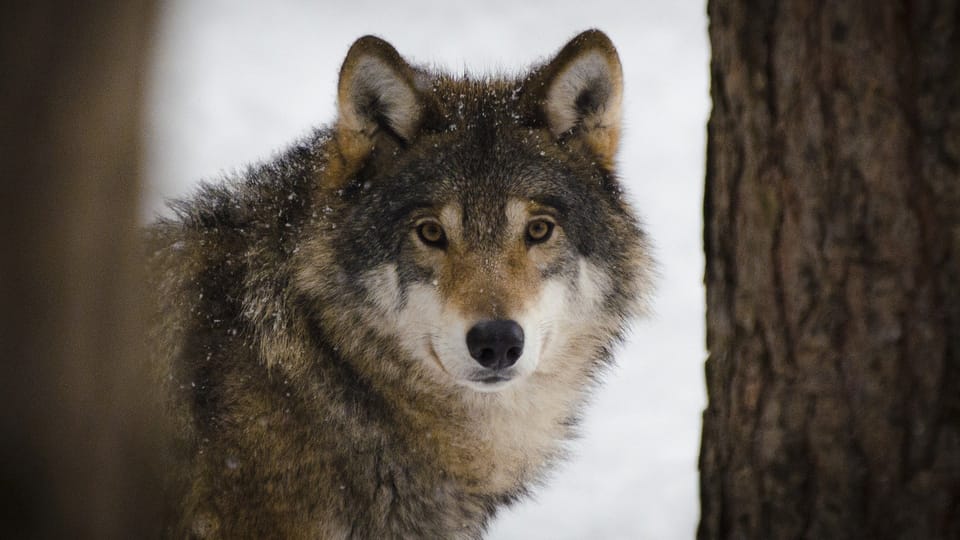
"Both approaches are relevant. We are currently seeing the return of wolves to Central Europe, and they are beavers’ main natural predator. In the Šumava Mountains, for example, wolves have started preying on beavers in significant numbers.
"But we can’t rely on natural regulation everywhere. So there are also legal measures in place. The Czech Republic has an official beaver action plan that divides the country into zones. One of these is a so-called 'no-go zone' for beavers, where nature conservation authorities can permit legal culling.
"However, the aim of these interventions is not to reduce the overall population but to remove specific individuals that are causing damage.
"There are also soft management strategies—like wrapping trees in metal mesh, draining dams, or reinforcing riverbanks with nets to prevent burrowing. These non-lethal methods help reduce conflicts without killing animals.
"So we manage the beaver population through a combination of natural predators, selective culling, and soft protective measures."
I guess just like with wolves, it's important to bring this topic into the public conversation—to raise awareness of both the challenges and the benefits these animals bring.
"Absolutely. And this interview is a great example of how to start that conversation.
"It’s important for people to know that natural regulation is already happening—thanks to wolves, for instance. If wolves focus on beavers as prey, that actually benefits us. We’d be dealing with two so-called 'conflict species' that balance each other out through natural interaction.
"And that, in itself, is great news for our landscape."