35 years ago, the much-feared Czechoslovak State Security was dissolved

When in 1990, Minister of the Interior Richard Sacher issued an order to abolish all central departments of Czechoslovakia’s State Security organisation (StB), he brought to an end the more than forty-year period of one of the main instruments of Communist terror in the country. For many, this meant the end of an era of oppression, violence and fear.

“Dear fellow citizens. After abolishing the so-called ‘internal intelligence department’, I have today ordered the abolition of the remaining branches of the State Security,” the minister announced on January 31st 1990.
This decision brought relief to many people. The StB was a major player in political trials in the 1950s and, during the period of normalisation, had intimidated and persecuted real and perceived opponents of the regime.

“During the Communist regime, about two million people were affected. It's a huge number," historian Petr Blažek from the Institute for the Study of Totalitarian Regimes told Radiožurnál.
Personal Stories of StB Victims
One of the victims of the State Security was Stanislav Pitaš, who was born in 1957 in Kocbeře in eastern Bohemia. In the 1980s, he decided to live by his own rules, which brought him into conflict with the regime. The StB targeted him because of his activities in the underground community and the distribution of ‘samizdat’ magazines, such as Vokno and Voknoviny.

Pitaš faced harassment from the StB throughout the 1980s. He was regularly visited for house searches and spent weeks in custody, with some months spent in prison or in a mental institution. He was punished for defaming the president and assaulting a public official. When he was arrested for the third time in 1989, he was not allowed to say goodbye to his dying mother or attend her funeral.
“They told me: 'You can't say goodbye to your mother because you are an enemy of the state,'” Pitaš recalled for the Memory of the Nation project (Paměť národa). “It was extremely difficult for me, but I knew I had to endure it.”

After the Velvet Revolution, Pitaš encountered difficult situations when he met his former persecutors on the street, in a pub or on a construction site, where they worked as labourers. He considered inviting one of them for a beer to ask him why he had not been allowed to say goodbye to his mother, but decided that it would not change the situation.
Miluška Havlůjová also experienced first-hand what the StB could do. After the Communist coup in February 1948, her family lost their business. Her father, who had been actively involved in the anti-Nazi resistance during World War II, could not come to terms with the new order and ended up in prison. Havlůjová was arrested by the State Security in May 1953.
“I was told, ‘If you sign the cooperation agreement, we will let you go home.’ In that moment of such helplessness, I started praying, and suddenly it became clear to me that I could not sign it,” she wrote in her memoirs for Memory of the Nation.

The court sent her to prison for five years for attempted sedition against the republic and attempted extortion. Her son was a year and a half old at the time. She was released after two years, when President Antonín Zápotocký granted a pardon to mothers with small children and to those who were ill.
“Establishing contact with my little son was a big problem. I suddenly showed up here, but he did not recognise me. I went to him, but he pulled away. He didn’t accept me,” Havlůjová recalled.
Document shredding

After the fall of the communist regime in November 1989, members of the State Security tried to get rid of all evidence that could be used against them. “The proof is the large-scale so-called ‘shreddings’, which were the savage destruction of operational materials. This showed that the State Security realised that the situation was at a turning point, and that it was necessary to cover their tracks,” historian Blažek explained to Radiožurnál.

At the time when Interior Minister Sacher ordered the abolition of the StB, approximately 13,000 members were working for it. Citizens’ commissions decided their future fate. According to Jan Ruml, a former dissident and former Deputy Minister of the Interior, everyone who fought against so-called ‘enemies within’ had to leave the ministry immediately. “I was put in charge of this number of people and had to solve this matter of personnel, which I did by dismissing about 8,500 of them based on checks by citizens’ commissions,” Ruml recalled a few years ago.

In the early 1990s, no one knew what coming to terms with the Communist past would look like. Some may still have had memories of the Nuremberg trials and the punishments of the Nazis. Therefore, even members of the StB might have feared more severe punishments that would affect a large number of them. In the end, however, only specific individuals were brought to trial. In total, only about forty members of the StB were convicted, mostly for crimes committed in the 1950s.
Preserved documents
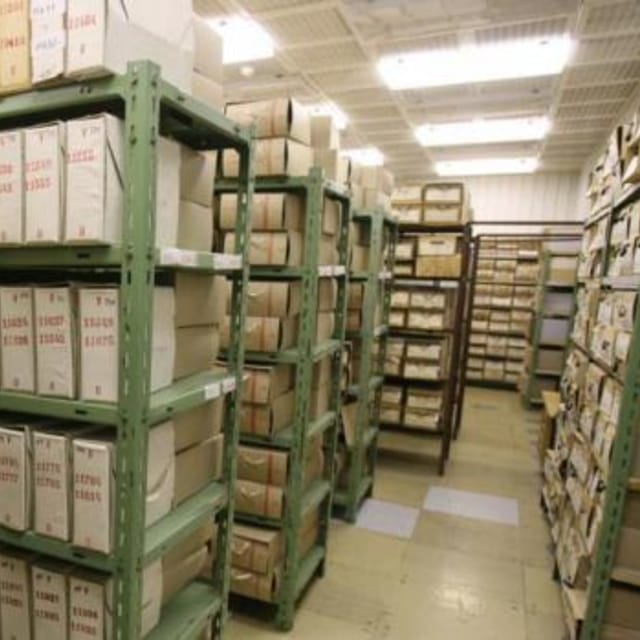
The preserved StB documents gradually became available to the public and were only made fully available by the Security Services archive in 2008. Today, these documents serve as important historical sources that offer a better understanding of the practices of the State Security and its impact on Czechoslovak society.